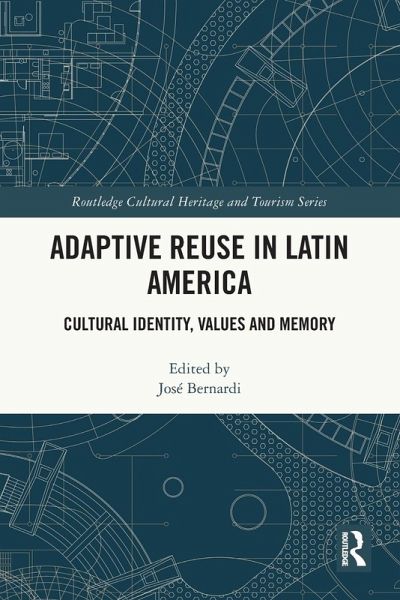
Adaptive Reuse in Latin America
Cultural Identity, Values and Memory
Herausgeber: Bernardi, José
Adaptive Reuse in Latin America
Cultural Identity, Values and Memory
Herausgeber: Bernardi, José
- Broschiertes Buch
- Merkliste
- Auf die Merkliste
- Bewerten Bewerten
- Teilen
- Produkt teilen
- Produkterinnerung
- Produkterinnerung
This book explores the theoretical & architectural connections.
Andere Kunden interessierten sich auch für
COVID-19 and Economic Development in Latin America55,99 €
Ideology and Social Change in Latin America63,99 €
James R. BettmanEmotion, Adaptive Decision Making, And Consumer Behavior70,99 €
James R. BettmanAdaptive Decision Making70,99 €
Nicholas PhillipsThe Adaptive Conversation Process21,99 €
Lester M SalamonState of Nonprofit America48,99 €
Clara Patricia Guzmán SilvaTEORIE PER LA COMPRENSIONE DEL MERCATO DEL LAVORO IN AMERICA LATINA29,99 €-
-
-
Produktdetails
- Produktdetails
- Verlag: Routledge
- Seitenzahl: 270
- Erscheinungstermin: 14. April 2025
- Englisch
- Abmessung: 234mm x 156mm x 15mm
- Gewicht: 415g
- ISBN-13: 9781032344522
- ISBN-10: 1032344520
- Artikelnr.: 73491265
- Herstellerkennzeichnung
- Libri GmbH
- Europaallee 1
- 36244 Bad Hersfeld
- gpsr@libri.de
- Verlag: Routledge
- Seitenzahl: 270
- Erscheinungstermin: 14. April 2025
- Englisch
- Abmessung: 234mm x 156mm x 15mm
- Gewicht: 415g
- ISBN-13: 9781032344522
- ISBN-10: 1032344520
- Artikelnr.: 73491265
- Herstellerkennzeichnung
- Libri GmbH
- Europaallee 1
- 36244 Bad Hersfeld
- gpsr@libri.de
José Bernardi is associate professor in The Design School at The Herberger Institute for Design and the Arts at Arizona State University. His work is focused on modern and contemporary design and architecture in Latin America.
Introduction: Expanding and diversifying the field of adaptive reuseJosé
Bernardi
Topic I Whose Memories, whose values? The search for identity
1. Whose memories, whose values? Reflecting on the spatial history of the
Americas.
Fernando Luiz Lara
2. Open Work as a seed for change in adaptive reuse
Ana Etkin
3. Essential Documentation: Lucio Costa and the Modernist Missionary
Catherine Seavitt Nordenson
4. From a project of modernization to a strategy of community building
Monica Bertolino
Topic II Other Modernities
5. Housing Policies in Brazil and Dwellers perspectives, a Comparative
Study
Ana Paula Koury
6. Renovation and reuse in Brazil: Cases in Sao Paulo, Bahia and Porto
Alegre
Marta Peixoto
7. Adaptive Reuse in Brazil: Lessons from Lina Bo Bardi
Isabella Trindade, and Ana Luisa Rolim
8. Resilient spaces: modern and historic legacy in Brazilian built heritage
Cláudia Costa Cabral
Topic III Perpetual Transformations: Adaptive Reuse in Mexico City
9. Mexican Iconoclasms: From the Post-Revolutionary Era to the 1980s
Cristóbal Jácome-Moreno
10. Exhibiting Contemporary Art in a Colonial Context at the Ex Santa
Teresa in Mexico City
Derek Burdette
11. Cosmologies of Ruins and Ruination: Infrastructures and the
Anthropocene
Christopher Morehart
Topic IV Places of Defiance and Resilience
12. How body memory "actualizes" to the architectural heritage the Latin
American dwelling as the new public space
Diana Maldonado
13. Hidden Landscapes of Palimpsestic Urban Memories: The Case of Lima,
Peru
Kathryn Golda- Pongratz
14. Reversing neo-Plantations: From Guayusa Monocultures to Chakras and
Managed Forests in Mushullakta
Ana María Durán Calisto
15. Matachín Codex Complex
Cristóbal Martínez
Bernardi
Topic I Whose Memories, whose values? The search for identity
1. Whose memories, whose values? Reflecting on the spatial history of the
Americas.
Fernando Luiz Lara
2. Open Work as a seed for change in adaptive reuse
Ana Etkin
3. Essential Documentation: Lucio Costa and the Modernist Missionary
Catherine Seavitt Nordenson
4. From a project of modernization to a strategy of community building
Monica Bertolino
Topic II Other Modernities
5. Housing Policies in Brazil and Dwellers perspectives, a Comparative
Study
Ana Paula Koury
6. Renovation and reuse in Brazil: Cases in Sao Paulo, Bahia and Porto
Alegre
Marta Peixoto
7. Adaptive Reuse in Brazil: Lessons from Lina Bo Bardi
Isabella Trindade, and Ana Luisa Rolim
8. Resilient spaces: modern and historic legacy in Brazilian built heritage
Cláudia Costa Cabral
Topic III Perpetual Transformations: Adaptive Reuse in Mexico City
9. Mexican Iconoclasms: From the Post-Revolutionary Era to the 1980s
Cristóbal Jácome-Moreno
10. Exhibiting Contemporary Art in a Colonial Context at the Ex Santa
Teresa in Mexico City
Derek Burdette
11. Cosmologies of Ruins and Ruination: Infrastructures and the
Anthropocene
Christopher Morehart
Topic IV Places of Defiance and Resilience
12. How body memory "actualizes" to the architectural heritage the Latin
American dwelling as the new public space
Diana Maldonado
13. Hidden Landscapes of Palimpsestic Urban Memories: The Case of Lima,
Peru
Kathryn Golda- Pongratz
14. Reversing neo-Plantations: From Guayusa Monocultures to Chakras and
Managed Forests in Mushullakta
Ana María Durán Calisto
15. Matachín Codex Complex
Cristóbal Martínez
Introduction: Expanding and diversifying the field of adaptive reuseJosé
Bernardi
Topic I Whose Memories, whose values? The search for identity
1. Whose memories, whose values? Reflecting on the spatial history of the
Americas.
Fernando Luiz Lara
2. Open Work as a seed for change in adaptive reuse
Ana Etkin
3. Essential Documentation: Lucio Costa and the Modernist Missionary
Catherine Seavitt Nordenson
4. From a project of modernization to a strategy of community building
Monica Bertolino
Topic II Other Modernities
5. Housing Policies in Brazil and Dwellers perspectives, a Comparative
Study
Ana Paula Koury
6. Renovation and reuse in Brazil: Cases in Sao Paulo, Bahia and Porto
Alegre
Marta Peixoto
7. Adaptive Reuse in Brazil: Lessons from Lina Bo Bardi
Isabella Trindade, and Ana Luisa Rolim
8. Resilient spaces: modern and historic legacy in Brazilian built heritage
Cláudia Costa Cabral
Topic III Perpetual Transformations: Adaptive Reuse in Mexico City
9. Mexican Iconoclasms: From the Post-Revolutionary Era to the 1980s
Cristóbal Jácome-Moreno
10. Exhibiting Contemporary Art in a Colonial Context at the Ex Santa
Teresa in Mexico City
Derek Burdette
11. Cosmologies of Ruins and Ruination: Infrastructures and the
Anthropocene
Christopher Morehart
Topic IV Places of Defiance and Resilience
12. How body memory "actualizes" to the architectural heritage the Latin
American dwelling as the new public space
Diana Maldonado
13. Hidden Landscapes of Palimpsestic Urban Memories: The Case of Lima,
Peru
Kathryn Golda- Pongratz
14. Reversing neo-Plantations: From Guayusa Monocultures to Chakras and
Managed Forests in Mushullakta
Ana María Durán Calisto
15. Matachín Codex Complex
Cristóbal Martínez
Bernardi
Topic I Whose Memories, whose values? The search for identity
1. Whose memories, whose values? Reflecting on the spatial history of the
Americas.
Fernando Luiz Lara
2. Open Work as a seed for change in adaptive reuse
Ana Etkin
3. Essential Documentation: Lucio Costa and the Modernist Missionary
Catherine Seavitt Nordenson
4. From a project of modernization to a strategy of community building
Monica Bertolino
Topic II Other Modernities
5. Housing Policies in Brazil and Dwellers perspectives, a Comparative
Study
Ana Paula Koury
6. Renovation and reuse in Brazil: Cases in Sao Paulo, Bahia and Porto
Alegre
Marta Peixoto
7. Adaptive Reuse in Brazil: Lessons from Lina Bo Bardi
Isabella Trindade, and Ana Luisa Rolim
8. Resilient spaces: modern and historic legacy in Brazilian built heritage
Cláudia Costa Cabral
Topic III Perpetual Transformations: Adaptive Reuse in Mexico City
9. Mexican Iconoclasms: From the Post-Revolutionary Era to the 1980s
Cristóbal Jácome-Moreno
10. Exhibiting Contemporary Art in a Colonial Context at the Ex Santa
Teresa in Mexico City
Derek Burdette
11. Cosmologies of Ruins and Ruination: Infrastructures and the
Anthropocene
Christopher Morehart
Topic IV Places of Defiance and Resilience
12. How body memory "actualizes" to the architectural heritage the Latin
American dwelling as the new public space
Diana Maldonado
13. Hidden Landscapes of Palimpsestic Urban Memories: The Case of Lima,
Peru
Kathryn Golda- Pongratz
14. Reversing neo-Plantations: From Guayusa Monocultures to Chakras and
Managed Forests in Mushullakta
Ana María Durán Calisto
15. Matachín Codex Complex
Cristóbal Martínez