American Literature in Transition, 1940-1950
Herausgeber: Vials, Christopher
American Literature in Transition, 1940-1950
Herausgeber: Vials, Christopher
- Gebundenes Buch
- Merkliste
- Auf die Merkliste
- Bewerten Bewerten
- Teilen
- Produkt teilen
- Produkterinnerung
- Produkterinnerung
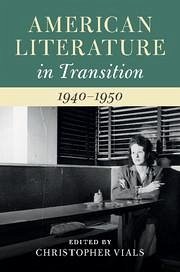
This collection provides crucial contexts for interpreting the literature of the 1940s, showing how writers intervened in the global struggles of the decade.
Andere Kunden interessierten sich auch für
American Literature in Transition, 1950-1960135,99 €
British Literature in Transition, 1940-1960: Postwar135,99 €
African American Literature in Transition, 1830-1850: Volume 3125,99 €
American Literature in Transition, 1910-1920135,99 €
American Literature in Transition, 1980-1990135,99 €
African American Literature in Transition, 1960-1970119,99 €
American Literature in Transition, 2000-2010135,99 €-
-
-
This collection provides crucial contexts for interpreting the literature of the 1940s, showing how writers intervened in the global struggles of the decade.
Produktdetails
- Produktdetails
- Verlag: Cambridge University Press
- Seitenzahl: 380
- Erscheinungstermin: 28. Dezember 2017
- Englisch
- Abmessung: 240mm x 166mm x 25mm
- Gewicht: 757g
- ISBN-13: 9781107143319
- ISBN-10: 1107143314
- Artikelnr.: 48859313
- Herstellerkennzeichnung
- Libri GmbH
- Europaallee 1
- 36244 Bad Hersfeld
- gpsr@libri.de
- Verlag: Cambridge University Press
- Seitenzahl: 380
- Erscheinungstermin: 28. Dezember 2017
- Englisch
- Abmessung: 240mm x 166mm x 25mm
- Gewicht: 757g
- ISBN-13: 9781107143319
- ISBN-10: 1107143314
- Artikelnr.: 48859313
- Herstellerkennzeichnung
- Libri GmbH
- Europaallee 1
- 36244 Bad Hersfeld
- gpsr@libri.de
Part I. The United States in the World: 1. Why We Fight: contending
narratives of the Second World War Christopher Vials; 2. Human rights in
American political discourse Glenn Mitoma; 3. Fictions of anti-semitism and
the beginning of Holocaust literature Josh Lambert; 4. The fatal machine:
the postwar imperial state and the radical novel Benjamin Balthaser; 5.
Antifascism as a political grammar and cultural force Christopher Vials;
6. From confession to exposure: transitions in anticommunist literature
Alex Goodall; 7. The contested origins of the Atomic Age and the Cold War
Christian Appy; Part II. Emergent Publics: 8. Cross currents: WWII and the
increasing visibility of race Bill Mullen; 9. Good Asian/bad Asian: Asian
American racial formation Floyd Cheung; 10. Social realism, the Ghetto, and
African American literature James Smethurst; 11. From factory to home? The
crisis in the gendered division of labor Julia L. Mickenberg; 12. Public
excursions in fierce truth-telling: literary cultures and homosexuality
Aaron Lecklider; 13. Resurgence: conservatives organize against the new
deal Kathy Olmsted; Part III. Media and Genre: 14. Late modernisms, latent
realisms: the politics of literary interpretation Sarah Ehlers; 15. The
city in the literary imagination Sean McCann; 16. Noir and the ebb of
radical hope Alan Wald; 17. Narrating the war Philip Beidler; 18.
Paperbacks and the literary marketplace Erin Smith; 19. Literary radicals
in Radio's public sphere Judith Smith; 20. The state cultural apparatus:
federal funding of arts and letters Joan Saab.
narratives of the Second World War Christopher Vials; 2. Human rights in
American political discourse Glenn Mitoma; 3. Fictions of anti-semitism and
the beginning of Holocaust literature Josh Lambert; 4. The fatal machine:
the postwar imperial state and the radical novel Benjamin Balthaser; 5.
Antifascism as a political grammar and cultural force Christopher Vials;
6. From confession to exposure: transitions in anticommunist literature
Alex Goodall; 7. The contested origins of the Atomic Age and the Cold War
Christian Appy; Part II. Emergent Publics: 8. Cross currents: WWII and the
increasing visibility of race Bill Mullen; 9. Good Asian/bad Asian: Asian
American racial formation Floyd Cheung; 10. Social realism, the Ghetto, and
African American literature James Smethurst; 11. From factory to home? The
crisis in the gendered division of labor Julia L. Mickenberg; 12. Public
excursions in fierce truth-telling: literary cultures and homosexuality
Aaron Lecklider; 13. Resurgence: conservatives organize against the new
deal Kathy Olmsted; Part III. Media and Genre: 14. Late modernisms, latent
realisms: the politics of literary interpretation Sarah Ehlers; 15. The
city in the literary imagination Sean McCann; 16. Noir and the ebb of
radical hope Alan Wald; 17. Narrating the war Philip Beidler; 18.
Paperbacks and the literary marketplace Erin Smith; 19. Literary radicals
in Radio's public sphere Judith Smith; 20. The state cultural apparatus:
federal funding of arts and letters Joan Saab.
Part I. The United States in the World: 1. Why We Fight: contending
narratives of the Second World War Christopher Vials; 2. Human rights in
American political discourse Glenn Mitoma; 3. Fictions of anti-semitism and
the beginning of Holocaust literature Josh Lambert; 4. The fatal machine:
the postwar imperial state and the radical novel Benjamin Balthaser; 5.
Antifascism as a political grammar and cultural force Christopher Vials;
6. From confession to exposure: transitions in anticommunist literature
Alex Goodall; 7. The contested origins of the Atomic Age and the Cold War
Christian Appy; Part II. Emergent Publics: 8. Cross currents: WWII and the
increasing visibility of race Bill Mullen; 9. Good Asian/bad Asian: Asian
American racial formation Floyd Cheung; 10. Social realism, the Ghetto, and
African American literature James Smethurst; 11. From factory to home? The
crisis in the gendered division of labor Julia L. Mickenberg; 12. Public
excursions in fierce truth-telling: literary cultures and homosexuality
Aaron Lecklider; 13. Resurgence: conservatives organize against the new
deal Kathy Olmsted; Part III. Media and Genre: 14. Late modernisms, latent
realisms: the politics of literary interpretation Sarah Ehlers; 15. The
city in the literary imagination Sean McCann; 16. Noir and the ebb of
radical hope Alan Wald; 17. Narrating the war Philip Beidler; 18.
Paperbacks and the literary marketplace Erin Smith; 19. Literary radicals
in Radio's public sphere Judith Smith; 20. The state cultural apparatus:
federal funding of arts and letters Joan Saab.
narratives of the Second World War Christopher Vials; 2. Human rights in
American political discourse Glenn Mitoma; 3. Fictions of anti-semitism and
the beginning of Holocaust literature Josh Lambert; 4. The fatal machine:
the postwar imperial state and the radical novel Benjamin Balthaser; 5.
Antifascism as a political grammar and cultural force Christopher Vials;
6. From confession to exposure: transitions in anticommunist literature
Alex Goodall; 7. The contested origins of the Atomic Age and the Cold War
Christian Appy; Part II. Emergent Publics: 8. Cross currents: WWII and the
increasing visibility of race Bill Mullen; 9. Good Asian/bad Asian: Asian
American racial formation Floyd Cheung; 10. Social realism, the Ghetto, and
African American literature James Smethurst; 11. From factory to home? The
crisis in the gendered division of labor Julia L. Mickenberg; 12. Public
excursions in fierce truth-telling: literary cultures and homosexuality
Aaron Lecklider; 13. Resurgence: conservatives organize against the new
deal Kathy Olmsted; Part III. Media and Genre: 14. Late modernisms, latent
realisms: the politics of literary interpretation Sarah Ehlers; 15. The
city in the literary imagination Sean McCann; 16. Noir and the ebb of
radical hope Alan Wald; 17. Narrating the war Philip Beidler; 18.
Paperbacks and the literary marketplace Erin Smith; 19. Literary radicals
in Radio's public sphere Judith Smith; 20. The state cultural apparatus:
federal funding of arts and letters Joan Saab.