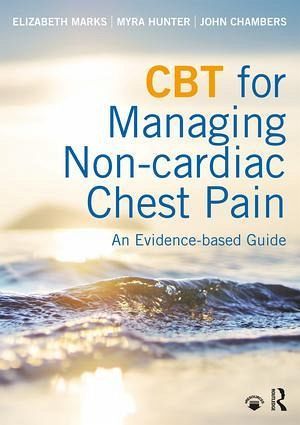
Dr Elizabeth Marks is a chartered clinical psychologist and accredited CBT practitioner. She works at University College London Hospital and is a Lecturer in Clinical Psychology at the University of Bath. Elizabeth's particular interests lie in enabling people to better manage chronic illness and to reduce the emotional and physical consequences physical health problems, such as chest pain. She has published a number of articles on non-cardiac chest pain. Professor Myra Hunter is Emeritus Professor of clinical health psychology with King's College London. She has specialised in the application of psychology to cardiology, oncology and women's health and has published over 200 articles and chapters and 7 books. Her clinical research has focused on developing interventions to help people to manage persistent physical symptoms, such as chest pain. Professor John Chambers is Professor of Clinical Cardiology and consultant cardiologist at Guy's and St Thomas' Hospitals, London. He has a career-long interest in the interactions between physical and psychological processes in non-cardiac chest pain. John has published 8 books and over 300 papers on general medicine, heart valve disease, chest pain and cardiac imaging.
Inhaltsangabe
PART 1 Introduction 1: What is non-cardiac chest pain? 2: What is coronary disease and how is it excluded? 3: Historical, social and cultural perspectives on NCCP 4: Biopsychosocial approaches to pain 5: The biopsychosocial approach to NCCP 6: Cognitive Behavioural Therapy and NCCP 7: The biopsychosocial assessment for NCCP PART 2 - THE WORKBOOK How to use the workbook Session 1: Understanding chest pain and setting goals Session 2: Paced, mindful, abdominal breathing Session 3: Stress management and relaxation Session 4: Keeping active Session 5: Thinking about chest pain Session 6: Review and maintenance PART 3 - FURTHER RESOURCES Appendix 1: Invitation leaflet for the clinic Appendix 2: Assessment tools Appendix 3: Treatment handouts Glossary of terms
PART 1 Introduction 1: What is non-cardiac chest pain? 2: What is coronary disease and how is it excluded? 3: Historical, social and cultural perspectives on NCCP 4: Biopsychosocial approaches to pain 5: The biopsychosocial approach to NCCP 6: Cognitive Behavioural Therapy and NCCP 7: The biopsychosocial assessment for NCCP PART 2 - THE WORKBOOK How to use the workbook Session 1: Understanding chest pain and setting goals Session 2: Paced, mindful, abdominal breathing Session 3: Stress management and relaxation Session 4: Keeping active Session 5: Thinking about chest pain Session 6: Review and maintenance PART 3 - FURTHER RESOURCES Appendix 1: Invitation leaflet for the clinic Appendix 2: Assessment tools Appendix 3: Treatment handouts Glossary of terms
Es gelten unsere Allgemeinen Geschäftsbedingungen: www.buecher.de/agb
Impressum
www.buecher.de ist ein Internetauftritt der buecher.de internetstores GmbH
Geschäftsführung: Monica Sawhney | Roland Kölbl | Günter Hilger
Sitz der Gesellschaft: Batheyer Straße 115 - 117, 58099 Hagen
Postanschrift: Bürgermeister-Wegele-Str. 12, 86167 Augsburg
Amtsgericht Hagen HRB 13257
Steuernummer: 321/5800/1497
USt-IdNr: DE450055826