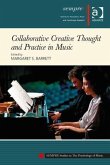
Collaborative Songwriting: In the Room focusses on the collaborative, creative act of group songwriting. It provides insights, perspectives, and practice models which will be invaluable for those just starting out in collaborative creativity, or for more experienced collaborators. Songwriting and music production in the 21st Century are increasingly social activities. As a result, the contemporary songwriter and collaborative music producer needs to be comfortable and skilled at creating with others. With this in mind, this book works to demystify the discourse around collaborative creativity…mehr
Collaborative Songwriting: In the Room focusses on the collaborative, creative act of group songwriting. It provides insights, perspectives, and practice models which will be invaluable for those just starting out in collaborative creativity, or for more experienced collaborators. Songwriting and music production in the 21st Century are increasingly social activities. As a result, the contemporary songwriter and collaborative music producer needs to be comfortable and skilled at creating with others. With this in mind, this book works to demystify the discourse around collaborative creativity and demonstrate how readers can apply this theoretical underpinning to their creative practice. The inclusion of over fifteen interviews from industry professionals from the UK, US and Europe, allows readers to benefit from the varied experiences of collaboration methods in practice. Collaborative Songwriting: In the Room will provide valuable insight to professional or developing songwriters, music producers, music educators, community artists, arts practitioners, and performing musicians wanting to gain new perspectives into creative collaboration. It will also be a valuable companion to students of songwriting and popular music.
Adam Martin is a Senior Lecturer at the University of Huddersfield as well as a music producer and composer. He has over 15 years' experience designing and lecturing on courses in songwriting and collaborative creativity at Conservatoires and Universities and continues to work as a collaborative musician. Adam has published research on songwriting, collaborative creativity, music production and electronic music.
Inhaltsangabe
1. Collaborative songwriting is rewarding 1.1. Collaboration can enable positive emotional and social experiences 1.1.1. Collaboration can be exciting and joyous 1.1.2. Collaboration creates social connections 1.2. Collaboration is productive 1.2.1. Collaboration can bring complimentary skills to the process 1.2.2. It is hard to see the whole process through on your own 1.2.3. Collaboration can provide a sense of validation 1.3. Collaboration brings unpredictability to the creative process 1.4. Collaboration is a learning opportunity 2. Collaborative songwriting as a role 2.1. The work of collaborative songwriters varies greatly 2.2. A collaborative songwriter needs to be good to work with 2.3. A collaborative songwriter can be a facilitator and a mediator in the creative environment 2.3.1. Collaborative songwriting involves navigating relationships in the room 2.3.2. Collaborative songwriting means prioritising the needs of the artist 2.3.3. Collaborative songwriting can involve helping others to communicate and articulate their ideas 3. Collaborative songwriting in a social environment 3.1. It is important for people to feel comfortable, safe and respected 3.1.1. An open environment can enable vulnerability within the creative process 3.1.2. Aim to ensure that everyone feels equal in the collaboration 3.1.3. Humour and playfulness can be conducive to collaborative creativity 3.1.4. Effective collaboration requires good communication 3.2. Collaborative songwriters will intentionally construct and maintain an effective social environment 4. Collaborative songwriting in a physical environment 4.1. A comfortable physical environment can be beneficial for creativity 4.2. An uncomfortable environment can be detrimental to creativity 4.3. Some environments can inspire you to work 4.4. Having space to work alone can be useful within collaboration 5. Collaborative songwriting with tools 5.1. Tools can help the creative collaborative process 5.1.1. Working with recording technology means that ideas can be tried and auditioned 5.1.2. Instruments and samples can inspire the creative process 5.1.3. It is useful to have things to around to play with during the creative process 5.1.4. Tools for writing lyrics vary greatly between collaborators 5.2. Tools can constrain collaborative songwriting 5.2.1. The choice of instruments can affect the song that will be written 5.2.2. Working with a computer can be a barrier to collaborative creativity 5.3. The use of tools needs to be managed across the creative process 5.3.1. All equipment should be plugged in and ready to capture ideas 5.3.2. Aim to have the core of the song written before using a DAW 6. Collaborative songwriting across time 6.1. Time restraints can have positive effects on creativity 6.1.1. Deadlines can be motivational for collaborative creativity 6.1.2. Perspective on the work changes over the process 6.2. Time restraints can have negative effects on creativity 6.3. It is important to maintain a sustainable working schedule 7. Collaborative songwriting as a social interaction 7.1. It is important to allow collaboration to happen 7.2. Be aware of the needs of others 7.2.1. Ensure that collaborators have freedom to do what they want to do 7.2.2. Pay attention, be present, and listening in the collaboration 7.2.3. It is important to be aware of how dominant or passive you are in a collaboration 7.3. Alignment between collaborators is important 7.3.1. It is useful to have alignment on taste or shared references 7.3.2. A shared sense of purpose is beneficial 7.3.3. Some creative processes will not overlap well 8. Collaborative songwriting is challenging 8.1. Egos can have a negative impact on collaboration 8.1.1. The challenge of egos in the creative process 8.1.2. Part of the role of a collaborator is to soothe the insecurities of the artist 8.2. Self-doubt as an internal challenge in collaboration 8.2.1. A lot of songwriters will have doubts and insecurities about what they do 8.2.2. Self-doubt can make you put up your guard and therefore constrain creativity 8.3. Aim to remove pressures from the creative process 8.4. Aim to avoid splits causing tension 9. Collaborative songwriting as a creative process 9.1. Aim to maintain flow and momentum in collaborative writing 9.2. Avoid negativity during the creative process 9.2.1. It is important to say 'yes' and let the idea prove itself 9.2.2. Negativity deflates the room and has the effect of stopping people suggesting new things 9.2.3. Postpone judgement 9.3. Trust the process 10. Collaborative songwriting toolkit 11. References
1. Collaborative songwriting is rewarding 1.1. Collaboration can enable positive emotional and social experiences 1.1.1. Collaboration can be exciting and joyous 1.1.2. Collaboration creates social connections 1.2. Collaboration is productive 1.2.1. Collaboration can bring complimentary skills to the process 1.2.2. It is hard to see the whole process through on your own 1.2.3. Collaboration can provide a sense of validation 1.3. Collaboration brings unpredictability to the creative process 1.4. Collaboration is a learning opportunity 2. Collaborative songwriting as a role 2.1. The work of collaborative songwriters varies greatly 2.2. A collaborative songwriter needs to be good to work with 2.3. A collaborative songwriter can be a facilitator and a mediator in the creative environment 2.3.1. Collaborative songwriting involves navigating relationships in the room 2.3.2. Collaborative songwriting means prioritising the needs of the artist 2.3.3. Collaborative songwriting can involve helping others to communicate and articulate their ideas 3. Collaborative songwriting in a social environment 3.1. It is important for people to feel comfortable, safe and respected 3.1.1. An open environment can enable vulnerability within the creative process 3.1.2. Aim to ensure that everyone feels equal in the collaboration 3.1.3. Humour and playfulness can be conducive to collaborative creativity 3.1.4. Effective collaboration requires good communication 3.2. Collaborative songwriters will intentionally construct and maintain an effective social environment 4. Collaborative songwriting in a physical environment 4.1. A comfortable physical environment can be beneficial for creativity 4.2. An uncomfortable environment can be detrimental to creativity 4.3. Some environments can inspire you to work 4.4. Having space to work alone can be useful within collaboration 5. Collaborative songwriting with tools 5.1. Tools can help the creative collaborative process 5.1.1. Working with recording technology means that ideas can be tried and auditioned 5.1.2. Instruments and samples can inspire the creative process 5.1.3. It is useful to have things to around to play with during the creative process 5.1.4. Tools for writing lyrics vary greatly between collaborators 5.2. Tools can constrain collaborative songwriting 5.2.1. The choice of instruments can affect the song that will be written 5.2.2. Working with a computer can be a barrier to collaborative creativity 5.3. The use of tools needs to be managed across the creative process 5.3.1. All equipment should be plugged in and ready to capture ideas 5.3.2. Aim to have the core of the song written before using a DAW 6. Collaborative songwriting across time 6.1. Time restraints can have positive effects on creativity 6.1.1. Deadlines can be motivational for collaborative creativity 6.1.2. Perspective on the work changes over the process 6.2. Time restraints can have negative effects on creativity 6.3. It is important to maintain a sustainable working schedule 7. Collaborative songwriting as a social interaction 7.1. It is important to allow collaboration to happen 7.2. Be aware of the needs of others 7.2.1. Ensure that collaborators have freedom to do what they want to do 7.2.2. Pay attention, be present, and listening in the collaboration 7.2.3. It is important to be aware of how dominant or passive you are in a collaboration 7.3. Alignment between collaborators is important 7.3.1. It is useful to have alignment on taste or shared references 7.3.2. A shared sense of purpose is beneficial 7.3.3. Some creative processes will not overlap well 8. Collaborative songwriting is challenging 8.1. Egos can have a negative impact on collaboration 8.1.1. The challenge of egos in the creative process 8.1.2. Part of the role of a collaborator is to soothe the insecurities of the artist 8.2. Self-doubt as an internal challenge in collaboration 8.2.1. A lot of songwriters will have doubts and insecurities about what they do 8.2.2. Self-doubt can make you put up your guard and therefore constrain creativity 8.3. Aim to remove pressures from the creative process 8.4. Aim to avoid splits causing tension 9. Collaborative songwriting as a creative process 9.1. Aim to maintain flow and momentum in collaborative writing 9.2. Avoid negativity during the creative process 9.2.1. It is important to say 'yes' and let the idea prove itself 9.2.2. Negativity deflates the room and has the effect of stopping people suggesting new things 9.2.3. Postpone judgement 9.3. Trust the process 10. Collaborative songwriting toolkit 11. References
Es gelten unsere Allgemeinen Geschäftsbedingungen: www.buecher.de/agb
Impressum
www.buecher.de ist ein Internetauftritt der buecher.de internetstores GmbH
Geschäftsführung: Monica Sawhney | Roland Kölbl | Günter Hilger
Sitz der Gesellschaft: Batheyer Straße 115 - 117, 58099 Hagen
Postanschrift: Bürgermeister-Wegele-Str. 12, 86167 Augsburg
Amtsgericht Hagen HRB 13257
Steuernummer: 321/5800/1497
USt-IdNr: DE450055826