Linda Levy Peck
Consuming Splendor
Linda Levy Peck
Consuming Splendor
- Gebundenes Buch
- Merkliste
- Auf die Merkliste
- Bewerten Bewerten
- Teilen
- Produkt teilen
- Produkterinnerung
- Produkterinnerung
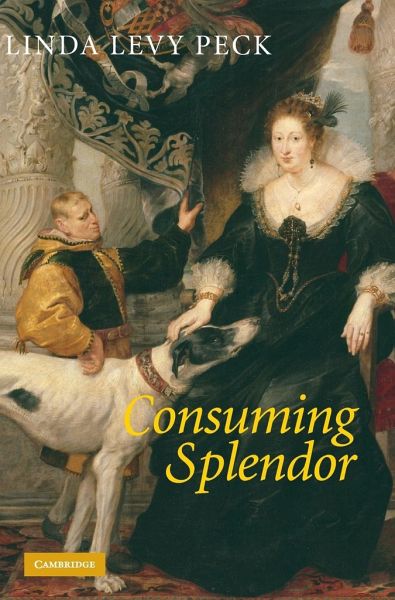
A fascinating new study of the emergence of consumer society in seventeenth-century England.
Andere Kunden interessierten sich auch für
Wondu Argaw YimamPower Consolidation, Modernization and Commercial Splendor26,99 €
Elizabeth EmeryConsuming the Past47,99 €
Andrew C. McKevittConsuming Japan33,99 €
Andrew C. McKevittConsuming Japan91,99 €
T. C. W. BlanningReform and Revolution in Mainz 1743 180349,99 €
Matthew WorleyNo Future29,99 €
HelmholzMarriage Litigation in Medieval England60,99 €-
-
-
A fascinating new study of the emergence of consumer society in seventeenth-century England.
Produktdetails
- Produktdetails
- Verlag: Cambridge University Press
- Seitenzahl: 448
- Erscheinungstermin: 1. September 2015
- Englisch
- Abmessung: 250mm x 175mm x 29mm
- Gewicht: 947g
- ISBN-13: 9780521842327
- ISBN-10: 0521842328
- Artikelnr.: 22218249
- Herstellerkennzeichnung
- Libri GmbH
- Europaallee 1
- 36244 Bad Hersfeld
- gpsr@libri.de
- Verlag: Cambridge University Press
- Seitenzahl: 448
- Erscheinungstermin: 1. September 2015
- Englisch
- Abmessung: 250mm x 175mm x 29mm
- Gewicht: 947g
- ISBN-13: 9780521842327
- ISBN-10: 0521842328
- Artikelnr.: 22218249
- Herstellerkennzeichnung
- Libri GmbH
- Europaallee 1
- 36244 Bad Hersfeld
- gpsr@libri.de
Linda Levy Peck is Columbian Professor of History at the George Washington University. She has published extensively on politics, society, and culture in seventeenth-century England. She is the author of Court Patronage and Corruption in Early Stuart England (1990) and the editor of The Mental World of the Jacobean Court (1991).
1. 'I must have a pair of Damasked spurs': shopping in seventeenth-century
London; 2. 'We may as well be silk-masters as sheep-masters': transferring
technology in seventeenth-century England; 3. 'What do you lack? What isn't
you buy?': creating new wants; 4. 'Anything that is strange': from rarities
to luxury goods; 5. 'Examine but my humors in buildings, gardening, and
private expenses': cultural exchange and the new built environment; 6. 'The
pictures I desire to have ... must be exquisitely done and by the best
masters': luxury and war: 1640-60; 7. 'Rome's artists in this nature can do
no more': a Bernini in Chelsea; 8. 'The largest, best built, and richest
city in the world': The Royal Society, luxury manufactures, and
aristocratic identity; 9. New wants, new wares: luxury consumption,
cultural change, and economic transformation.

London; 2. 'We may as well be silk-masters as sheep-masters': transferring
technology in seventeenth-century England; 3. 'What do you lack? What isn't
you buy?': creating new wants; 4. 'Anything that is strange': from rarities
to luxury goods; 5. 'Examine but my humors in buildings, gardening, and
private expenses': cultural exchange and the new built environment; 6. 'The
pictures I desire to have ... must be exquisitely done and by the best
masters': luxury and war: 1640-60; 7. 'Rome's artists in this nature can do
no more': a Bernini in Chelsea; 8. 'The largest, best built, and richest
city in the world': The Royal Society, luxury manufactures, and
aristocratic identity; 9. New wants, new wares: luxury consumption,
cultural change, and economic transformation.
1. 'I must have a pair of Damasked spurs': shopping in seventeenth-century
London; 2. 'We may as well be silk-masters as sheep-masters': transferring
technology in seventeenth-century England; 3. 'What do you lack? What isn't
you buy?': creating new wants; 4. 'Anything that is strange': from rarities
to luxury goods; 5. 'Examine but my humors in buildings, gardening, and
private expenses': cultural exchange and the new built environment; 6. 'The
pictures I desire to have ... must be exquisitely done and by the best
masters': luxury and war: 1640-60; 7. 'Rome's artists in this nature can do
no more': a Bernini in Chelsea; 8. 'The largest, best built, and richest
city in the world': The Royal Society, luxury manufactures, and
aristocratic identity; 9. New wants, new wares: luxury consumption,
cultural change, and economic transformation.
London; 2. 'We may as well be silk-masters as sheep-masters': transferring
technology in seventeenth-century England; 3. 'What do you lack? What isn't
you buy?': creating new wants; 4. 'Anything that is strange': from rarities
to luxury goods; 5. 'Examine but my humors in buildings, gardening, and
private expenses': cultural exchange and the new built environment; 6. 'The
pictures I desire to have ... must be exquisitely done and by the best
masters': luxury and war: 1640-60; 7. 'Rome's artists in this nature can do
no more': a Bernini in Chelsea; 8. 'The largest, best built, and richest
city in the world': The Royal Society, luxury manufactures, and
aristocratic identity; 9. New wants, new wares: luxury consumption,
cultural change, and economic transformation.