
Andere Kunden interessierten sich auch für
 Menores E Loucos Em Direito Criminal18,99 €
 Direito Penal Do Exercito E Armada Com Appendice Contendo Os Codigos Penal E Disciplinares Militares E Outras Leis20,99 €
 Direito Civil Brazileiro Recopilado31,99 €
 Compendio De Theoria E Pratica Do Processo Civil Comparado Com O Commercial Para Uso Das Faculdades De Direito Do Imperio22,99 €
 Direito Autoral17,99 €
 Principios de direito mercantil, e leis de marinha, para uso da mocidade portugueza, destinada ao commercio, divididos em oito tratados elementares Volume 4-726,99 €
 Curso De Direito Civil Brasileiro ...25,99 €





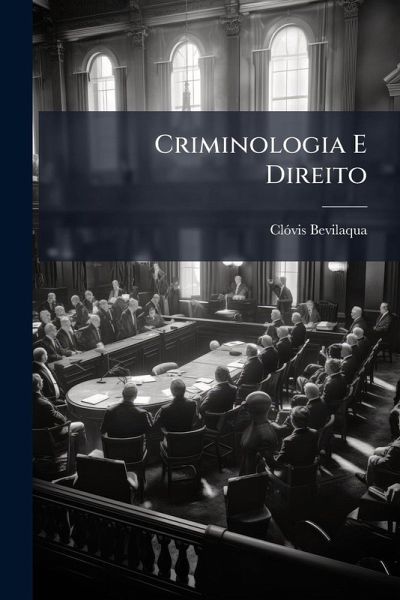
Criminologia E Direito, by ClÃ3vis Bevilaqua, is a foundational work in Portuguese on criminology and its relationship to law. Originally published in 1896, this book provides insights into the late 19th-century understanding of crime, its causes, and its legal treatment. Bevilaqua's text offers a historical perspective on the development of criminological thought and its application within the legal framework of the time. It remains a valuable resource for scholars and students interested in the history of criminology, comparative law, and the evolution of legal theory. This work has been selected by scholars as being culturally important, and is part of the knowledge base of civilization as we know it. This work was reproduced from the original artifact, and remains as true to the original work as possible. Therefore, you will see the original copyright references, library stamps (as most of these works have been housed in our most important libraries around the world), and other notations in the work. This work is in the public domain in the United States of America, and possibly other nations. Within the United States, you may freely copy and distribute this work, as no entity (individual or corporate) has a copyright on the body of the work. As a reproduction of a historical artifact, this work may contain missing or blurred pages, poor pictures, errant marks, etc. Scholars believe, and we concur, that this work is important enough to be preserved, reproduced, and made generally available to the public. We appreciate your support of the preservation process, and thank you for being an important part of keeping this knowledge alive and relevant.