
Andere Kunden interessierten sich auch für
 Hematological parameters among Tuberculosis patients under treatment24,99 €
 Digestive System Malignancies100,99 €
 Plant Genome Diversity Volume 2151,99 €
 Cytogenetics of Down Syndrome33,99 €
 Disposition of fish smokers and consumers29,99 €
 Notions on ecological sampling of populations and communities36,99 €
 Population, distribution and ecology of the Madagascar fish eagle40,99 €







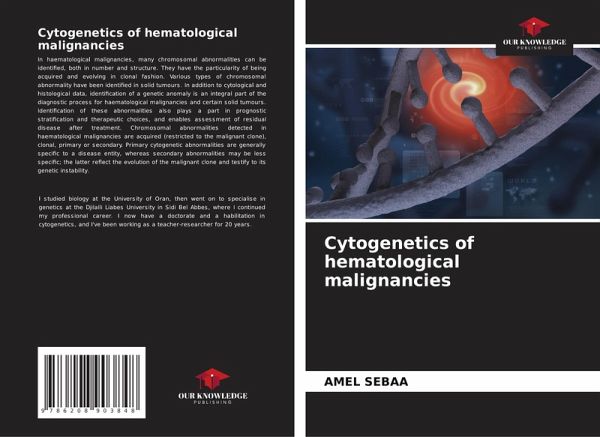
In haematological malignancies, many chromosomal abnormalities can be identified, both in number and structure. They have the particularity of being acquired and evolving in clonal fashion. Various types of chromosomal abnormality have been identified in solid tumours. In addition to cytological and histological data, identification of a genetic anomaly is an integral part of the diagnostic process for haematological malignancies and certain solid tumours. Identification of these abnormalities also plays a part in prognostic stratification and therapeutic choices, and enables assessment of residual disease after treatment. Chromosomal abnormalities detected in haematological malignancies are acquired (restricted to the malignant clone), clonal, primary or secondary. Primary cytogenetic abnormalities are generally specific to a disease entity, whereas secondary abnormalities may be less specific; the latter reflect the evolution of the malignant clone and testify to its genetic instability.