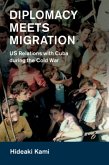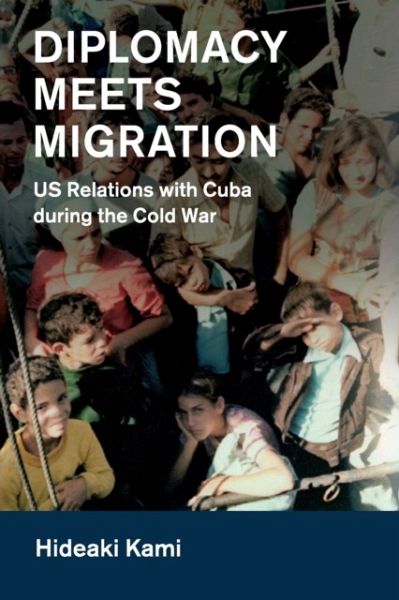
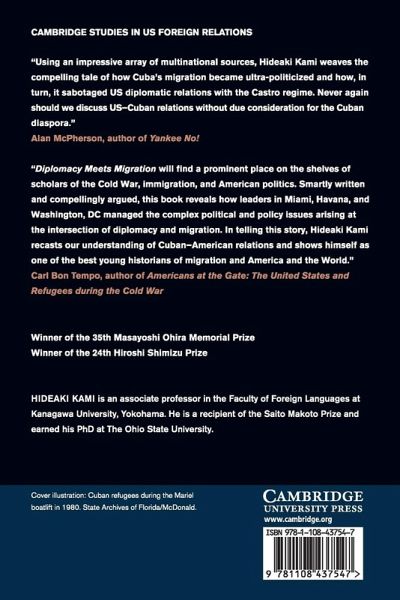
Shows how migration influenced American foreign policy in Cuban-American relations during the Cold War. Drawing on multi-archival research, this study demonstrates how the US government reformulated its Cuban policy in response to the emergence of the Cuban-American community as a new, politically mobilized constituency.
Hideaki Kami is an Assistant Professor in the Faculty of Foreign Languages at Kanagawa University, Japan. He is a recipient of the Saito Makoto Prize and the Fulbright Award for Doctoral Studies, and has conducted archival research in the United States, Cuba, and elsewhere.
Inhaltsangabe
List of figures Acknowledgments List of abbreviations Introduction 1. Between revolution and counterrevolution 2. The legacy of violence 3. A time for dialogue? 4. The crisis of 1980 5. Acting as a 'superhero'? 6. The two contrary currents 7. Making foreign policy domestic? Conclusion Bibliography Index.
Es gelten unsere Allgemeinen Geschäftsbedingungen: www.buecher.de/agb
Impressum
www.buecher.de ist ein Internetauftritt der buecher.de internetstores GmbH
Geschäftsführung: Monica Sawhney | Roland Kölbl | Günter Hilger
Sitz der Gesellschaft: Batheyer Straße 115 - 117, 58099 Hagen
Postanschrift: Bürgermeister-Wegele-Str. 12, 86167 Augsburg
Amtsgericht Hagen HRB 13257
Steuernummer: 321/5800/1497
USt-IdNr: DE450055826