
Andere Kunden interessierten sich auch für
 Accountability in State Legislatures33,99 €
 The Adaptability Paradox103,99 €
 The Money Signal40,99 €
 The Adaptability Paradox34,99 €
 A Supreme Court Unlike Any Other24,99 €
 Big Money Unleashed40,99 €
 Countermobilization32,99 €





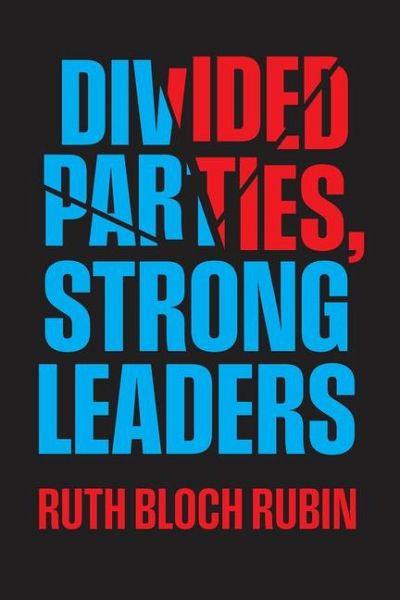
"For decades, legislative scholars have viewed divided parties as a critical constraint on congressional leadership. The more a party's rank and file agree with one another, the stronger their leaders are predicted to be; as member preferences diverge, leader power is thought to diminish. In a powerful corrective to this received wisdom, Ruth Bloch Rubin argues that party divisions are not inherently limiting. In defense of this thesis, Divided Parties, Strong Leaders highlights variation in how members of party factions choose to work together. Bloch Rubin shows that leaders of divided parties will exercise power most forcefully when the collaborative efforts of their coalitions' competing factions are evenly matched. By contrast, their capacity to exercise power is more limited when one faction has out-collaborated its competition. Presenting detailed case studies of some of the most storied leaders of the postwar Congress, including Speakers Sam Rayburn and Nancy Pelosi, the book's empirical chapters explore the factional configurations these leaders encountered and their consequences for how forcefully they wielded power"--