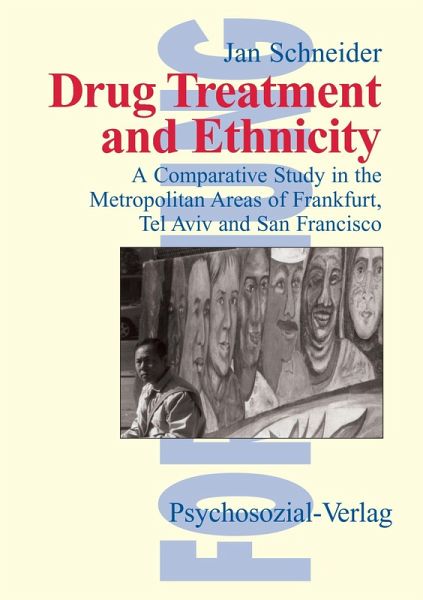
Die interkulturelle Öffnung der sozialen Dienste ist in den letzten Jahren zu einem wichtigen Thema geworden. Diese komparative Studie beschreibt in einer systematischen Gegenüberstellung, wie die Gesellschaften Deutschlands, Israels und der USA auf den Hilfebedarf drogenmissbrauchender ethnischer Minderheiten reagieren. Anhand von empirischen Fallstudien werden Modelle herausgearbeitet, mit denen sich Einrichtungen und Mitarbeiter der psychosozialen Dienste einer multikulturellen Klientel öffnen können. Developing multicultural competencies within the social services has become a continuous…mehr
Die interkulturelle Öffnung der sozialen Dienste ist in den letzten Jahren zu einem wichtigen Thema geworden. Diese komparative Studie beschreibt in einer systematischen Gegenüberstellung, wie die Gesellschaften Deutschlands, Israels und der USA auf den Hilfebedarf drogenmissbrauchender ethnischer Minderheiten reagieren. Anhand von empirischen Fallstudien werden Modelle herausgearbeitet, mit denen sich Einrichtungen und Mitarbeiter der psychosozialen Dienste einer multikulturellen Klientel öffnen können. Developing multicultural competencies within the social services has become a continuous issue in recent years. This comparative study, by means of a systematic juxtaposition, illuminates the ways in which the German, Israeli and American societies react to the needs of substance-abusing ethnic minority groups. On the basis of empirical case studies the author elaborates paradigmatic models, which psychosocial service institutions and professionals apply to increase their relevancy with regard to a multicultural clientele.
Jan Schneider, Studium am Fachbereich Sozialwesen der Fachhochschule Wiesbaden (1996-2000) und am Beit Berl College, Israel (1999), Diplomarbeit zum Verhältnis von Drogenhilfe und Ethnizität in multikulturellen Stadtgesellschaften (2000); Promotionsstudium am Fachbereich Sozial- und Kulturwissenschaften der JLU Gießen (2000-2002); z.Zt. Doktorand am Institut für Politikwissenschaft. Verlagsassistenz und Geschäftsführung im Psychosozial-Verlag (2000-2002); Freier Mitarbeiter der Bundeszentrale für politische Bildung und Redaktionsmitglied beim Newsletter Migration und Bevölkerung (seit 2003).
Inhaltsangabe
Inhalt 1. Introductory Chapter: Immigration and ethnic minorites in Germany, Israel and the United States - political and societal concepts and realities 1.1 GERMANY 1.1.1 Germany as a de facto immigration country 1.1.2 The multicultural city of Frankfurt am Main 1.2 ISRAEL 1.2.1 The melting pot maintained: Immigration and absorption of Jews and differentiation of other ethnic minorities 1.2.2 City of cultural diversity: Tel Aviv/Jaffo 1.3 UNITED STATES 1.3.1 The United States as an immigrant society 1.3.2 San Francisco: Minorities as a majority 2. Idiosyncrasies in three Western Countries: drug history, drug treatment systems and prevalence of illicit substance use 2.1 GERMANY 2.1.1 Prevalence of illicit substance use - a West German phenomenon? 2.1.2 From abstinence-dogmatism to experimental harm-reduction: Evolution of the drug treatment system 2.2 ISRAEL 2.2.1 The Jewish 'sober ethos' to fade? - Prevalence of Illicit Drug Use in Israel 2.2.2 The Israeli Drug Treatment System: A Unique and Recent History 2.2.2.1 The situation prior to 1989 2.2.2.2 Installation of the Anti Drug Authority 2.2.2.3 Development of a treatment system 2.3 UNITED STATES 2.3.1 Prevalence of drug use in the U.S. - an upward or downward trend? 2.3.2 The Summer of Love, the Drug Scares and Beyond: Evolution of Drug Scenes and the Drug Treatment System in the U.S. 2.4 Comparative conclusions 3. Substance abuse among ethnic minorities - prevelance, distribution and patterns 3.1 Germany 3.2 Israel 3.3 United States 4. Roadblocks and other barriers: What prevents ethnic minorities from entering drug abuse treatment in Germany? 4.1 Under-utilization of mainstream services 4.2 Identified barriers to accessing treatment for ethnic minority groups 4.3 Outpatient drug services and ethnicity in Frankfurt am Main 4.3.1 Options for outpatient treatment and service utilization 4.3.2 From low-threshold service into counseling? 5. Access to drug treatment for ethnic minorities in Israel 5.1 A national perspective 5.2 Outpatient drug treatment in Tel Aviv/Jaffo: Empirical observations 5.2.1 The treatment providers' point of view 5.2.2 The clients' point of view 6. Ethnic and cultural sensitivity in outpatient drug abuse services in the United States: a case study 6.1 Ethnic groups and drug treatment in San Francisco 6.2 A philosophy from the 60s - suitable for the 90s? Case study of the Haight Ashbury Free Clinics' outpatient substance abuse services 6.2.1 History and evolution 6.2.2 Current realities 7. Towards multicultural competencies in outpatient substance abuse services: discussion and results from a transnational perspective 7.1 Inhibiting factors in politics and society 7.2 Concluding considerations for organizational development
Inhalt 1. Introductory Chapter: Immigration and ethnic minorites in Germany, Israel and the United States - political and societal concepts and realities 1.1 GERMANY 1.1.1 Germany as a de facto immigration country 1.1.2 The multicultural city of Frankfurt am Main 1.2 ISRAEL 1.2.1 The melting pot maintained: Immigration and absorption of Jews and differentiation of other ethnic minorities 1.2.2 City of cultural diversity: Tel Aviv/Jaffo 1.3 UNITED STATES 1.3.1 The United States as an immigrant society 1.3.2 San Francisco: Minorities as a majority 2. Idiosyncrasies in three Western Countries: drug history, drug treatment systems and prevalence of illicit substance use 2.1 GERMANY 2.1.1 Prevalence of illicit substance use - a West German phenomenon? 2.1.2 From abstinence-dogmatism to experimental harm-reduction: Evolution of the drug treatment system 2.2 ISRAEL 2.2.1 The Jewish 'sober ethos' to fade? - Prevalence of Illicit Drug Use in Israel 2.2.2 The Israeli Drug Treatment System: A Unique and Recent History 2.2.2.1 The situation prior to 1989 2.2.2.2 Installation of the Anti Drug Authority 2.2.2.3 Development of a treatment system 2.3 UNITED STATES 2.3.1 Prevalence of drug use in the U.S. - an upward or downward trend? 2.3.2 The Summer of Love, the Drug Scares and Beyond: Evolution of Drug Scenes and the Drug Treatment System in the U.S. 2.4 Comparative conclusions 3. Substance abuse among ethnic minorities - prevelance, distribution and patterns 3.1 Germany 3.2 Israel 3.3 United States 4. Roadblocks and other barriers: What prevents ethnic minorities from entering drug abuse treatment in Germany? 4.1 Under-utilization of mainstream services 4.2 Identified barriers to accessing treatment for ethnic minority groups 4.3 Outpatient drug services and ethnicity in Frankfurt am Main 4.3.1 Options for outpatient treatment and service utilization 4.3.2 From low-threshold service into counseling? 5. Access to drug treatment for ethnic minorities in Israel 5.1 A national perspective 5.2 Outpatient drug treatment in Tel Aviv/Jaffo: Empirical observations 5.2.1 The treatment providers' point of view 5.2.2 The clients' point of view 6. Ethnic and cultural sensitivity in outpatient drug abuse services in the United States: a case study 6.1 Ethnic groups and drug treatment in San Francisco 6.2 A philosophy from the 60s - suitable for the 90s? Case study of the Haight Ashbury Free Clinics' outpatient substance abuse services 6.2.1 History and evolution 6.2.2 Current realities 7. Towards multicultural competencies in outpatient substance abuse services: discussion and results from a transnational perspective 7.1 Inhibiting factors in politics and society 7.2 Concluding considerations for organizational development
Es gelten unsere Allgemeinen Geschäftsbedingungen: www.buecher.de/agb
Impressum
www.buecher.de ist ein Internetauftritt der buecher.de internetstores GmbH
Geschäftsführung: Monica Sawhney | Roland Kölbl | Günter Hilger
Sitz der Gesellschaft: Batheyer Straße 115 - 117, 58099 Hagen
Postanschrift: Bürgermeister-Wegele-Str. 12, 86167 Augsburg
Amtsgericht Hagen HRB 13257
Steuernummer: 321/5800/1497
USt-IdNr: DE450055826