
Andere Kunden interessierten sich auch für
 Musket, Map and Money:51,99 €
 The Theory of Fluctuations in Contemporary Economic Thought53,00 €
 Capitalism and Migration76,99 €
 Capitalism and Migration76,99 €
 Handbook of the History of Economic Thought154,99 €
 Contributions to the U.S., European and Japanese History of Economic Thought141,99 €
 The Economics Book21,99 €

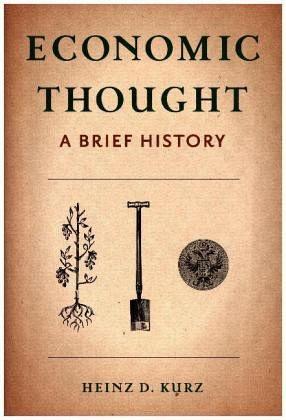
In this concise and strategic history, Heinz D. Kurz selects major moments in the development of economic ideas to portray the growth of the field and how economic insights are acquired, lost, and reborn. His timeline focuses on the dynamic individuals who give old ideas new life and the historical events that provoke the combination and recombination of different approaches and theories. Kurz takes the reader from ancient Greece to classical economics to the visionary work of Kenneth J. Arrow and Amartya Sen. Among many other topics, he explains what Adam Smith meant by an "invisible hand"; how Karl Marx's "law of motion" works in capitalist economies; the roots of Austrian economists' emphasis on the problems of information, incomplete knowledge, and uncertainty; and John Maynard Keynes's principle of effective demand and economic stabilization.