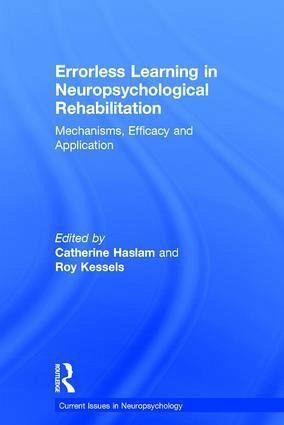
Errorless Learning in Neuropsychological Rehabilitation
Mechanisms, Efficacy and Application
Herausgeber: Haslam, Catherine; Kessels, Roy
Errorless Learning in Neuropsychological Rehabilitation
Mechanisms, Efficacy and Application
Herausgeber: Haslam, Catherine; Kessels, Roy
- Gebundenes Buch
- Merkliste
- Auf die Merkliste
- Bewerten Bewerten
- Teilen
- Produkt teilen
- Produkterinnerung
- Produkterinnerung
This definitive volume provides an up-to-date comprehensive and concise analysis of the use of Errorless Learning (EL) principles in neuro-rehabilitation.
Andere Kunden interessierten sich auch für
Sara MondiniMethodology in Neuropsychological Assessment94,99 €
Neuropsychological Evaluation of Somatoform and Other Functional Somatic Conditions214,99 €
A Handbook of Neuropsychological Assessment169,99 €
Linda ClareNeuropsychological Rehabilitation and People with Dementia172,99 €
Jaqueline Aparecida Alberti de SousaNEUROPSYCHOLOGICAL REHABILITATION IN NEURODEGENERATIVE DISEASES26,99 €
Jubin Abutalebi / Peter Mariën (eds.)Neuropsychological Research168,99 €
Clinical Neuropsychological Foundations of Schizophrenia179,99 €-
-
-
This definitive volume provides an up-to-date comprehensive and concise analysis of the use of Errorless Learning (EL) principles in neuro-rehabilitation.
Produktdetails
- Produktdetails
- Verlag: Routledge
- Seitenzahl: 224
- Erscheinungstermin: 12. Dezember 2017
- Englisch
- Abmessung: 240mm x 161mm x 17mm
- Gewicht: 505g
- ISBN-13: 9781138959248
- ISBN-10: 1138959243
- Artikelnr.: 69944671
- Herstellerkennzeichnung
- Libri GmbH
- Europaallee 1
- 36244 Bad Hersfeld
- gpsr@libri.de
- Verlag: Routledge
- Seitenzahl: 224
- Erscheinungstermin: 12. Dezember 2017
- Englisch
- Abmessung: 240mm x 161mm x 17mm
- Gewicht: 505g
- ISBN-13: 9781138959248
- ISBN-10: 1138959243
- Artikelnr.: 69944671
- Herstellerkennzeichnung
- Libri GmbH
- Europaallee 1
- 36244 Bad Hersfeld
- gpsr@libri.de
Catherine Haslam is Professor of Clinical Psychology at the University of Queensland, Australia. Roy P.C. Kessels is head of the Department of Neuropsychology and Rehabilitation Psychology and clinical neuropsychologist at the department of Medical Psychology, Radboud University, The Netherlands.
PART 1
Errorless learning: introductory, historical and theoretical overview, 1. "Make no mistake": errorless learning and its application in rehabilitation
Catherine Haslam and Roy Kessels, 2. The past, present and future of errorless learning in rehabilitation
Barbara A. Wilson and Jessica E. Fish, 3. Cognitive and neural correlates of errorless learning
Dirk Bertens and Inti A. Brazil, PART 2
Applying errorless learning in neurorehabilitation, 4. Application of errorless learning in child rehabilitation
Catherine Haslam, 5. Application of errorless learning in adult acquired brain injury rehabilitation
Jonathan Evans, 6. Application of errorless learning in dementia
Roy Kessels, 7. Application of errorless learning in the treatment of acquired communication disorders
Paul Conroy, 8. Application of errorless learning in schizophrenia
Nicolas Cabé and Julien Cabé, 9. Application of errorless learning in alcohol
related cognitive disorders
Yvonne C.M. Rensen, Hélène Beaunieux, Francis Eustache, and Anne
Lise Pitel, PART 3
Error
based approaches and comparative techniques, 10. Learning from our mistakes: effects of learning errors on memory in healthy younger and older adults
Andrée
Ann Cyr and Nicole D. Anderson, 11. Errors: friend or foe? The theory and evidence base for error
based learning
Tamara Ownsworth, 12. The tyranny of choice: can we choose between errorless learning, spaced retrieval and vanishing cues
Catherine Haslam, PART 4
Conclusion, 13. Working with error in rehabilitation practice: making the most of errorless and error
based approaches
Catherine Haslam and Roy Kessels
Errorless learning: introductory, historical and theoretical overview, 1. "Make no mistake": errorless learning and its application in rehabilitation
Catherine Haslam and Roy Kessels, 2. The past, present and future of errorless learning in rehabilitation
Barbara A. Wilson and Jessica E. Fish, 3. Cognitive and neural correlates of errorless learning
Dirk Bertens and Inti A. Brazil, PART 2
Applying errorless learning in neurorehabilitation, 4. Application of errorless learning in child rehabilitation
Catherine Haslam, 5. Application of errorless learning in adult acquired brain injury rehabilitation
Jonathan Evans, 6. Application of errorless learning in dementia
Roy Kessels, 7. Application of errorless learning in the treatment of acquired communication disorders
Paul Conroy, 8. Application of errorless learning in schizophrenia
Nicolas Cabé and Julien Cabé, 9. Application of errorless learning in alcohol
related cognitive disorders
Yvonne C.M. Rensen, Hélène Beaunieux, Francis Eustache, and Anne
Lise Pitel, PART 3
Error
based approaches and comparative techniques, 10. Learning from our mistakes: effects of learning errors on memory in healthy younger and older adults
Andrée
Ann Cyr and Nicole D. Anderson, 11. Errors: friend or foe? The theory and evidence base for error
based learning
Tamara Ownsworth, 12. The tyranny of choice: can we choose between errorless learning, spaced retrieval and vanishing cues
Catherine Haslam, PART 4
Conclusion, 13. Working with error in rehabilitation practice: making the most of errorless and error
based approaches
Catherine Haslam and Roy Kessels
PART 1
Errorless learning: introductory, historical and theoretical overview, 1. "Make no mistake": errorless learning and its application in rehabilitation
Catherine Haslam and Roy Kessels, 2. The past, present and future of errorless learning in rehabilitation
Barbara A. Wilson and Jessica E. Fish, 3. Cognitive and neural correlates of errorless learning
Dirk Bertens and Inti A. Brazil, PART 2
Applying errorless learning in neurorehabilitation, 4. Application of errorless learning in child rehabilitation
Catherine Haslam, 5. Application of errorless learning in adult acquired brain injury rehabilitation
Jonathan Evans, 6. Application of errorless learning in dementia
Roy Kessels, 7. Application of errorless learning in the treatment of acquired communication disorders
Paul Conroy, 8. Application of errorless learning in schizophrenia
Nicolas Cabé and Julien Cabé, 9. Application of errorless learning in alcohol
related cognitive disorders
Yvonne C.M. Rensen, Hélène Beaunieux, Francis Eustache, and Anne
Lise Pitel, PART 3
Error
based approaches and comparative techniques, 10. Learning from our mistakes: effects of learning errors on memory in healthy younger and older adults
Andrée
Ann Cyr and Nicole D. Anderson, 11. Errors: friend or foe? The theory and evidence base for error
based learning
Tamara Ownsworth, 12. The tyranny of choice: can we choose between errorless learning, spaced retrieval and vanishing cues
Catherine Haslam, PART 4
Conclusion, 13. Working with error in rehabilitation practice: making the most of errorless and error
based approaches
Catherine Haslam and Roy Kessels
Errorless learning: introductory, historical and theoretical overview, 1. "Make no mistake": errorless learning and its application in rehabilitation
Catherine Haslam and Roy Kessels, 2. The past, present and future of errorless learning in rehabilitation
Barbara A. Wilson and Jessica E. Fish, 3. Cognitive and neural correlates of errorless learning
Dirk Bertens and Inti A. Brazil, PART 2
Applying errorless learning in neurorehabilitation, 4. Application of errorless learning in child rehabilitation
Catherine Haslam, 5. Application of errorless learning in adult acquired brain injury rehabilitation
Jonathan Evans, 6. Application of errorless learning in dementia
Roy Kessels, 7. Application of errorless learning in the treatment of acquired communication disorders
Paul Conroy, 8. Application of errorless learning in schizophrenia
Nicolas Cabé and Julien Cabé, 9. Application of errorless learning in alcohol
related cognitive disorders
Yvonne C.M. Rensen, Hélène Beaunieux, Francis Eustache, and Anne
Lise Pitel, PART 3
Error
based approaches and comparative techniques, 10. Learning from our mistakes: effects of learning errors on memory in healthy younger and older adults
Andrée
Ann Cyr and Nicole D. Anderson, 11. Errors: friend or foe? The theory and evidence base for error
based learning
Tamara Ownsworth, 12. The tyranny of choice: can we choose between errorless learning, spaced retrieval and vanishing cues
Catherine Haslam, PART 4
Conclusion, 13. Working with error in rehabilitation practice: making the most of errorless and error
based approaches
Catherine Haslam and Roy Kessels