
Andere Kunden interessierten sich auch für
 The Night the Mountain Fell16,99 €
 On the Motion of the Heart and Blood in Animals16,99 €
 Tea Leaves24,99 €
 Railroads27,99 €
 Genealogical and historical record of the Carpenter family15,99 €
 Hardtack and Coffee36,99 €
 The Diary of a Resurrectionist, 1811-181213,99 €





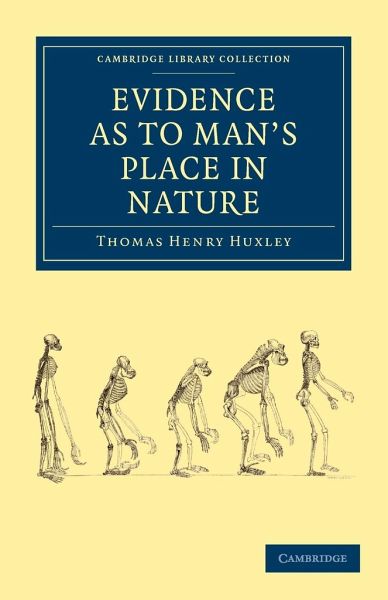
In 1863, the biologist and educator Thomas Henry Huxley published Evidence as to Man's Place in Nature, a compilation of his public lectures on Darwin's theory of evolution - specifically the controversial idea of the ape ancestry of humans. An energetic supporter of Darwin, Huxley's argues that in order to understand the universe, everyone must know their place in the natural world. The book is divided into three parts, each written with the aim of persuading lay audiences. The first covers earlier human beliefs about exotic animals, especially 'man-like' apes. In Part 2, Huxley suggests that every animal on Earth is related in that all go through developmental stages from an egg, whether the animal is 'a silkworm or a school-boy'. Part 3 involves a discussion of recently discovered Neanderthal bones and compares prehistoric craniums to modern human skulls.