
Free Will and the Brain
Herausgeber: Glannon, Walter
Free Will and the Brain
Herausgeber: Glannon, Walter
- Broschiertes Buch
- Merkliste
- Auf die Merkliste
- Bewerten Bewerten
- Teilen
- Produkt teilen
- Produkterinnerung
- Produkterinnerung
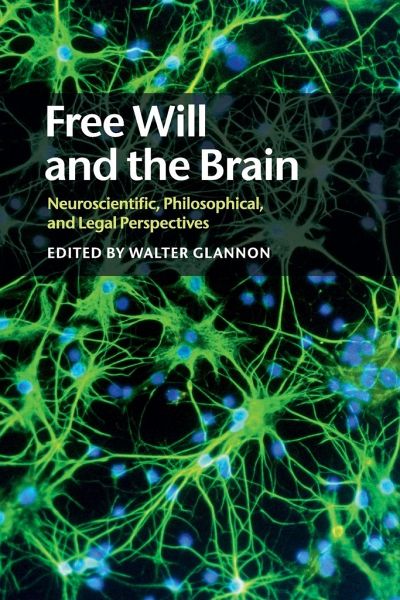
Examines how neuroscience can inform the concept of free will and associated practices of moral and criminal responsibility.
Examines how neuroscience can inform the concept of free will and associated practices of moral and criminal responsibility.
Produktdetails
- Produktdetails
- Verlag: Cambridge University Press
- Seitenzahl: 308
- Erscheinungstermin: 30. Oktober 2017
- Englisch
- Abmessung: 229mm x 152mm x 17mm
- Gewicht: 449g
- ISBN-13: 9781108449304
- ISBN-10: 1108449301
- Artikelnr.: 50444256
- Herstellerkennzeichnung
- Libri GmbH
- Europaallee 1
- 36244 Bad Hersfeld
- gpsr@libri.de
- Verlag: Cambridge University Press
- Seitenzahl: 308
- Erscheinungstermin: 30. Oktober 2017
- Englisch
- Abmessung: 229mm x 152mm x 17mm
- Gewicht: 449g
- ISBN-13: 9781108449304
- ISBN-10: 1108449301
- Artikelnr.: 50444256
- Herstellerkennzeichnung
- Libri GmbH
- Europaallee 1
- 36244 Bad Hersfeld
- gpsr@libri.de
Part I. Introduction: 1. Free will in light of neuroscience Walter Glannon;
Part II. Conceptual Issues: 2. Is free will an observer-based concept
rather than a brain-based one? A critical neuroepistemological account
Georg Northoff; 3. Evolution, dissolution and the neuroscience of the will
Grant Gillett; 4. The experience of free will and the experience of agency:
an error-prone, reconstructive process Matthis Synofzik, Gottfried Vosgerau
and Axel Lindner; Part III. Mental Capacities and Disorders of the Will: 5.
Being free by losing control: what obsessive-compulsive disorder can tell
us about free will Sanneke de Haan, Erik Rietveld and Damiaan Denys; 6.
Psychopathy and free will from a philosophical and cognitive neuroscience
perspective Farah Focquaert, Andrea L. Glenn and Adrian Raine; 7. How
mental disorders can compromise the will Gerben Meynen; 8. Are addicted
individuals responsible for their behavior? Wayne Hall and Adrian Carter;
9. Assessment and modification of free will via scientific techniques: two
challenges Nicole A. Vincent; Part IV. Neural Circuitry and Modification of
the Will: 10. Implications of functional neurosurgery and deep-brain
stimulation for free will and decision-making Nir Lipsman and Andres M.
Lozano; 11. Reducing, restoring, or enhancing autonomy with neuromodulation
techniques Maartje Schermer; Part V. Legal Implications of Neuroscience:
12. Neurobiology collides with moral and criminal responsibility: the
result is double vision Steven E. Hyman; 13. Neuroscience, free will and
criminal responsibility Stephen J. Morse.
Part II. Conceptual Issues: 2. Is free will an observer-based concept
rather than a brain-based one? A critical neuroepistemological account
Georg Northoff; 3. Evolution, dissolution and the neuroscience of the will
Grant Gillett; 4. The experience of free will and the experience of agency:
an error-prone, reconstructive process Matthis Synofzik, Gottfried Vosgerau
and Axel Lindner; Part III. Mental Capacities and Disorders of the Will: 5.
Being free by losing control: what obsessive-compulsive disorder can tell
us about free will Sanneke de Haan, Erik Rietveld and Damiaan Denys; 6.
Psychopathy and free will from a philosophical and cognitive neuroscience
perspective Farah Focquaert, Andrea L. Glenn and Adrian Raine; 7. How
mental disorders can compromise the will Gerben Meynen; 8. Are addicted
individuals responsible for their behavior? Wayne Hall and Adrian Carter;
9. Assessment and modification of free will via scientific techniques: two
challenges Nicole A. Vincent; Part IV. Neural Circuitry and Modification of
the Will: 10. Implications of functional neurosurgery and deep-brain
stimulation for free will and decision-making Nir Lipsman and Andres M.
Lozano; 11. Reducing, restoring, or enhancing autonomy with neuromodulation
techniques Maartje Schermer; Part V. Legal Implications of Neuroscience:
12. Neurobiology collides with moral and criminal responsibility: the
result is double vision Steven E. Hyman; 13. Neuroscience, free will and
criminal responsibility Stephen J. Morse.
Part I. Introduction: 1. Free will in light of neuroscience Walter Glannon;
Part II. Conceptual Issues: 2. Is free will an observer-based concept
rather than a brain-based one? A critical neuroepistemological account
Georg Northoff; 3. Evolution, dissolution and the neuroscience of the will
Grant Gillett; 4. The experience of free will and the experience of agency:
an error-prone, reconstructive process Matthis Synofzik, Gottfried Vosgerau
and Axel Lindner; Part III. Mental Capacities and Disorders of the Will: 5.
Being free by losing control: what obsessive-compulsive disorder can tell
us about free will Sanneke de Haan, Erik Rietveld and Damiaan Denys; 6.
Psychopathy and free will from a philosophical and cognitive neuroscience
perspective Farah Focquaert, Andrea L. Glenn and Adrian Raine; 7. How
mental disorders can compromise the will Gerben Meynen; 8. Are addicted
individuals responsible for their behavior? Wayne Hall and Adrian Carter;
9. Assessment and modification of free will via scientific techniques: two
challenges Nicole A. Vincent; Part IV. Neural Circuitry and Modification of
the Will: 10. Implications of functional neurosurgery and deep-brain
stimulation for free will and decision-making Nir Lipsman and Andres M.
Lozano; 11. Reducing, restoring, or enhancing autonomy with neuromodulation
techniques Maartje Schermer; Part V. Legal Implications of Neuroscience:
12. Neurobiology collides with moral and criminal responsibility: the
result is double vision Steven E. Hyman; 13. Neuroscience, free will and
criminal responsibility Stephen J. Morse.
Part II. Conceptual Issues: 2. Is free will an observer-based concept
rather than a brain-based one? A critical neuroepistemological account
Georg Northoff; 3. Evolution, dissolution and the neuroscience of the will
Grant Gillett; 4. The experience of free will and the experience of agency:
an error-prone, reconstructive process Matthis Synofzik, Gottfried Vosgerau
and Axel Lindner; Part III. Mental Capacities and Disorders of the Will: 5.
Being free by losing control: what obsessive-compulsive disorder can tell
us about free will Sanneke de Haan, Erik Rietveld and Damiaan Denys; 6.
Psychopathy and free will from a philosophical and cognitive neuroscience
perspective Farah Focquaert, Andrea L. Glenn and Adrian Raine; 7. How
mental disorders can compromise the will Gerben Meynen; 8. Are addicted
individuals responsible for their behavior? Wayne Hall and Adrian Carter;
9. Assessment and modification of free will via scientific techniques: two
challenges Nicole A. Vincent; Part IV. Neural Circuitry and Modification of
the Will: 10. Implications of functional neurosurgery and deep-brain
stimulation for free will and decision-making Nir Lipsman and Andres M.
Lozano; 11. Reducing, restoring, or enhancing autonomy with neuromodulation
techniques Maartje Schermer; Part V. Legal Implications of Neuroscience:
12. Neurobiology collides with moral and criminal responsibility: the
result is double vision Steven E. Hyman; 13. Neuroscience, free will and
criminal responsibility Stephen J. Morse.