
- Gebundenes Buch
- Merkliste
- Auf die Merkliste
- Bewerten Bewerten
- Teilen
- Produkt teilen
- Produkterinnerung
- Produkterinnerung
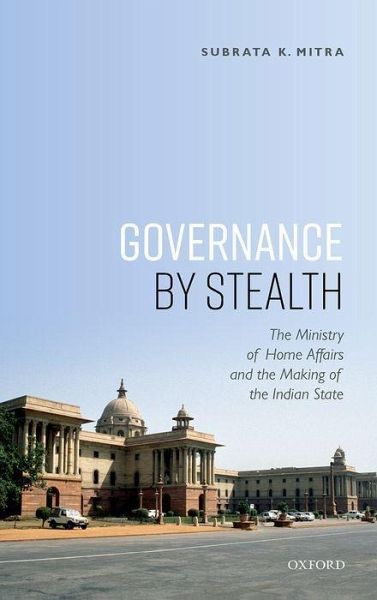
India's Ministry of Home Affairs, with its striking durability, and ability to adapt to the transition from colonial rule to post-colonial governance, is a remarkable example of institutional resilience. Home's special expertise in governance by stealth - maximum order with the use of minimum force - was instrumental for the department to acquire a secure niche within the colonial structure. Following the end of colonial rule in 1947, the Home Department, still ensconced in the majestic North Block of Delhi, mutated into the Home Ministry of the Indian Republic. How a colonial institution…mehr
Andere Kunden interessierten sich auch für
 After Liberalization") Maidul IslamIndian Muslim(s) After Liberalization50,99 €
Maidul IslamIndian Muslim(s) After Liberalization50,99 € Troubled Diversity84,99 €
 Karamjit K MalhotraThe Eighteenth Century in Sikh History74,99 €
 S. NarayanThe Dravidian Years30,99 €
 India89,99 €
 Mushirul HasanWhen Stone Walls Cry40,99 €
 PeirisTwilight of the Tigers54,99 €
-
-
-


India's Ministry of Home Affairs, with its striking durability, and ability to adapt to the transition from colonial rule to post-colonial governance, is a remarkable example of institutional resilience. Home's special expertise in governance by stealth - maximum order with the use of minimum force - was instrumental for the department to acquire a secure niche within the colonial structure. Following the end of colonial rule in 1947, the Home Department, still ensconced in the majestic North Block of Delhi, mutated into the Home Ministry of the Indian Republic. How a colonial institution whose key task was to hold Indian nationalism at bay became the architect of the post-colonial state and nation, is one of the main questions to which I respond in this book. Home's multiple roles as the keeper of public order, mentor to public services and the invisible sinews of the state that holds the noisy democracy and assertive regions together to explain its exalted status in India's governance and politics. My analysis, based on declassified files of the Ministry of Home Affairs, correspondences, biographies and interviews, explores the multiple roles of the Ministry, with its penchant for governance by stealth as my focus
Produktdetails
- Produktdetails
- Verlag: Oxford University Press
- Seitenzahl: 472
- Erscheinungstermin: 2. Februar 2022
- Englisch
- Abmessung: 224mm x 152mm x 33mm
- Gewicht: 612g
- ISBN-13: 9780199460489
- ISBN-10: 0199460485
- Artikelnr.: 61400018
- Herstellerkennzeichnung
- Libri GmbH
- Europaallee 1
- 36244 Bad Hersfeld
- gpsr@libri.de
- Verlag: Oxford University Press
- Seitenzahl: 472
- Erscheinungstermin: 2. Februar 2022
- Englisch
- Abmessung: 224mm x 152mm x 33mm
- Gewicht: 612g
- ISBN-13: 9780199460489
- ISBN-10: 0199460485
- Artikelnr.: 61400018
- Herstellerkennzeichnung
- Libri GmbH
- Europaallee 1
- 36244 Bad Hersfeld
- gpsr@libri.de
Subrata K. Mitra is Emeritus Professor of Political Science, Heidelberg University, Germany.
* Chapter One
* Governance by stealth, and, the making of India's Home Ministry
* Home's distinctive character
* Is governance by stealth an elite conspiracy?
* Why India? Order-making as State Formation: the 'Missing Link'
* Raj to Swaraj: Poachers into gamekeepers
* Ministers and civil servants: the Janus-face of the Indian state
* Home: The 'charlady' of the government, and more
* Independence and the ordeal of post-colonial chaos
* Structure of the narrative
* Sources, and the method of analysis
* Contributions of the book and its limitations
* Chapter Two
* Governance as process: Colonial legacy, hybrid norms, and
institutional arrangement
* Colonial Order: Appropriation and re-use of Indian culture
* The Structure of colonial power and its orderly unravelling
* Norms of governance by stealth and the post-colonial challenge
* Post-colonial Democracy and a dynamic, neo-institutional model of
governance
* What holds India's political system together?
* Chapter Three
* The Sentinel of Order: Home - origin, evolution, functions and
structure
* Imperial rule and Home's functional niche
* Origin and evolution
* From Department to Ministry (1947)
* The functions and Structure of the Ministry (1948)
* The internal architecture of the Ministry: Allocation of Business
Rules (1961)
* Organization of the Ministry
* The 'new look' charlady: Home - balancing authority, accountability
and compliance
* Chapter Four
* Politicians, civil servants and post-colonial Governance: Continued
synergy, despite role reversal
* Regime Change, with seamless continuity
* The challenge of leadership: Synergy of ministers and secretaries
* Ministerial leadership
* Bureaucracy: the 'Old Faithful' of Indian politics
* Ministers and Secretaries: Conflicting loyalties?
* PM- HM- HS: An Incompatible triad?
* Chapter Five
* Home at work: Re-shaping public services and integrating national
territory
* Public Order and Public Services: dual challenges for the Home
Ministry
* The challenge of re-shaping the civil service
* Recasting the colonial civil service in a national mould
* Post-partition trauma, and building of an Indian nation
* Integration by stealth: Princely states and the dilemma of
Independence
* Junagarh
* Hyderabad
* Jammu and Kashmir State
* Generous in victory: Patel stoops to conquer!
* On to the 'promised land', with Home
* Chapter Six
* Setting the Mould: Home and the 1950s
* Setting the political agenda: The Congress 'system', Home Ministry
and the 1950s
* Public services
* Reorganisation of the Machinery of Government
* Nehru and Patel: a tense duopoly
* Home at work: creation of new, innovative institutions
* The 1950s' harvest: Embryonic norms and policy outcomes of the 'new'
politics
* The 1950s: Institutionalization of governance by stealth
* Chapter Seven
* Home, beyond the foundational decade: Manifest decline, resilient
frame
* 1960s and the beginning of governmental instability: Home under
pressure
* Self-portrait of the Ministry, 1960-61
* Indo-China border war, 1962: unintended consequences for the MHA
* The growing hiatus of politics and administration: facing the
uncertainty of the 1970s
* Special measures during emergency
* Revoking Emergency: Home, redux?
* The 1980s: A decade of 'deinstitutionalization'
* India's 1984: Home at its nadir
* Beyond the Foundational Decade: Home's complex trajectory
* Chapter Eight
* Holding the state together: The Ministry of Home Affairs and India's
'unity in diversity'
* The 'rational' politics of cultural nationalism and the danger of
'Balkanization'
* Surreptitious integration: Regulating public holidays
* Censorship
* Mediation in contesting claims over regional boundaries
* Engaging insurgency through peace initiatives
* Creation of sub-States
* 'Colonization' of Union Territories
* Institutional innovation: Reorganisation of JandK militia
* President's rule: MHA and Indian States
* Punjab: limited success, despite President's rule
* India's 'Unity in Diversity', with a little help from Home's silken
threads
* Chapter Nine
* Governing the sacred: Home and the quest for collective identity
* Sacred spaces and colonial power
* The Devaswom Board: A colonial innovation
* Religion, post-independence: fundamental right and fundamental cause
of political strife
* Home, and evolution of a national language policy
* Combatting 'Communalism' through the Project of 'National
Integration'
* After Ayodhya riot (1992), what kept Bhiwandi quiet?
* Accommodating regional and sectional identities within the modern
state
* Continuing relevance of language and religion as issues in Indian
politics
* Chapter Ten
* Ultima ratio regum: Force in the making of legitimacy
* The forceful state: Home's fire power
* The gathering and processing of intelligence
* Legitimate force? An Indian dilemma
* The 'Liberation' of Goa, 1961
* Force, bound by law
* Policing the police: Lessons of the PAC (UP) revolt, 1973
* Legitimate force? Democracy's conundrum
* Chapter Eleven
* Home stymied: The Emergency regime, 1975-77, and its aftermath
* Orderly rule, emergency and due process: A symbiotic triad
* Carl Schmitt: the role of the sovereign in an emergency
* The Political context of the Emergency
* The Janata Interlude (1977-79): Home and the middle ground between
orderly rule and anti-emergency zealotry
* Emergency as conundrum: Home's cruel dilemma
* Home: Orderly rule and the legacy of the 1970s
* Chapter Twelve
* When Home Fails: Compliance and Contestation in a post-colonial state
* Assessing compliance: Three analytic narratives
* Ayodhya: demolition of the Babri mosque
* Insurgency in Jammu and Kashmir
* Maoist movements (LWE)
* Norms of governance by stealth reconsidered
* -loss of elite consensus and its impact on compliance
* -High efficacy and low trust, and non-compliance
* Home on the mend
* Rupture of orderly rule in India: cumulative or diminishing?
* Conclusion
* The Reason of State: Governance by Stealth, and beyond
* Home at work
* The logic of appropriateness and grey areas of governance
* The reason of state and the ambiguity of power
* Liberal Politics in an illiberal context: Home's challenge
* Re-enchanting the state
* Still the 'steel frame'?
* Governance by stealth, and, the making of India's Home Ministry
* Home's distinctive character
* Is governance by stealth an elite conspiracy?
* Why India? Order-making as State Formation: the 'Missing Link'
* Raj to Swaraj: Poachers into gamekeepers
* Ministers and civil servants: the Janus-face of the Indian state
* Home: The 'charlady' of the government, and more
* Independence and the ordeal of post-colonial chaos
* Structure of the narrative
* Sources, and the method of analysis
* Contributions of the book and its limitations
* Chapter Two
* Governance as process: Colonial legacy, hybrid norms, and
institutional arrangement
* Colonial Order: Appropriation and re-use of Indian culture
* The Structure of colonial power and its orderly unravelling
* Norms of governance by stealth and the post-colonial challenge
* Post-colonial Democracy and a dynamic, neo-institutional model of
governance
* What holds India's political system together?
* Chapter Three
* The Sentinel of Order: Home - origin, evolution, functions and
structure
* Imperial rule and Home's functional niche
* Origin and evolution
* From Department to Ministry (1947)
* The functions and Structure of the Ministry (1948)
* The internal architecture of the Ministry: Allocation of Business
Rules (1961)
* Organization of the Ministry
* The 'new look' charlady: Home - balancing authority, accountability
and compliance
* Chapter Four
* Politicians, civil servants and post-colonial Governance: Continued
synergy, despite role reversal
* Regime Change, with seamless continuity
* The challenge of leadership: Synergy of ministers and secretaries
* Ministerial leadership
* Bureaucracy: the 'Old Faithful' of Indian politics
* Ministers and Secretaries: Conflicting loyalties?
* PM- HM- HS: An Incompatible triad?
* Chapter Five
* Home at work: Re-shaping public services and integrating national
territory
* Public Order and Public Services: dual challenges for the Home
Ministry
* The challenge of re-shaping the civil service
* Recasting the colonial civil service in a national mould
* Post-partition trauma, and building of an Indian nation
* Integration by stealth: Princely states and the dilemma of
Independence
* Junagarh
* Hyderabad
* Jammu and Kashmir State
* Generous in victory: Patel stoops to conquer!
* On to the 'promised land', with Home
* Chapter Six
* Setting the Mould: Home and the 1950s
* Setting the political agenda: The Congress 'system', Home Ministry
and the 1950s
* Public services
* Reorganisation of the Machinery of Government
* Nehru and Patel: a tense duopoly
* Home at work: creation of new, innovative institutions
* The 1950s' harvest: Embryonic norms and policy outcomes of the 'new'
politics
* The 1950s: Institutionalization of governance by stealth
* Chapter Seven
* Home, beyond the foundational decade: Manifest decline, resilient
frame
* 1960s and the beginning of governmental instability: Home under
pressure
* Self-portrait of the Ministry, 1960-61
* Indo-China border war, 1962: unintended consequences for the MHA
* The growing hiatus of politics and administration: facing the
uncertainty of the 1970s
* Special measures during emergency
* Revoking Emergency: Home, redux?
* The 1980s: A decade of 'deinstitutionalization'
* India's 1984: Home at its nadir
* Beyond the Foundational Decade: Home's complex trajectory
* Chapter Eight
* Holding the state together: The Ministry of Home Affairs and India's
'unity in diversity'
* The 'rational' politics of cultural nationalism and the danger of
'Balkanization'
* Surreptitious integration: Regulating public holidays
* Censorship
* Mediation in contesting claims over regional boundaries
* Engaging insurgency through peace initiatives
* Creation of sub-States
* 'Colonization' of Union Territories
* Institutional innovation: Reorganisation of JandK militia
* President's rule: MHA and Indian States
* Punjab: limited success, despite President's rule
* India's 'Unity in Diversity', with a little help from Home's silken
threads
* Chapter Nine
* Governing the sacred: Home and the quest for collective identity
* Sacred spaces and colonial power
* The Devaswom Board: A colonial innovation
* Religion, post-independence: fundamental right and fundamental cause
of political strife
* Home, and evolution of a national language policy
* Combatting 'Communalism' through the Project of 'National
Integration'
* After Ayodhya riot (1992), what kept Bhiwandi quiet?
* Accommodating regional and sectional identities within the modern
state
* Continuing relevance of language and religion as issues in Indian
politics
* Chapter Ten
* Ultima ratio regum: Force in the making of legitimacy
* The forceful state: Home's fire power
* The gathering and processing of intelligence
* Legitimate force? An Indian dilemma
* The 'Liberation' of Goa, 1961
* Force, bound by law
* Policing the police: Lessons of the PAC (UP) revolt, 1973
* Legitimate force? Democracy's conundrum
* Chapter Eleven
* Home stymied: The Emergency regime, 1975-77, and its aftermath
* Orderly rule, emergency and due process: A symbiotic triad
* Carl Schmitt: the role of the sovereign in an emergency
* The Political context of the Emergency
* The Janata Interlude (1977-79): Home and the middle ground between
orderly rule and anti-emergency zealotry
* Emergency as conundrum: Home's cruel dilemma
* Home: Orderly rule and the legacy of the 1970s
* Chapter Twelve
* When Home Fails: Compliance and Contestation in a post-colonial state
* Assessing compliance: Three analytic narratives
* Ayodhya: demolition of the Babri mosque
* Insurgency in Jammu and Kashmir
* Maoist movements (LWE)
* Norms of governance by stealth reconsidered
* -loss of elite consensus and its impact on compliance
* -High efficacy and low trust, and non-compliance
* Home on the mend
* Rupture of orderly rule in India: cumulative or diminishing?
* Conclusion
* The Reason of State: Governance by Stealth, and beyond
* Home at work
* The logic of appropriateness and grey areas of governance
* The reason of state and the ambiguity of power
* Liberal Politics in an illiberal context: Home's challenge
* Re-enchanting the state
* Still the 'steel frame'?
* Chapter One
* Governance by stealth, and, the making of India's Home Ministry
* Home's distinctive character
* Is governance by stealth an elite conspiracy?
* Why India? Order-making as State Formation: the 'Missing Link'
* Raj to Swaraj: Poachers into gamekeepers
* Ministers and civil servants: the Janus-face of the Indian state
* Home: The 'charlady' of the government, and more
* Independence and the ordeal of post-colonial chaos
* Structure of the narrative
* Sources, and the method of analysis
* Contributions of the book and its limitations
* Chapter Two
* Governance as process: Colonial legacy, hybrid norms, and
institutional arrangement
* Colonial Order: Appropriation and re-use of Indian culture
* The Structure of colonial power and its orderly unravelling
* Norms of governance by stealth and the post-colonial challenge
* Post-colonial Democracy and a dynamic, neo-institutional model of
governance
* What holds India's political system together?
* Chapter Three
* The Sentinel of Order: Home - origin, evolution, functions and
structure
* Imperial rule and Home's functional niche
* Origin and evolution
* From Department to Ministry (1947)
* The functions and Structure of the Ministry (1948)
* The internal architecture of the Ministry: Allocation of Business
Rules (1961)
* Organization of the Ministry
* The 'new look' charlady: Home - balancing authority, accountability
and compliance
* Chapter Four
* Politicians, civil servants and post-colonial Governance: Continued
synergy, despite role reversal
* Regime Change, with seamless continuity
* The challenge of leadership: Synergy of ministers and secretaries
* Ministerial leadership
* Bureaucracy: the 'Old Faithful' of Indian politics
* Ministers and Secretaries: Conflicting loyalties?
* PM- HM- HS: An Incompatible triad?
* Chapter Five
* Home at work: Re-shaping public services and integrating national
territory
* Public Order and Public Services: dual challenges for the Home
Ministry
* The challenge of re-shaping the civil service
* Recasting the colonial civil service in a national mould
* Post-partition trauma, and building of an Indian nation
* Integration by stealth: Princely states and the dilemma of
Independence
* Junagarh
* Hyderabad
* Jammu and Kashmir State
* Generous in victory: Patel stoops to conquer!
* On to the 'promised land', with Home
* Chapter Six
* Setting the Mould: Home and the 1950s
* Setting the political agenda: The Congress 'system', Home Ministry
and the 1950s
* Public services
* Reorganisation of the Machinery of Government
* Nehru and Patel: a tense duopoly
* Home at work: creation of new, innovative institutions
* The 1950s' harvest: Embryonic norms and policy outcomes of the 'new'
politics
* The 1950s: Institutionalization of governance by stealth
* Chapter Seven
* Home, beyond the foundational decade: Manifest decline, resilient
frame
* 1960s and the beginning of governmental instability: Home under
pressure
* Self-portrait of the Ministry, 1960-61
* Indo-China border war, 1962: unintended consequences for the MHA
* The growing hiatus of politics and administration: facing the
uncertainty of the 1970s
* Special measures during emergency
* Revoking Emergency: Home, redux?
* The 1980s: A decade of 'deinstitutionalization'
* India's 1984: Home at its nadir
* Beyond the Foundational Decade: Home's complex trajectory
* Chapter Eight
* Holding the state together: The Ministry of Home Affairs and India's
'unity in diversity'
* The 'rational' politics of cultural nationalism and the danger of
'Balkanization'
* Surreptitious integration: Regulating public holidays
* Censorship
* Mediation in contesting claims over regional boundaries
* Engaging insurgency through peace initiatives
* Creation of sub-States
* 'Colonization' of Union Territories
* Institutional innovation: Reorganisation of JandK militia
* President's rule: MHA and Indian States
* Punjab: limited success, despite President's rule
* India's 'Unity in Diversity', with a little help from Home's silken
threads
* Chapter Nine
* Governing the sacred: Home and the quest for collective identity
* Sacred spaces and colonial power
* The Devaswom Board: A colonial innovation
* Religion, post-independence: fundamental right and fundamental cause
of political strife
* Home, and evolution of a national language policy
* Combatting 'Communalism' through the Project of 'National
Integration'
* After Ayodhya riot (1992), what kept Bhiwandi quiet?
* Accommodating regional and sectional identities within the modern
state
* Continuing relevance of language and religion as issues in Indian
politics
* Chapter Ten
* Ultima ratio regum: Force in the making of legitimacy
* The forceful state: Home's fire power
* The gathering and processing of intelligence
* Legitimate force? An Indian dilemma
* The 'Liberation' of Goa, 1961
* Force, bound by law
* Policing the police: Lessons of the PAC (UP) revolt, 1973
* Legitimate force? Democracy's conundrum
* Chapter Eleven
* Home stymied: The Emergency regime, 1975-77, and its aftermath
* Orderly rule, emergency and due process: A symbiotic triad
* Carl Schmitt: the role of the sovereign in an emergency
* The Political context of the Emergency
* The Janata Interlude (1977-79): Home and the middle ground between
orderly rule and anti-emergency zealotry
* Emergency as conundrum: Home's cruel dilemma
* Home: Orderly rule and the legacy of the 1970s
* Chapter Twelve
* When Home Fails: Compliance and Contestation in a post-colonial state
* Assessing compliance: Three analytic narratives
* Ayodhya: demolition of the Babri mosque
* Insurgency in Jammu and Kashmir
* Maoist movements (LWE)
* Norms of governance by stealth reconsidered
* -loss of elite consensus and its impact on compliance
* -High efficacy and low trust, and non-compliance
* Home on the mend
* Rupture of orderly rule in India: cumulative or diminishing?
* Conclusion
* The Reason of State: Governance by Stealth, and beyond
* Home at work
* The logic of appropriateness and grey areas of governance
* The reason of state and the ambiguity of power
* Liberal Politics in an illiberal context: Home's challenge
* Re-enchanting the state
* Still the 'steel frame'?
* Governance by stealth, and, the making of India's Home Ministry
* Home's distinctive character
* Is governance by stealth an elite conspiracy?
* Why India? Order-making as State Formation: the 'Missing Link'
* Raj to Swaraj: Poachers into gamekeepers
* Ministers and civil servants: the Janus-face of the Indian state
* Home: The 'charlady' of the government, and more
* Independence and the ordeal of post-colonial chaos
* Structure of the narrative
* Sources, and the method of analysis
* Contributions of the book and its limitations
* Chapter Two
* Governance as process: Colonial legacy, hybrid norms, and
institutional arrangement
* Colonial Order: Appropriation and re-use of Indian culture
* The Structure of colonial power and its orderly unravelling
* Norms of governance by stealth and the post-colonial challenge
* Post-colonial Democracy and a dynamic, neo-institutional model of
governance
* What holds India's political system together?
* Chapter Three
* The Sentinel of Order: Home - origin, evolution, functions and
structure
* Imperial rule and Home's functional niche
* Origin and evolution
* From Department to Ministry (1947)
* The functions and Structure of the Ministry (1948)
* The internal architecture of the Ministry: Allocation of Business
Rules (1961)
* Organization of the Ministry
* The 'new look' charlady: Home - balancing authority, accountability
and compliance
* Chapter Four
* Politicians, civil servants and post-colonial Governance: Continued
synergy, despite role reversal
* Regime Change, with seamless continuity
* The challenge of leadership: Synergy of ministers and secretaries
* Ministerial leadership
* Bureaucracy: the 'Old Faithful' of Indian politics
* Ministers and Secretaries: Conflicting loyalties?
* PM- HM- HS: An Incompatible triad?
* Chapter Five
* Home at work: Re-shaping public services and integrating national
territory
* Public Order and Public Services: dual challenges for the Home
Ministry
* The challenge of re-shaping the civil service
* Recasting the colonial civil service in a national mould
* Post-partition trauma, and building of an Indian nation
* Integration by stealth: Princely states and the dilemma of
Independence
* Junagarh
* Hyderabad
* Jammu and Kashmir State
* Generous in victory: Patel stoops to conquer!
* On to the 'promised land', with Home
* Chapter Six
* Setting the Mould: Home and the 1950s
* Setting the political agenda: The Congress 'system', Home Ministry
and the 1950s
* Public services
* Reorganisation of the Machinery of Government
* Nehru and Patel: a tense duopoly
* Home at work: creation of new, innovative institutions
* The 1950s' harvest: Embryonic norms and policy outcomes of the 'new'
politics
* The 1950s: Institutionalization of governance by stealth
* Chapter Seven
* Home, beyond the foundational decade: Manifest decline, resilient
frame
* 1960s and the beginning of governmental instability: Home under
pressure
* Self-portrait of the Ministry, 1960-61
* Indo-China border war, 1962: unintended consequences for the MHA
* The growing hiatus of politics and administration: facing the
uncertainty of the 1970s
* Special measures during emergency
* Revoking Emergency: Home, redux?
* The 1980s: A decade of 'deinstitutionalization'
* India's 1984: Home at its nadir
* Beyond the Foundational Decade: Home's complex trajectory
* Chapter Eight
* Holding the state together: The Ministry of Home Affairs and India's
'unity in diversity'
* The 'rational' politics of cultural nationalism and the danger of
'Balkanization'
* Surreptitious integration: Regulating public holidays
* Censorship
* Mediation in contesting claims over regional boundaries
* Engaging insurgency through peace initiatives
* Creation of sub-States
* 'Colonization' of Union Territories
* Institutional innovation: Reorganisation of JandK militia
* President's rule: MHA and Indian States
* Punjab: limited success, despite President's rule
* India's 'Unity in Diversity', with a little help from Home's silken
threads
* Chapter Nine
* Governing the sacred: Home and the quest for collective identity
* Sacred spaces and colonial power
* The Devaswom Board: A colonial innovation
* Religion, post-independence: fundamental right and fundamental cause
of political strife
* Home, and evolution of a national language policy
* Combatting 'Communalism' through the Project of 'National
Integration'
* After Ayodhya riot (1992), what kept Bhiwandi quiet?
* Accommodating regional and sectional identities within the modern
state
* Continuing relevance of language and religion as issues in Indian
politics
* Chapter Ten
* Ultima ratio regum: Force in the making of legitimacy
* The forceful state: Home's fire power
* The gathering and processing of intelligence
* Legitimate force? An Indian dilemma
* The 'Liberation' of Goa, 1961
* Force, bound by law
* Policing the police: Lessons of the PAC (UP) revolt, 1973
* Legitimate force? Democracy's conundrum
* Chapter Eleven
* Home stymied: The Emergency regime, 1975-77, and its aftermath
* Orderly rule, emergency and due process: A symbiotic triad
* Carl Schmitt: the role of the sovereign in an emergency
* The Political context of the Emergency
* The Janata Interlude (1977-79): Home and the middle ground between
orderly rule and anti-emergency zealotry
* Emergency as conundrum: Home's cruel dilemma
* Home: Orderly rule and the legacy of the 1970s
* Chapter Twelve
* When Home Fails: Compliance and Contestation in a post-colonial state
* Assessing compliance: Three analytic narratives
* Ayodhya: demolition of the Babri mosque
* Insurgency in Jammu and Kashmir
* Maoist movements (LWE)
* Norms of governance by stealth reconsidered
* -loss of elite consensus and its impact on compliance
* -High efficacy and low trust, and non-compliance
* Home on the mend
* Rupture of orderly rule in India: cumulative or diminishing?
* Conclusion
* The Reason of State: Governance by Stealth, and beyond
* Home at work
* The logic of appropriateness and grey areas of governance
* The reason of state and the ambiguity of power
* Liberal Politics in an illiberal context: Home's challenge
* Re-enchanting the state
* Still the 'steel frame'?