
Andere Kunden interessierten sich auch für
 Hitler's Strategic Bombing Offensive on the Eastern Front32,99 €
 Hitler's Luftwaffe Infantry29,99 €
 Hitler's RAF Collaborators31,99 €
 Hitler's Terror from the Sky19,99 €
 Special Operations Consolidated B-24 Liberators28,99 €
 Hitler's Panther Tank Battalions, 1943-194521,99 €
 RAF at the Crossroads31,99 €




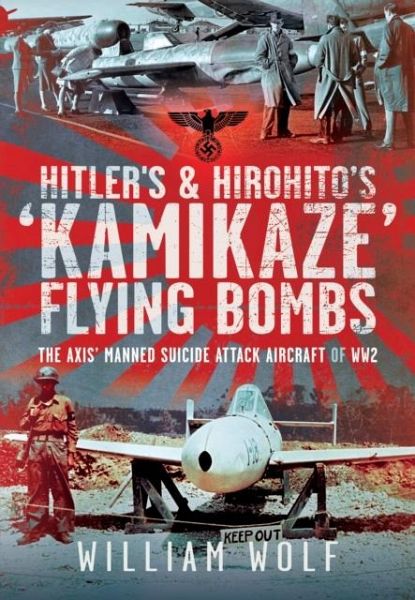
Details the development and deployment of Japan's Ohka and Germany's Reichenberg manned flying bombs during World War II. On 1 April 1945, US troops launched the largest amphibious assault of the Pacific War on the heavily-defended island of Okinawa. Supporting the invasion, the USS West Virginia participated in the bombardment of entrenched Japanese defenders. That evening, a Japanese aircraft launched a Yokosuka MXY-7 Ohka, a rocket-powered kamikaze plane. West Virginia was hit by an Ohka, becoming the first ship damaged by such a weapon. Twelve days later, the USS Mannert L. Able became the first ship sunk by an Ohka. The deployment of the Ohka was a desperate measure by Japan as the war turned against them. This manned flying bomb evolved from earlier kamikaze tactics. However, the Germans had also considered similar weapons. As early as 1944, figures close to Hitler, such as Otto Skorzeny and Hanna Reitsch, advocated for kamikaze missions. Hitler authorized the creation of the Leonidas Staffel to prepare for these attacks, leading to the development of the Messerschmitt Me 328 and Fieseler Fi 103R, also known as the Reichenberg. Though the Fi 103R began production in October 1944, the changing dynamics of the war rendered it obsolete by the time it was ready for use. The project was formally abandoned in March 1945. This book details the development of both the Ohka and Reichenberg.