
Andere Kunden interessierten sich auch für
 EVANGELIZING PRESENCE OF THE CATHOLIC CHURCH27,99 €
 ALPC PROLIFERATION AND ARMED CONFLICT IN THE MANO RIVER REGION27,99 €
 Development of the English for Public Relations course36,99 €
 IMPROVING THE COORDINATION OF HEALTH CARE STRUCTURES IN URBAN AREAS27,99 €
 Ensuring Ethical Integrity in AI-Driven Research Practices29,99 €
 Model-Driven Approaches to Analysing Time and Location47,99 €
 The Art of Mentoring29,99 €



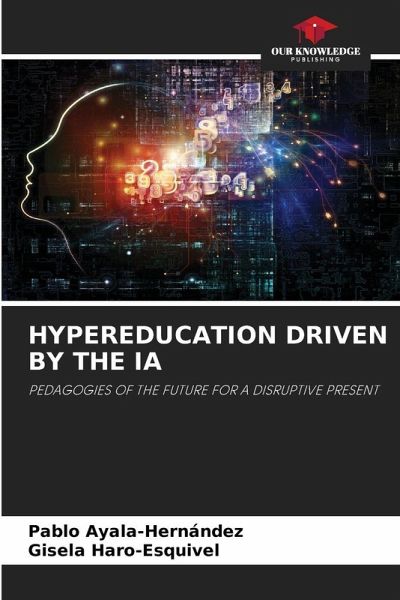
We live on the threshold of a new pedagogical era. Artificial intelligence, far from being a distant promise, already inhabits our classrooms, devices, and minds. It is not just about automation or efficiency, but about profound transformation of the act of teaching and learning. What we are witnessing is the emergence of hypereducation: an ecosystem where teachers, algorithms, data, emotions and virtual worlds coexist in real time, reconfiguring our educational practices, ethics and objectives.This book is born from a radically current question: how to educate in a present that already seems like the future? And the answer, or rather, the map, unfolds throughout these chapters. Each one explores one of the critical edges of this silent revolution: from personalized cognitive tutors, to lenses that read student engagement, to classes with social robots, neurofeedback, extended realities and predictive analytics of dropout.But beyond technologies, this book focuses on pedagogies. Because if anything remains, it is the human purpose of education: to form critical, autonomous, creative and ethical subjects.