
Andere Kunden interessierten sich auch für
 Autophagy in Immune Response: Impact on Cancer Immunotherapy118,99 €
 Cancer Vaccines as Immunotherapy of Cancer100,99 €
 Histone Modifications in Therapy124,99 €
 Towards the use of natural compounds as anti-glioma agents53,99 €
 Glioblastoma Resistance to Chemotherapy: Molecular Mechanisms and Innovative Reversal Strategies118,99 €
 New Targeting in the Reversal of Resistant Glioblastomas119,99 €
 Immunotherapy in Resistant Cancer: From the Lab Bench Work to Its Clinical Perspectives118,99 €



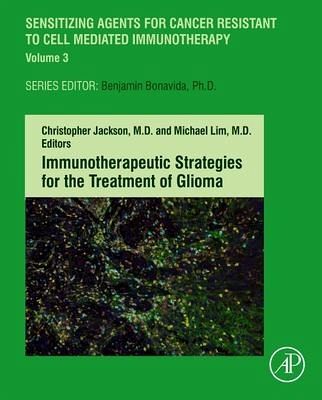
Immunotherapeutic Strategies for the Treatment of Glioma provides a review of the current state of immunotherapy for primary brain tumors. The topic is of interest to patients, clinicians, and researchers alike, particularly given the recent failure of large clinical trials. This book serves as an overview of the most promising approaches in the field and provides a foundation for considering novel and combination therapies moving forward.
The book discusses several types of immunotherapies for glioma, such as peptide, dendritic cell and heat shock protein vaccines; immune checkpoint blockade; myeloid cells as target; oncolytic viruses; and CAR T cell therapy. Additionally, it discusses the mechanisms of immune suppression in patients and immunogenomics.
This volume is a valuable source for cancer researchers, oncologists and several members of biomedical field who are interested in novel strategies to fight glioblastoma.
The book discusses several types of immunotherapies for glioma, such as peptide, dendritic cell and heat shock protein vaccines; immune checkpoint blockade; myeloid cells as target; oncolytic viruses; and CAR T cell therapy. Additionally, it discusses the mechanisms of immune suppression in patients and immunogenomics.
This volume is a valuable source for cancer researchers, oncologists and several members of biomedical field who are interested in novel strategies to fight glioblastoma.