
Andere Kunden interessierten sich auch für
 Turning the Flywheel9,99 €
 Female Entrepreneurship in Transition Economies76,99 €
 International Entrepreneurship76,99 €
 Self-Reinforcing Processes in and Among Organizations76,99 €
 Female Entrepreneurship in Transition Economies76,99 €
 Open Innovation Through Strategic Alliances76,99 €
 The Theory of Entrepreneurship91,99 €

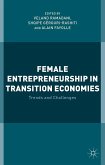

This book explores a range of theories used to explain the phenomenon of innovation and learning in individual thought, organizations, industries, and economies. The author draws on insights and perspectives from management and organization studies, economics, and cognitive science, bringing these together in a unifying framework for an analysis of innovation systems and the management of learning.
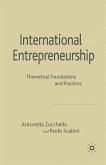
This book develops a general 'logic', or heuristic of discovery, to explain the emergence of novelty in individual thought, organizations, industries, and economies. It draws on a variety of literatures, discussing theories of organizational learning, evolutionary and institutional economics, knowledge and language. It brings these together in a unifying framework, and applies that for an analysis of innovation systems and the management of learning. Unification is based on the resource or competence-based view in economics, in combination with a theory of learning by interaction. The central theme of the book is the relation between stability and change. In business literature this theme appears in the relation between exploitation and exploration. In evolutionary economics it appears in the relation between selection and adaptation. The general heuristic shows how exploitation can provide the basis for exploration. The analysis is illustrated with many phenomena and empirical results from the different literatures.
This book develops a general 'logic', or heuristic of discovery, to explain the emergence of novelty in individual thought, organizations, industries, and economies. It draws on a variety of literatures, discussing theories of organizational learning, evolutionary and institutional economics, knowledge and language. It brings these together in a unifying framework, and applies that for an analysis of innovation systems and the management of learning. Unification is based on the resource or competence-based view in economics, in combination with a theory of learning by interaction. The central theme of the book is the relation between stability and change. In business literature this theme appears in the relation between exploitation and exploration. In evolutionary economics it appears in the relation between selection and adaptation. The general heuristic shows how exploitation can provide the basis for exploration. The analysis is illustrated with many phenomena and empirical results from the different literatures.