
Andere Kunden interessierten sich auch für
 The Billionaire's Temptation18,99 €
 The Temptation Of St. Antony. Over Strand And Field23,99 €
 The Abbot's Ghost, or Maurice Treherne's Temptation15,99 €
") The Temptation of St. Antony (Esprios Classics)22,99 €
The Temptation of St. Antony (Esprios Classics)22,99 € Temptation of the Warrior7,49 €
 The Devil's Temptation18,99 €
 The Night of Temptation18,99 €






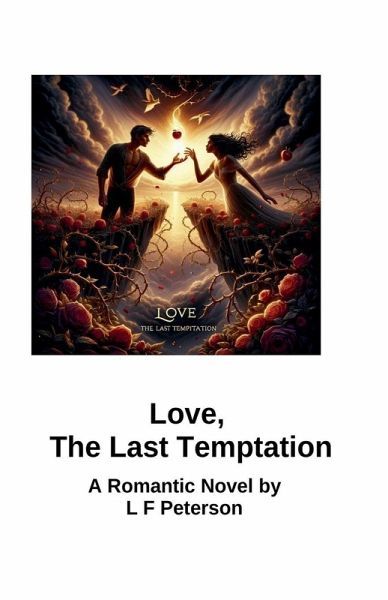
In Love, The Last Temptation, we encounter a work that transcends the conventional boundaries of romance fiction to deliver something far more unsettling and authentic - - a psychological excavation of a man who has built his identity around emotional self-preservation, only to find himself confronting the question of whether he is protecting himself or imprisoning himself. The novel's protagonist, Alex Brennan, is rendered with remarkable psychological precision. A fifty-three-year-old man bearing the scars of three failed marriages, he has retreated to a forty-acre ranch that functions less as a home and more as a fortress against further emotional devastation. The author's prose is spare yet evocative, particularly in the opening chapters where Alex's morning ritual - - coffee on the porch, dogs at his feet, land stretching endlessly before him - - establishes both the beauty and the profound loneliness of his chosen exile. What distinguishes this work from typical romance narratives is its unflinching examination of a character who may be fundamentally incompatible with romantic love. Alex is not a wounded hero waiting to be healed by the right woman; he is a man who has systematically constructed walls so high that even he cannot see over them anymore. The author's handling of the central conflict is masterful. This is not a story of star-crossed lovers kept apart by external circumstances; it is a story of two people whose needs are fundamentally incompatible. Dina needs presence, daily intimacy, integration into her established life. Alex needs space, autonomy, and the freedom to retreat into himself. The tragedy is not that they cannot be together, but that Alex cannot be the person Dina needs without erasing himself - - and perhaps more devastatingly, he doesn't love her enough to try. The novel's emotional climax arrives not with a dramatic confrontation but with a quiet, devastating question Alex asks himself: "Have I ever truly been in love?" His subsequent inventory of his three marriages reveals a pattern of loving ideas rather than people - - youth, success, normalcy - - and the realization that he has spent his adult life performing love rather than feeling it. At its core, Love, The Last Temptation is about the cost of self-protection. Alex has spent seven years building a sanctuary that might also be his prison, and the novel asks whether it is possible to dismantle such defenses without destroying the self they were built to protect. It is about the difference between loneliness and solitude, between safety and happiness, between existing and living. The novel also grapples with questions of compatibility and compromise in relationships. How much should one person sacrifice for another? When does compromise become self-erasure? Is it possible to love someone without being able to give them what they need? These are not questions the novel answers definitively, but it explores them with nuance and empathy. Perhaps most provocatively, the novel suggests that some people may be fundamentally unsuited for romantic partnership - - not because they are damaged or broken, but because they are wired differently, because their deepest needs are incompatible with the demands of intimate relationship. This is a radical proposition in a culture that treats romantic love as the ultimate human fulfillment, and the novel deserves credit for taking it seriously rather than dismissing it as a problem to be solved. The novel's greatest achievement is that it makes us understand Alex without necessarily sympathizing with him, and it makes us question whether his final choice - - whatever that choice truly is - - represents growth or capitulation. In an age of easy answers and therapeutic optimism, Love, The Last Temptation has the courage to suggest that some questions have no good answers, and that self-knowledge, however painful, may be its own form of grace.