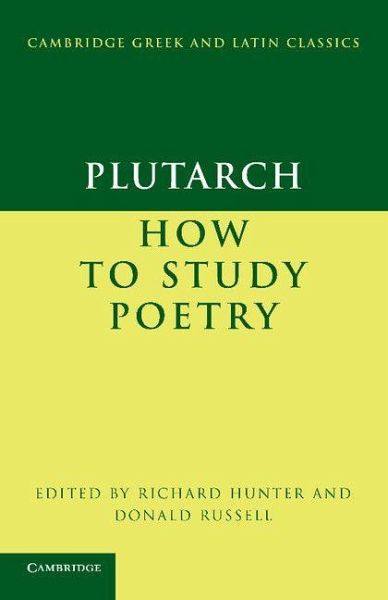
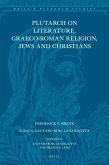
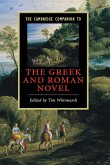
Plutarch's essay 'How to Study Poetry' offers a set of reading practices intended to remove the potential damage that poetry can do to the moral health of young readers. It opens a window on to a world of ancient education and scholarship which can seem rather alien to those brought up in the highly sophisticated world of modern literary theory and criticism. The full Introduction and Commentary, by two of the world's leading scholars in the field, trace the origins and intellectual affiliations of Plutarch's method and fully illustrate the background to each of his examples. As such this book…mehr
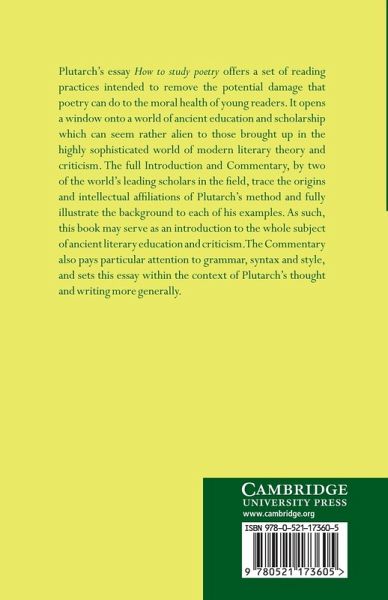
Plutarch's essay 'How to Study Poetry' offers a set of reading practices intended to remove the potential damage that poetry can do to the moral health of young readers. It opens a window on to a world of ancient education and scholarship which can seem rather alien to those brought up in the highly sophisticated world of modern literary theory and criticism. The full Introduction and Commentary, by two of the world's leading scholars in the field, trace the origins and intellectual affiliations of Plutarch's method and fully illustrate the background to each of his examples. As such this book may serve as an introduction to the whole subject of ancient reading practices and literary criticism. The Commentary also pays particular attention to grammar, syntax and style, and sets this essay within the context of Plutarch's thought and writing more generally.
Plutarch, born around AD 46 in Chaeronea, Boeotia, was a prominent Greek philosopher, historian, and biographer. He hailed from a distinguished family and pursued studies in mathematics and philosophy in Athens under the tutelage of Ammonius. Throughout his life, Plutarch maintained close relationships with notable Roman figures, reflecting his integration into both Greek and Roman societies.His most renowned work, Parallel Lives, comprises a series of biographies pairing notable Greeks and Romans to highlight their moral virtues and vices. This collection offers profound insights into human nature and has significantly influenced Western literature and thought. Additionally, Plutarch's Moralia encompasses a diverse array of essays and speeches on ethical, religious, and philosophical topics, further showcasing his intellectual versatility.Beyond his literary contributions, Plutarch served as a priest at the Temple of Apollo in Delphi, underscoring his active engagement in religious and civic life. He was also a vegetarian, reflecting his philosophical views on ethics and the treatment of animals. Plutarch's works continue to be studied for their rich historical content and enduring reflections on morality and human behavior.
Inhaltsangabe
Introduction; Text; Commentary; Bibliography; General index; Index of passages discussed.
Introduction; Text; Commentary; Bibliography; General index; Index of passages discussed.
Rezensionen
'It is one of the most informative and intriguing of the studies on ancient reading that I have encountered in some years.' Peter Toohey, Comptes Rendus
Es gelten unsere Allgemeinen Geschäftsbedingungen: www.buecher.de/agb
Impressum
www.buecher.de ist ein Internetauftritt der buecher.de internetstores GmbH
Geschäftsführung: Monica Sawhney | Roland Kölbl | Günter Hilger
Sitz der Gesellschaft: Batheyer Straße 115 - 117, 58099 Hagen
Postanschrift: Bürgermeister-Wegele-Str. 12, 86167 Augsburg
Amtsgericht Hagen HRB 13257
Steuernummer: 321/5800/1497
USt-IdNr: DE450055826