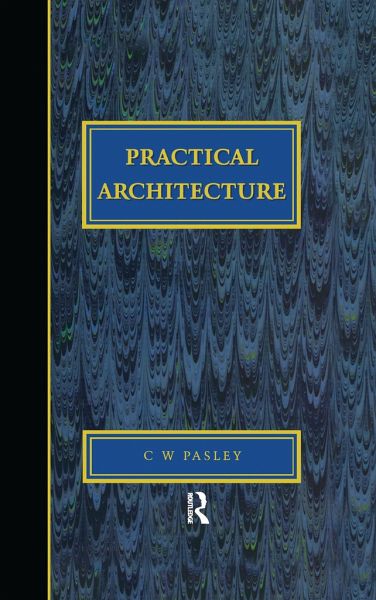
Offers information on how buildings were being constructed a hundred and fifty years ago, and the type of limes and cements that were used. This title examines the bonds in brickwork and provides coverage of different types of arches and how they are formed. It is suitable for architects, surveyors and structural engineers.
Offers information on how buildings were being constructed a hundred and fifty years ago, and the type of limes and cements that were used. This title examines the bonds in brickwork and provides coverage of different types of arches and how they are formed. It is suitable for architects, surveyors and structural engineers.
PASLEY, Charles William (1780-1861), general, royal engineers, was born on 8 September 1780 at Eskdalemuir, Dumfriesshire, Scotland, the son of a London merchant. He was educated in the school of Andrew Little of Langholm and later at Selkirk. Pasley entered the Royal Military Academy at Woolwich in 1796 and graduated the next year, receiving a commission in the royal artillery. In 1798 he was transferred to the corps of royal engineers and posted to Portsmouth. During the period 1799 to 1809, Pasley served on the east coast of England as well as in Minorca, Malta, Naples, Sicily and various European theatres of the Napoleonic Wars. He was severely wounded at the siege of Flushing during the Walcheren expedition and this incapacitated him for further combat duty. Thereafter, Pasley's career in the corps was to focus on the education of military engineers and building technology research. Pasley was made a KCB in 1846. He became colonelcommandant of the royal engineers in 1853 and a general in the army in 1860. Pasley died on 19 April 1861 at his home, 12 Norfolk Crescent, Hyde Park, London, from an ailment of the lungs. A portrait of Pasley, by Eddis, hangs in the Royal Engineers Headquarters Officers Mess at Brompton Barracks, Chatham.
Inhaltsangabe
Preliminary Observations; Remarks on obtaining water cements by artificial means; Rules for judging of the quality of bricks; That English bond ought in all cases to have the preference to Flemish bond; Plain brick arches denned; The same principles applied to the construction of parabolic arches; The subject of great arches continued. Description of the arches used in the casemates at the Citadel of Quebec, and at Dover; General remarks on the proportions of arches; Observations on the foundations of arches, and on the pressure of earth against their abutments; The same subject continued. General remarks on great arches; Supplementary remarks on arch-bricks, or bricks moulded to the arch-like form; General remarks on the chimneys of buildings; Rules for determining the dimensions of chimney breasts, &c.; Varieties in regard to the arrangement and construction of chimneys; Remarks on the difficulties attending the subject of smoky chimneys. Account of some; expedients for relieving this nuisance; Mr. Hiort's improved system of chimneys described; Description of the hollow brick walls sometimes adopted as a security against damp; The same subject continued. Correction of an inaccuracy in the preceding article in consequence of further experience, on the subject. That not only Aberthaw lime, but the blue lias of Lyme Regis, and the Dorking lime, may be considered as cements, and used accordingly; Further remarks on the thickness proper for the walls of brick buildings; Practical examples of the thickness of walls of inclosure; The tools and implements used; Of scaffolding; The same subject continued. Of extra charges allowed for the nicer parts of bricklayer's work; The same subject continued. Remarks on the measurement of brickwork. That the practice of measuring by the rod or yard ought to be abolished, and that all brickwork ought to be measured by the foot; Of contracts for the execution of buildings for a specific sum. Of the precautions necessary to insure the proper fulfilment of such contracts; The same subject continued. Of the system of contracts adopted by His Majesty's Board of Works in London; General rules for forming the estimate of the brickwork and foundations of a building; Supplementary remarks, correcting an omission on the subject of chimneys. The conclusion of brickwork
Preliminary Observations; Remarks on obtaining water cements by artificial means; Rules for judging of the quality of bricks; That English bond ought in all cases to have the preference to Flemish bond; Plain brick arches denned; The same principles applied to the construction of parabolic arches; The subject of great arches continued. Description of the arches used in the casemates at the Citadel of Quebec, and at Dover; General remarks on the proportions of arches; Observations on the foundations of arches, and on the pressure of earth against their abutments; The same subject continued. General remarks on great arches; Supplementary remarks on arch-bricks, or bricks moulded to the arch-like form; General remarks on the chimneys of buildings; Rules for determining the dimensions of chimney breasts, &c.; Varieties in regard to the arrangement and construction of chimneys; Remarks on the difficulties attending the subject of smoky chimneys. Account of some; expedients for relieving this nuisance; Mr. Hiort's improved system of chimneys described; Description of the hollow brick walls sometimes adopted as a security against damp; The same subject continued. Correction of an inaccuracy in the preceding article in consequence of further experience, on the subject. That not only Aberthaw lime, but the blue lias of Lyme Regis, and the Dorking lime, may be considered as cements, and used accordingly; Further remarks on the thickness proper for the walls of brick buildings; Practical examples of the thickness of walls of inclosure; The tools and implements used; Of scaffolding; The same subject continued. Of extra charges allowed for the nicer parts of bricklayer's work; The same subject continued. Remarks on the measurement of brickwork. That the practice of measuring by the rod or yard ought to be abolished, and that all brickwork ought to be measured by the foot; Of contracts for the execution of buildings for a specific sum. Of the precautions necessary to insure the proper fulfilment of such contracts; The same subject continued. Of the system of contracts adopted by His Majesty's Board of Works in London; General rules for forming the estimate of the brickwork and foundations of a building; Supplementary remarks, correcting an omission on the subject of chimneys. The conclusion of brickwork
Es gelten unsere Allgemeinen Geschäftsbedingungen: www.buecher.de/agb
Impressum
www.buecher.de ist ein Internetauftritt der buecher.de internetstores GmbH
Geschäftsführung: Monica Sawhney | Roland Kölbl | Günter Hilger
Sitz der Gesellschaft: Batheyer Straße 115 - 117, 58099 Hagen
Postanschrift: Bürgermeister-Wegele-Str. 12, 86167 Augsburg
Amtsgericht Hagen HRB 13257
Steuernummer: 321/5800/1497
USt-IdNr: DE450055826