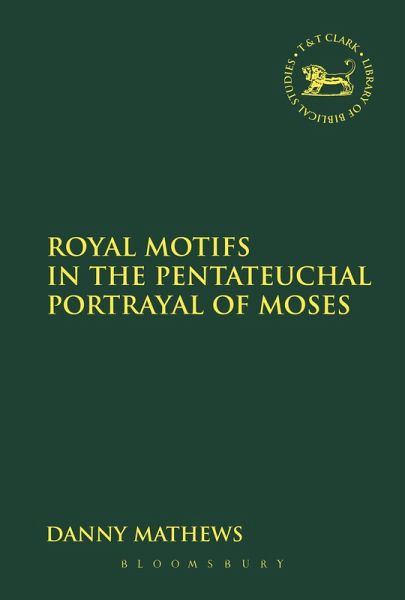
Moses is portrayed through the use of royal motifs, such as his abandonment at birth, flight from Pharaoh, portrayal as a shepherd, as a semi-divine figure, temple builder, military general, and lawgiver. These well-known motifs that have been typically used to depict four famous rulers in the ancient Near East, Hammurabi, Esarhaddon, Nabonidus, and Cyrus, have been adapted by the authors of the Pentateuch to affirm Moses as a more ancient leader, whose work has resulted in the constitution of the community of Israel. As a result, Israel's identity and enduring existence rest upon the authority and legacy of Moses.…mehr
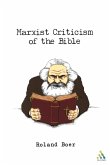
Moses is portrayed through the use of royal motifs, such as his abandonment at birth, flight from Pharaoh, portrayal as a shepherd, as a semi-divine figure, temple builder, military general, and lawgiver. These well-known motifs that have been typically used to depict four famous rulers in the ancient Near East, Hammurabi, Esarhaddon, Nabonidus, and Cyrus, have been adapted by the authors of the Pentateuch to affirm Moses as a more ancient leader, whose work has resulted in the constitution of the community of Israel. As a result, Israel's identity and enduring existence rest upon the authority and legacy of Moses.
Chapter One: "Who am I?": Unraveling the Mystery of Moses I. Introduction II. Moses in Classical Sources A. The Portrayal of Moses in Early Hellenistic Sources B. Philo's Portrait of Moses C. Josephus' Portrayal of Moses D. Conclusion III. Moses in Modern Critical Scholarship A. Modernizing Moses B. Moses and Methodology C. Recent Studies of Moses IV. Conclusion Chapter Two: Royal Motifs in the Pentateuchal Portrayal of Moses: An Overview I. Introduction II. Survey of the Portrayal of Moses in thePentateuch A. The Birth and Abandonment of Moses B. Beauty and Health C The name "Moses" D. Flight and Exile E. Shepherd F. Private Commissioning G. Public Emergence and Controversy H. Divinity I. Military Success J. Temple builder K. Lawgiving and Covenant-making L. Judge M. Humility N. Intercessor and Appeaser O. Succession by Joshua III. Clustering of Motifs A. Hammurabi B. Esarhaddon C. Nabonidus D. Cyrus IV. Conclusion Chapter Three: "I have made you God to Pharaoh": The Portrayal of Moses in Exodus 1:1-7:7 I. Introduction II. The Birth of Moses: Exod 2:1-10 III. Moses' Flight and Sojourn in Midian (Exod 2:11-22) IV. Private Commissioning and Divine Empowerment of a Royal Deliverer (Exod 3:1-4:17) A. The Commissioning of Moses and Jeremiah B. The Commissioning of Moses and Gideon C. The Commissioning of Saul and Moses V. Public Emergence and Controversy VI. Conclusion Chapter Four: "It is an Awesome Thing that I will do with You": The Portrayal of Moses in the Wilderness Episodes I. Introduction II. Exaltation of King and Deity at Sinai III. The Royal Tasks of Lawgiving and Covenant-making IV. Temple Building and Cultic Oversight as a Royal Task V. "You will impart some of your majesty to him": Death of the Leader and Succession CONCLUSION I. Moses as Prophet? II. "Man of God" III. "Servant of the Lord" pasting
Chapter One: "Who am I?": Unraveling the Mystery of Moses I. Introduction II. Moses in Classical Sources A. The Portrayal of Moses in Early Hellenistic Sources B. Philo's Portrait of Moses C. Josephus' Portrayal of Moses D. Conclusion III. Moses in Modern Critical Scholarship A. Modernizing Moses B. Moses and Methodology C. Recent Studies of Moses IV. Conclusion Chapter Two: Royal Motifs in the Pentateuchal Portrayal of Moses: An Overview I. Introduction II. Survey of the Portrayal of Moses in thePentateuch A. The Birth and Abandonment of Moses B. Beauty and Health C The name "Moses" D. Flight and Exile E. Shepherd F. Private Commissioning G. Public Emergence and Controversy H. Divinity I. Military Success J. Temple builder K. Lawgiving and Covenant-making L. Judge M. Humility N. Intercessor and Appeaser O. Succession by Joshua III. Clustering of Motifs A. Hammurabi B. Esarhaddon C. Nabonidus D. Cyrus IV. Conclusion Chapter Three: "I have made you God to Pharaoh": The Portrayal of Moses in Exodus 1:1-7:7 I. Introduction II. The Birth of Moses: Exod 2:1-10 III. Moses' Flight and Sojourn in Midian (Exod 2:11-22) IV. Private Commissioning and Divine Empowerment of a Royal Deliverer (Exod 3:1-4:17) A. The Commissioning of Moses and Jeremiah B. The Commissioning of Moses and Gideon C. The Commissioning of Saul and Moses V. Public Emergence and Controversy VI. Conclusion Chapter Four: "It is an Awesome Thing that I will do with You": The Portrayal of Moses in the Wilderness Episodes I. Introduction II. Exaltation of King and Deity at Sinai III. The Royal Tasks of Lawgiving and Covenant-making IV. Temple Building and Cultic Oversight as a Royal Task V. "You will impart some of your majesty to him": Death of the Leader and Succession CONCLUSION I. Moses as Prophet? II. "Man of God" III. "Servant of the Lord" pasting
Es gelten unsere Allgemeinen Geschäftsbedingungen: www.buecher.de/agb
Impressum
www.buecher.de ist ein Internetauftritt der buecher.de internetstores GmbH
Geschäftsführung: Monica Sawhney | Roland Kölbl | Günter Hilger
Sitz der Gesellschaft: Batheyer Straße 115 - 117, 58099 Hagen
Postanschrift: Bürgermeister-Wegele-Str. 12, 86167 Augsburg
Amtsgericht Hagen HRB 13257
Steuernummer: 321/5800/1497
USt-IdNr: DE450055826