
Andere Kunden interessierten sich auch für
 Supporting Shrinkage93,99 €
 Role of NGOs in Supporting CBOs for Sustaining Community Development36,99 €
 U.S. Department of Homeland Security Contract and Grant Spending and the Supporting Industrial Base, 2004-201364,99 €
 The Role of Swiss Neutrality in the Context of Supporting Economic Sanctions of the European Union15,95 €
 Supporting Shrinkage34,99 €
 Impact of supporting schemes and of the electricity prices on PV33,99 €
![]() "Supporting Diversity - Strengthening Cohesion" - Multiculturalism in Germany17,95 €
"Supporting Diversity - Strengthening Cohesion" - Multiculturalism in Germany17,95 €





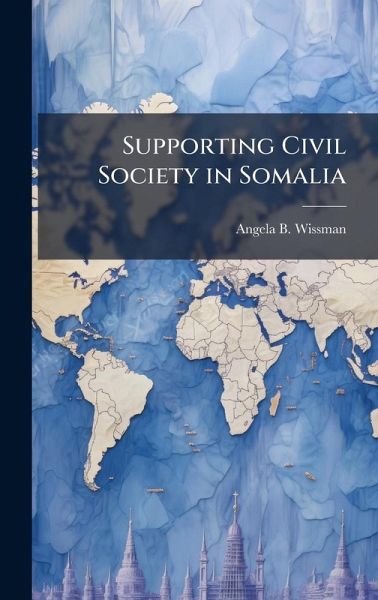
The international community intervened repeatedly in Somalia since the central government fell in 1991. These interventions failed to produce a stable, elected government. Instead, over the last 20 years Somalis faced famine, terrorism, sexual violence and lack of basic public services. Somalia's problems stem from lack political unity and rule of corrupt elites who misappropriate foreign aid and national resources. However, even with the pressures of the last two decades, parts of Somali society prospered and show the development of civil society that would serve as counterweights to a predatory government. The international community and the US should provide support around the edges of Somali politics and society. Actively engaging the center through a brokered peace deal or lengthy military occupation invites corruption and mistrust. Aggressive intervention such as establishing an international administration over Somalia would unnecessarily cause friction. It also would delay Somalia's development as a unified, strong country. Numerous Somalis possess the technical ability to run a government. What is missing is accountability. This work has been selected by scholars as being culturally important, and is part of the knowledge base of civilization as we know it. This work was reproduced from the original artifact, and remains as true to the original work as possible. Therefore, you will see the original copyright references, library stamps (as most of these works have been housed in our most important libraries around the world), and other notations in the work. This work is in the public domain in the United States of America, and possibly other nations. Within the United States, you may freely copy and distribute this work, as no entity (individual or corporate) has a copyright on the body of the work. As a reproduction of a historical artifact, this work may contain missing or blurred pages, poor pictures, errant marks, etc. Scholars believe, and we concur, that this work is important enough to be preserved, reproduced, and made generally available to the public. We appreciate your support of the preservation process, and thank you for being an important part of keeping this knowledge alive and relevant.