
Andere Kunden interessierten sich auch für
 Synthetic Sorbent Materials Based on Metal Sulphides and Oxides68,99 €
 Nanocellulose and Its Composites for Water Treatment Applications76,99 €
 The Answer Key43,99 €
 Physical Chemistry for Engineers110,99 €
 Environmental Chemistry of Arsenic85,99 €
 Mechanical Behavior of Advanced Materials67,99 €
 Literature Of Analytical Chemistry71,99 €


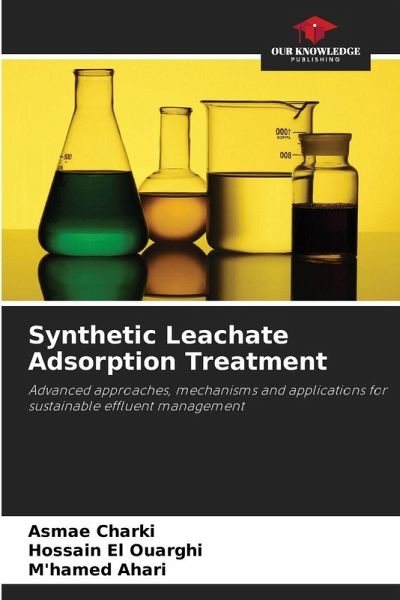
The study assesses the feasibility of treating synthetic leachate by adsorption on bentonite, a natural material with remarkable adsorptive properties. The main objective is to reduce the leachate pollutant load, in particular chemical oxygen demand (COD) and certain inorganic ions (NH , NO -, NO2- and PO ³-), in order to facilitate a possible combination with a photochemical oxidation process. Experiments were carried out in batch mode, varying several parameters including bentonite dose, contact time, initial concentration and temperature. The results show that adsorption efficiency increases with time and temperature, reaching maximum reductions of 63% for COD and variable rates for other pollutants after 24 hours of agitation at 35°C. Two treatment strategies can be considered: prolonged reaction time at room temperature or accelerated adsorption at higher temperatures. The study highlights the potential of bentonite as an adsorbent for leachate pre-treatment, offering a significant reduction in organic and inorganic pollutants.