82,99 €
inkl. MwSt.
Versandkostenfrei*Erscheint vorauss. Mai 2026
Melden Sie sich
hier
hier
für den Produktalarm an, um über die Verfügbarkeit des Produkts informiert zu werden.

41 °P sammeln
Andere Kunden interessierten sich auch für
 Basic Income-What, Why, and How?98,99 €
 The Basic Economic System of China83,99 €
 Basic Income-What, Why, and How?98,99 €
 The Palgrave International Handbook of Basic Income137,99 €
 The Basic Economic System of China83,99 €
 Basic Income, Disability Pensions and the Australian Political Economy61,99 €
 Green Gamification. The basic knowledge18,95 €
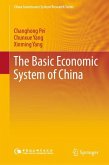
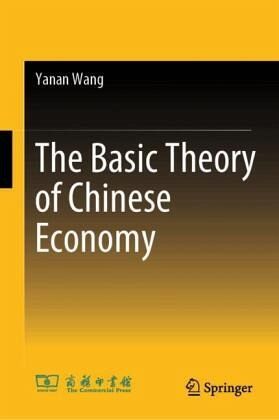
This book is authored by Chinese economist Yanan Wang. It provides a systematic analysis of the modern Chinese economy by adopting comprehensive, developmental, and comparative methodologies. The work elucidates the interconnections among key economic concepts such as goods, value, money, capital, profit, interest, wages, rent, and panic within the historical context of China s semi-colonial society in 1946.
Drawing on modern Chinese economic history, this book investigates how feudal economic remnants, perpetuated by Chinese landlords, impeded the development of modern national capitalism. By appropriately applying core theories of capital and employing dialectical materialism, the author guides the analysis from partial to holistic perspectives and from qualitative to quantitative approaches, thereby clarifying the complex economic phenomena of modern China. This book enhances readers' understanding of modern Chinese history and the origins of China s post-1949 economic policies.
Drawing on modern Chinese economic history, this book investigates how feudal economic remnants, perpetuated by Chinese landlords, impeded the development of modern national capitalism. By appropriately applying core theories of capital and employing dialectical materialism, the author guides the analysis from partial to holistic perspectives and from qualitative to quantitative approaches, thereby clarifying the complex economic phenomena of modern China. This book enhances readers' understanding of modern Chinese history and the origins of China s post-1949 economic policies.