
Andere Kunden interessierten sich auch für
 The Art Thief9,99 €
 The Art Thief14,90 €
 Somebody's Daughter23,99 €
 The ignorance of the lemmings - App lemmings, Cardriver lemmings, Dog owner lemmings, Waste lemmings, Landlord lemmings, Autism,18,00 €
 The ignorance of the lemmings - App lemmings, Cardriver lemmings, Dog owner lemmings, Waste lemmings, Landlord lemmings, Autism,12,00 €
 The American Nightmare and the Art of Failure23,99 €
 The Season20,99 €
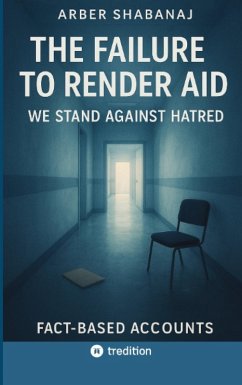
The Failure to Render Aid (We Stand Against Hatred) is a powerful nonfiction work that sheds light on the hidden wounds of modern Europe. Through five true and meticulously documented accounts, Arber Shabanaj reveals the faces of discrimination, bureaucratic failure, and the quiet endurance of those who continue to hope when justice remains silent. Each story stands on its own yet forms part of a larger moral landscape. A twelve-year-old boy recounts how a simple bike ride turned into a lesson in injustice and indifference. A father reflects on his son's humiliation at school and the quiet persistence of prejudice in a society that calls itself inclusive. Another account follows a refugee who receives his long-awaited apartment - only to discover that even sunlight can be taken away. In a fourth, a family's experience of medical negligence exposes the dangers of institutional arrogance and linguistic barriers. Together, these narratives reveal the human cost of looking away. Written in clear, poetic prose, Shabanaj's work moves beyond mere reportage. It transforms pain into understanding and outrage into reflection. The author's voice is both calm and courageous - neither accusing nor pleading, but bearing witness with dignity and compassion. At a time when Europe is wrestling with questions of identity, migration, and moral responsibility, Three Scars and No Justice offers a deeply human perspective. It calls upon readers, policymakers, and educators to confront uncomfortable truths and to see dignity not as privilege, but as a universal right. Shabanaj's writing stands at the intersection of documentary realism and literary expression. His stories are based on verified events, yet they resonate far beyond their factual core - reminding us that empathy, courage, and truth are not political ideals, but the foundations of humanity itself. Both intimate and universal, this work is a mirror held up to Europe's conscience - inviting us to listen, to reflect, and to remember that even the smallest voice deserves to be heard.