
Andere Kunden interessierten sich auch für
 Megalopolis: The Giant City in History113,99 €
 Megalopolis: The Giant City in History113,99 €
 Transatlantic Voyages and Sociology177,99 €
 Transatlantic Voyages and Sociology62,99 €
 The Giant Crab And Other Tales From Old India11,99 €
 Transatlantic Parallaxes131,99 €
 Imagining Transatlantic Slavery38,99 €


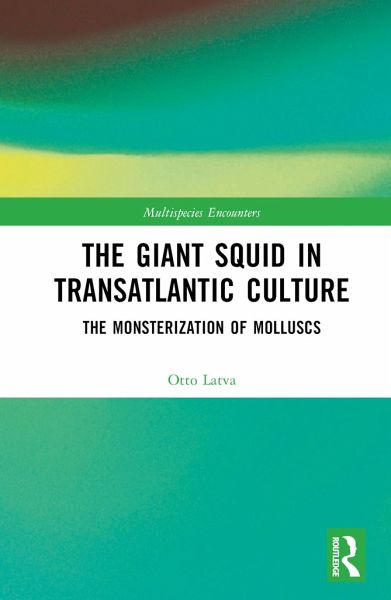
Drawing on a range of sources, this book explores the historical relationship between sea animals and humans, demonstrating that far from being an age-old fear with its origins among seafarers, the conception of the giant squid as deep-sea monster evolved as a product of Enlightenment thinking in the work of zoologists and popular writers.
"This bold, original book is the history of a shared relationship between two intelligent, social species with entangled pasts - yet who are utterly alien to each other. It takes us on a deep, spectral journey, fathoming brand new territory in Human Animal Studies, environmental history, Transatlantic Studies, and Enlightenment historiography. We follow the squid into interdisciplinary depths, pursue subterranean archives, chart sea flows that connect an international transatlantic world. Fundamentally, we are shown that it was not the squid who was the monster but our own human imaginative hunger."
Sandra Swart, Stellenbosch University, South Africa
Sandra Swart, Stellenbosch University, South Africa