The International Human Rights Judiciary and National Parliaments
Herausgeber: Saul, Matthew; Ulfstein, Geir; Follesdal, Andreas
The International Human Rights Judiciary and National Parliaments
Herausgeber: Saul, Matthew; Ulfstein, Geir; Follesdal, Andreas
- Gebundenes Buch
- Merkliste
- Auf die Merkliste
- Bewerten Bewerten
- Teilen
- Produkt teilen
- Produkterinnerung
- Produkterinnerung
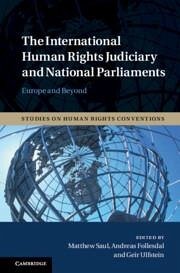
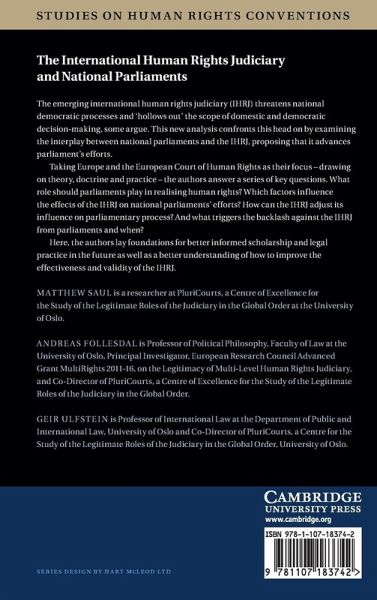
Saul, Follesdal and Ulfstein examine in detail the interplay between national parliaments and the international human rights judiciary.
Andere Kunden interessierten sich auch für
Vladislava StoyanovaPositive Obligations Under the European Convention on Human Rights146,99 €
Chris KendallBetween Possibility and Peril59,99 €
Martin GarbusThe Next 25 Years16,99 €
Robert MckeeverThe United States Supreme Court103,99 €
Pertti AlasuutariNational Parliaments as a Global Institution108,99 €
Lawrence BaumThe Company They Keep35,99 €
National Parliaments and the European Union221,99 €-
-
-
Saul, Follesdal and Ulfstein examine in detail the interplay between national parliaments and the international human rights judiciary.
Produktdetails
- Produktdetails
- Verlag: Cambridge University Press
- Seitenzahl: 415
- Erscheinungstermin: 12. Oktober 2017
- Englisch
- Abmessung: 229mm x 150mm x 28mm
- Gewicht: 699g
- ISBN-13: 9781107183742
- ISBN-10: 110718374X
- Artikelnr.: 47970046
- Herstellerkennzeichnung
- Libri GmbH
- Europaallee 1
- 36244 Bad Hersfeld
- gpsr@libri.de
- Verlag: Cambridge University Press
- Seitenzahl: 415
- Erscheinungstermin: 12. Oktober 2017
- Englisch
- Abmessung: 229mm x 150mm x 28mm
- Gewicht: 699g
- ISBN-13: 9781107183742
- ISBN-10: 110718374X
- Artikelnr.: 47970046
- Herstellerkennzeichnung
- Libri GmbH
- Europaallee 1
- 36244 Bad Hersfeld
- gpsr@libri.de
Introduction Matthew Saul, Andreas Follesdal and Geir Ulfstein; Part I. The
Human Rights Role of Parliaments: 1. A transnational separation of powers?
Geir Ulfstein; 2. Effective parliamentary oversight of human rights Kirsten
Roberts Lyer and Philippa Webb; 3. Citizens' deliberation and human rights
Jürg Steiner; Part II. The International Human Rights Judiciary in the
Practice of Parliaments: 4. Parliaments as compliance partners in the
European convention on human rights system Alice Donald; 5. Parliamentary
interpretation and application of European human rights law Theresa
Squatrito; Part III. National Parliaments in the Practice of the
International Human Rights Judiciary: 6. How and when can the international
human rights judiciary promote the human rights role of national
parliaments? Matthew Saul; 7. Obligations to 'secure' the rights of the
Convention in an 'effective political democracy': how should parliaments
and domestic courts interact? Amrei Müller; 8. Shifting emergencies from
the political to the legal sphere: placing the United Kingdom's derogations
from the ECHR in historical context Colin Murray; 9. The role of the
European Court of Human Rights in facilitating legislative change in cases
of long-term delays in implementation Nino Tsereteli; 10. The
Inter-American Court of Human Rights and the mobilisation of parliaments
Leiv Marsteintredet; Part IV. Managing Relations between Parliaments and
the International Human Rights Judiciary: 11. Democratic override (or
rejection) and the authority of the Strasbourg court - the UK parliament
and prisoner voting Ed Bates; 12. Saying 'no' to Strasbourg - when are
national parliaments justified in refusing to give effect to judgments of
international human rights courts? Colm O'Cinneide; 13. Law making by law
breaking? A theory of parliamentary civil disobedience against
international human rights courts Andreas Follesdal; 14. Conclusion: how
does, could, and should the international human rights judiciary interact
with national parliaments? Matthew Saul.
Human Rights Role of Parliaments: 1. A transnational separation of powers?
Geir Ulfstein; 2. Effective parliamentary oversight of human rights Kirsten
Roberts Lyer and Philippa Webb; 3. Citizens' deliberation and human rights
Jürg Steiner; Part II. The International Human Rights Judiciary in the
Practice of Parliaments: 4. Parliaments as compliance partners in the
European convention on human rights system Alice Donald; 5. Parliamentary
interpretation and application of European human rights law Theresa
Squatrito; Part III. National Parliaments in the Practice of the
International Human Rights Judiciary: 6. How and when can the international
human rights judiciary promote the human rights role of national
parliaments? Matthew Saul; 7. Obligations to 'secure' the rights of the
Convention in an 'effective political democracy': how should parliaments
and domestic courts interact? Amrei Müller; 8. Shifting emergencies from
the political to the legal sphere: placing the United Kingdom's derogations
from the ECHR in historical context Colin Murray; 9. The role of the
European Court of Human Rights in facilitating legislative change in cases
of long-term delays in implementation Nino Tsereteli; 10. The
Inter-American Court of Human Rights and the mobilisation of parliaments
Leiv Marsteintredet; Part IV. Managing Relations between Parliaments and
the International Human Rights Judiciary: 11. Democratic override (or
rejection) and the authority of the Strasbourg court - the UK parliament
and prisoner voting Ed Bates; 12. Saying 'no' to Strasbourg - when are
national parliaments justified in refusing to give effect to judgments of
international human rights courts? Colm O'Cinneide; 13. Law making by law
breaking? A theory of parliamentary civil disobedience against
international human rights courts Andreas Follesdal; 14. Conclusion: how
does, could, and should the international human rights judiciary interact
with national parliaments? Matthew Saul.
Introduction Matthew Saul, Andreas Follesdal and Geir Ulfstein; Part I. The
Human Rights Role of Parliaments: 1. A transnational separation of powers?
Geir Ulfstein; 2. Effective parliamentary oversight of human rights Kirsten
Roberts Lyer and Philippa Webb; 3. Citizens' deliberation and human rights
Jürg Steiner; Part II. The International Human Rights Judiciary in the
Practice of Parliaments: 4. Parliaments as compliance partners in the
European convention on human rights system Alice Donald; 5. Parliamentary
interpretation and application of European human rights law Theresa
Squatrito; Part III. National Parliaments in the Practice of the
International Human Rights Judiciary: 6. How and when can the international
human rights judiciary promote the human rights role of national
parliaments? Matthew Saul; 7. Obligations to 'secure' the rights of the
Convention in an 'effective political democracy': how should parliaments
and domestic courts interact? Amrei Müller; 8. Shifting emergencies from
the political to the legal sphere: placing the United Kingdom's derogations
from the ECHR in historical context Colin Murray; 9. The role of the
European Court of Human Rights in facilitating legislative change in cases
of long-term delays in implementation Nino Tsereteli; 10. The
Inter-American Court of Human Rights and the mobilisation of parliaments
Leiv Marsteintredet; Part IV. Managing Relations between Parliaments and
the International Human Rights Judiciary: 11. Democratic override (or
rejection) and the authority of the Strasbourg court - the UK parliament
and prisoner voting Ed Bates; 12. Saying 'no' to Strasbourg - when are
national parliaments justified in refusing to give effect to judgments of
international human rights courts? Colm O'Cinneide; 13. Law making by law
breaking? A theory of parliamentary civil disobedience against
international human rights courts Andreas Follesdal; 14. Conclusion: how
does, could, and should the international human rights judiciary interact
with national parliaments? Matthew Saul.
Human Rights Role of Parliaments: 1. A transnational separation of powers?
Geir Ulfstein; 2. Effective parliamentary oversight of human rights Kirsten
Roberts Lyer and Philippa Webb; 3. Citizens' deliberation and human rights
Jürg Steiner; Part II. The International Human Rights Judiciary in the
Practice of Parliaments: 4. Parliaments as compliance partners in the
European convention on human rights system Alice Donald; 5. Parliamentary
interpretation and application of European human rights law Theresa
Squatrito; Part III. National Parliaments in the Practice of the
International Human Rights Judiciary: 6. How and when can the international
human rights judiciary promote the human rights role of national
parliaments? Matthew Saul; 7. Obligations to 'secure' the rights of the
Convention in an 'effective political democracy': how should parliaments
and domestic courts interact? Amrei Müller; 8. Shifting emergencies from
the political to the legal sphere: placing the United Kingdom's derogations
from the ECHR in historical context Colin Murray; 9. The role of the
European Court of Human Rights in facilitating legislative change in cases
of long-term delays in implementation Nino Tsereteli; 10. The
Inter-American Court of Human Rights and the mobilisation of parliaments
Leiv Marsteintredet; Part IV. Managing Relations between Parliaments and
the International Human Rights Judiciary: 11. Democratic override (or
rejection) and the authority of the Strasbourg court - the UK parliament
and prisoner voting Ed Bates; 12. Saying 'no' to Strasbourg - when are
national parliaments justified in refusing to give effect to judgments of
international human rights courts? Colm O'Cinneide; 13. Law making by law
breaking? A theory of parliamentary civil disobedience against
international human rights courts Andreas Follesdal; 14. Conclusion: how
does, could, and should the international human rights judiciary interact
with national parliaments? Matthew Saul.