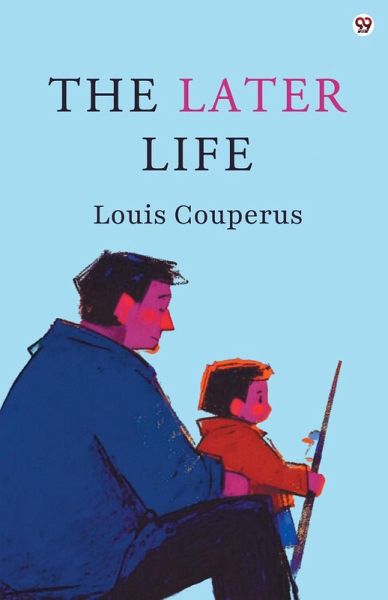
The Later Life explores a man as he grapples with the discontent and dissatisfaction in his life as he faces the pressures of societal expectations and the monotony of family dynamics. Struggling to find meaning in his existence, he is caught between a longing for change and the stability of his routine. The narrative highlights the contrast between the lighter, everyday interactions within his family and the deeper, more unspoken tensions that arise from unfulfilled desires. As family members navigate their roles, the protagonist contemplates the futility of societal norms and yearns for…mehr
The Later Life explores a man as he grapples with the discontent and dissatisfaction in his life as he faces the pressures of societal expectations and the monotony of family dynamics. Struggling to find meaning in his existence, he is caught between a longing for change and the stability of his routine. The narrative highlights the contrast between the lighter, everyday interactions within his family and the deeper, more unspoken tensions that arise from unfulfilled desires. As family members navigate their roles, the protagonist contemplates the futility of societal norms and yearns for something more, emphasizing the complexity of human emotion. The story examines the push and pull of familial obligations against personal desires and the quest for individuality. Underneath the surface of routine interactions lies a profound sense of dissatisfaction, challenging the balance between duty and personal fulfillment. As relationships evolve, the protagonist is forced to confront the disconnect between his own inner desires and the reality of his structured life, ultimately portraying a man s struggle to find purpose and happiness within the confines of his existence.
Louis Marie-Anne Couperus was a prominent Dutch novelist and poet, born on June 10, 1863, in The Hague, Netherlands. He is regarded as one of the foremost figures in Dutch literature, known for his extensive body of work that spans various genres, including lyric poetry, psychological and historical novels, novellas, short stories, fairy tales, feuilletons, and sketches. Couperus' writing is marked by its exploration of complex human emotions and societal pressures, offering deep psychological insights and historical reflections. He married Elisabeth Couperus-Baud in 1891, with whom he spent the remainder of his life. Couperus passed away on July 16, 1923, at the age of 60 in De Steeg, Netherlands, and was buried at Cemetery Ou. His grandfather, Jan Cornelis Reijnst, was also a notable figure in Dutch society. Throughout his life, Couperus made a significant impact on Dutch literary culture, with works that continue to be celebrated for their depth and narrative complexity. His ability to capture both the psychological and social landscapes of his time cemented his place as a central figure in the literary canon.
Es gelten unsere Allgemeinen Geschäftsbedingungen: www.buecher.de/agb
Impressum
www.buecher.de ist ein Internetauftritt der buecher.de internetstores GmbH
Geschäftsführung: Monica Sawhney | Roland Kölbl | Günter Hilger
Sitz der Gesellschaft: Batheyer Straße 115 - 117, 58099 Hagen
Postanschrift: Bürgermeister-Wegele-Str. 12, 86167 Augsburg
Amtsgericht Hagen HRB 13257
Steuernummer: 321/5800/1497
USt-IdNr: DE450055826