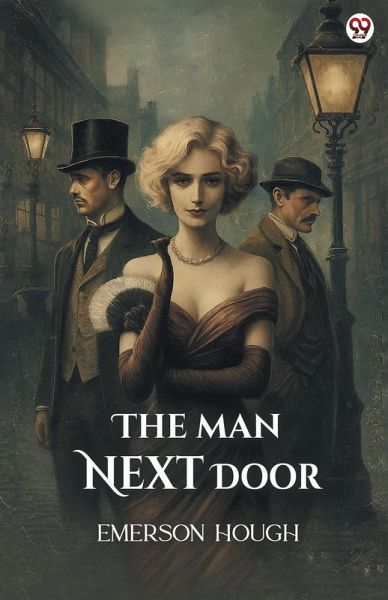
The man next door explores the contrast between frontier values and urban expectations through the lens of transition, belonging, and personal reinvention. As individuals leave behind the open spaces of ranch life for the rigid formalities of city society, the story captures the tension between authenticity and adaptation. A family's decision to relocate from the familiar rhythms of the West to the structured world of Chicago invites reflection on how place shapes identity. The narrative underscores the emotional complexities of leaving a life deeply rooted in independence and directness for…mehr
The man next door explores the contrast between frontier values and urban expectations through the lens of transition, belonging, and personal reinvention. As individuals leave behind the open spaces of ranch life for the rigid formalities of city society, the story captures the tension between authenticity and adaptation. A family's decision to relocate from the familiar rhythms of the West to the structured world of Chicago invites reflection on how place shapes identity. The narrative underscores the emotional complexities of leaving a life deeply rooted in independence and directness for one defined by appearances, conventions, and social negotiation. Beneath polite conversations and new routines lies the struggle to preserve integrity in an unfamiliar environment. The story reveals how relationships evolve when displaced from their natural setting and how memory and tradition remain guiding forces even amid cultural shifts. It questions what must be compromised or held onto when starting anew and highlights how selfhood can be tested in the process of social assimilation.
American writer Emerson Hough (1857 1923) was well-known for his large body of historical writing, essays, and novels, especially in the western fiction genre. Hough, who was born in Newton, Iowa, on June 28, 1857, was greatly impacted by the American West's scenery and people. He briefly practiced law after earning his law degree from the University of Iowa in 1880 before deciding to become a writer. Hough's early western-themed writings, such as "The Story of the Cowboy" (1897), launched his literary career and solidified his status as a western fiction author. His books "The Mississippi Bubble" (1902) and "The Covered Wagon" (1922), the latter of which was made into a popular silent film, won him significant praise. Hough wrote on the spirit of exploration, adventure, and hardy individuality of the American frontier throughout his life. His writings contributed to the romanticization of the West in American literature by frequently capturing the struggles and victories of settlers, cowboys, and pioneers.
Es gelten unsere Allgemeinen Geschäftsbedingungen: www.buecher.de/agb
Impressum
www.buecher.de ist ein Internetauftritt der buecher.de internetstores GmbH
Geschäftsführung: Monica Sawhney | Roland Kölbl | Günter Hilger
Sitz der Gesellschaft: Batheyer Straße 115 - 117, 58099 Hagen
Postanschrift: Bürgermeister-Wegele-Str. 12, 86167 Augsburg
Amtsgericht Hagen HRB 13257
Steuernummer: 321/5800/1497
USt-IdNr: DE450055826