
Andere Kunden interessierten sich auch für
 The National Geographic Magazine15,99 €
 The National Geographic Magazine15,99 €
 A Tour in Sutherlandshire With Extracts From the Fieldbooks of a Sportsman and Naturalist23,99 €
 The Land of Desolation20,99 €
 Discoveries in Australia25,99 €
") Around The World In Seven Months (1891)24,99 €
Around The World In Seven Months (1891)24,99 € Personal Narrative of Travels to the Equinoctial Regions of America, During the Year 1799-180425,99 €



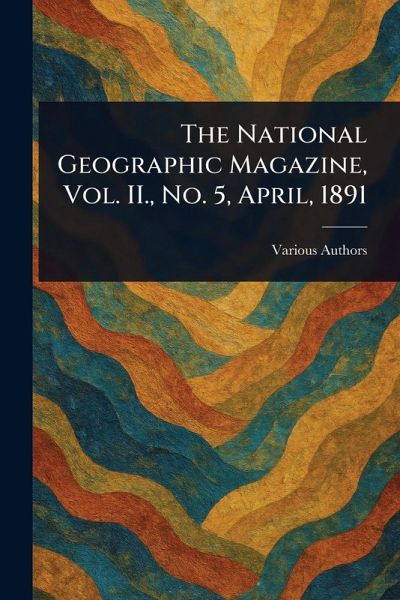
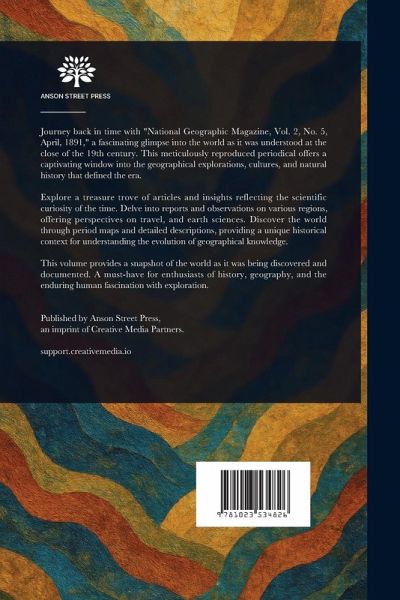
Journey back in time with "National Geographic Magazine, Vol. 2, No. 5, April, 1891," a fascinating glimpse into the world as it was understood at the close of the 19th century. This meticulously reproduced periodical offers a captivating window into the geographical explorations, cultures, and natural history that defined the era. Explore a treasure trove of articles and insights reflecting the scientific curiosity of the time. Delve into reports and observations on various regions, offering perspectives on travel, and earth sciences. Discover the world through period maps and detailed descriptions, providing a unique historical context for understanding the evolution of geographical knowledge. This volume provides a snapshot of the world as it was being discovered and documented. A must-have for enthusiasts of history, geography, and the enduring human fascination with exploration. This work has been selected by scholars as being culturally important, and is part of the knowledge base of civilization as we know it. This work is in the public domain in the United States of America, and possibly other nations. Within the United States, you may freely copy and distribute this work, as no entity (individual or corporate) has a copyright on the body of the work. Scholars believe, and we concur, that this work is important enough to be preserved, reproduced, and made generally available to the public. We appreciate your support of the preservation process, and thank you for being an important part of keeping this knowledge alive and relevant.