
Andere Kunden interessierten sich auch für
 All the King's Women: Polygyny and Politics in Europe, 900-1250154,99 €
 The Early Byzantine Historians121,99 €
 Studies in the History of Mediaeval Science36,99 €
 Rethinking the Republic of Letters124,99 €
 The Alphabet of Galen116,99 €
 Slavery and Unfreedom in Byzantine Thought on the Household109,99 €
 The Mediaeval Universities105,99 €

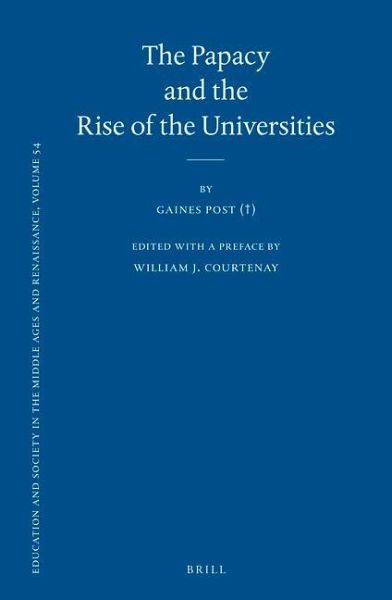
One of the leading historians of medieval universities in the last generation, Gaines Post published less than a quarter of his 1931 dissertation on the role of the papacy in the rise of universities. The entire work merits publication, both because of the remaining content and because it reveals more on how Gaines Post, a product of Charles Homer Haskins' seminar at Harvard in the late 1920s, approached his subject. The volume covers the interaction of the papacy with multiple universities from the twelfth and thirteenth centuries and opens up a much broader range of topics, considering papal intervention and influence in the areas of licensing to teach, financial support for masters and students, dispensations for study, regulation of housing rents, and the founding of colleges. See inside the book.