
Andere Kunden interessierten sich auch für
 Gender Performativity in Clint Eastwood's "Gran Torino". The Social Constructions of Identity15,95 €
 Sexuality, Nudity and the Body in Soviet Cinema179,99 €
 The Subaltern Subject in Structured Historical Process170,99 €
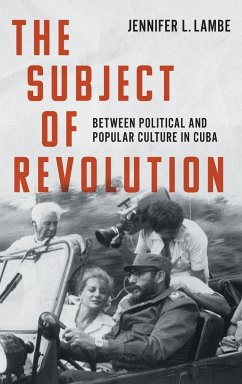
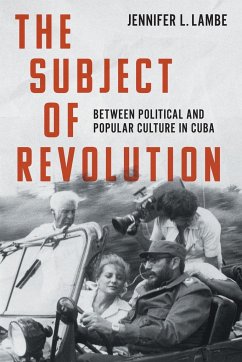
 The Subject of Revolution91,99 €
 The Subject of Revolution34,99 €
") Remarks Of A. O. P. Nicholson, Of Tennessee, On The Sectional Conflict On The Subject Of Slavery (1860)17,99 €
Remarks Of A. O. P. Nicholson, Of Tennessee, On The Sectional Conflict On The Subject Of Slavery (1860)17,99 € The Early Transnational Chinese Cinema Industry166,99 €



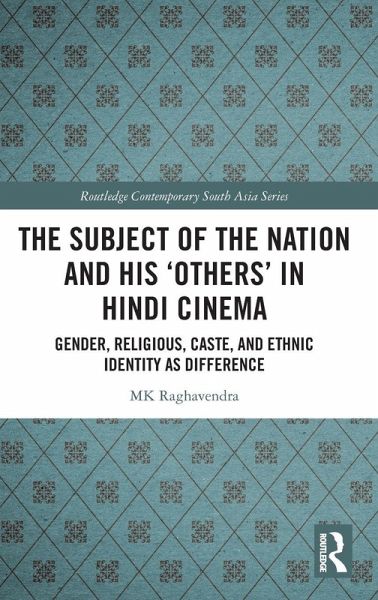
This book analyzes the representations of the subjects of Hindi cinema as a way of gaining insights into the hegemony of the upper-caste Hindu male in narratives of nationhood.
Given that Hindi cinema has narrativized the nation after 1947, the book examines how these subjects were chosen and argues that they were upper-caste, Hindu and predominantly male. The author's analysis shows asymmetries in the constitution of the 'imagined nation' in the public consciousness. Women, the marginalized categories, and minorities were presented as 'others' with separate stories for the issues dealing with them-but distinct from that of the nation. Stories centered on women primarily highlight their position within society. In this context, the book argues that it is the male protagonist whose story mirrors that of the nation as allegory.
A novel contribution to the field of Bollywood Studies, this insightful work will be of interest to those studying Hindi cinema and film studies, political science and history, as well as gender studies.
Given that Hindi cinema has narrativized the nation after 1947, the book examines how these subjects were chosen and argues that they were upper-caste, Hindu and predominantly male. The author's analysis shows asymmetries in the constitution of the 'imagined nation' in the public consciousness. Women, the marginalized categories, and minorities were presented as 'others' with separate stories for the issues dealing with them-but distinct from that of the nation. Stories centered on women primarily highlight their position within society. In this context, the book argues that it is the male protagonist whose story mirrors that of the nation as allegory.
A novel contribution to the field of Bollywood Studies, this insightful work will be of interest to those studying Hindi cinema and film studies, political science and history, as well as gender studies.