
Andere Kunden interessierten sich auch für
 120 Content Strategies for English Language Learners67,99 €
 Easy Lessons for Teaching Word Families: Hands-On Lessons That Build Phonemic Awareness, Phonics, Spelling, Reading, and Writing Skills13,99 €
 What the Science of Reading Says about Word Recognition26,99 €
 Word Mastery: A Course in Phonics for the First Three Grades17,99 €
 Making Words Third Grade59,99 €
 Ready for Rica50,99 €
 What Really Matters for Middle School Readers59,99 €

Pre-service and in-service teachers get the detailed information they need to successfully teach word identification skills and practical applications to use in the classroom.
This straight-forward, comprehensive, easy-to-understand book gives readers a solid look at classroom reading programs in the elementary school-how the word recognition process unfolds, why and how to teach different strategies as children develop as readers and spellers, best practices for teaching, how children learn and use the letter-sound patterns of phonics, and the contribution that multi-letter chunks (prefixes, suffixes, syllables, and Greek and Latin roots) make to learning new words.
Through a theory-based, developmental perspective on teaching word identification, this book gives teachers the technical information they need to know to successfully teach word identification, and the practical applications they can use to apply this information. The book focuses on effective practices for teaching English language learners and children at risk, includes ready-to-use review and practice activities that fit nicely into short periods of available time, cites research studies that support teaching various word identification strategies, and includes valuable information on using e-resources for teaching word identification in the elementary school.
More than a "phonics" book, this text takes a comprehensive approach to word identification, explaining all the print-based strategies children develop and use-providing a thorough understanding of teaching word identification, PreK through 5.
Product Description
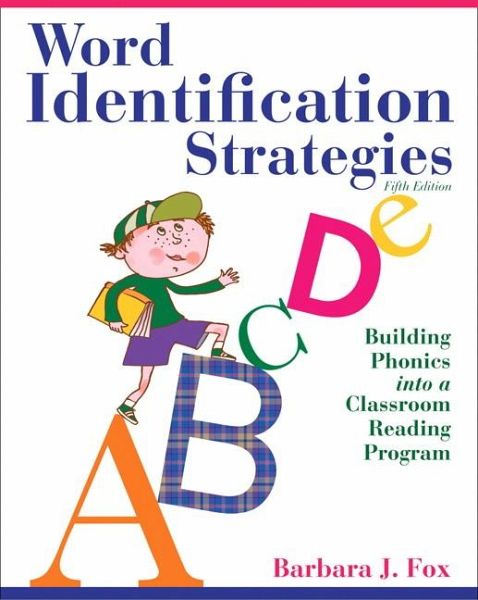
Word Identification Strategies: Building Phonics into a Classroom Reading Program, Fifth Edition,gives pre- and in-service teachers essential information for planning and implementing effective word identification in elementary classroom reading programs-plus the tools to carry it out.
Features + Benefits
· This comprehensive view of word identification gives pre- and in-service teachers the tools for teaching across the elementary school, including developing phonemic awareness and alphabet knowledge, and teaching word family words through rimes, letter-sound phonics, and the structure of long words.
· Theory-based explanations for learning to read and spell new words are integrated into chapters to provide readers with a developmental perspective on teaching.
· Effective, classroom-ready activities provide resources to support the effective teaching of word identification.
· An explicit time-line for teaching and learning word identification runs throughout the book.
· Essential information for planning and implementing effective word identification instruction is presented to support instruction in classrooms across the elementary school.
· Research studies that support teaching various word identification strategies are cited.
Backcover
For a comprehensive understanding of how to plan and implement effective word identification instruction in elementary classroom reading programs-and for a practical look at the tools to help you do it-turn to Barbara Fox's Word Identification Strategies: Building Phonics into a Classroom Reading Program, Fifth Edition. In it, pre-service and in-service teachers get a straight-forward, easy-to-understand look at such topics as:
· how the word recognition process unfolds as children learn to read in the elementary school
· why and how to teach different strategies as children develop as readers and spellers
· best practices for teaching
· how children learn and use the letter-sound patterns of phonics
· the contribution that multiletter chunks (prefixes, suffixes, syllables, and Greek and Latin roots) make to learning new words.
This book focuses on effective practices for teaching English language learners and children at risk, includes ready-to-use review and practice activities that fit nicely into short periods of available time, cites research studies that support teaching various word identification strategies, and includes valuable information on using e-resources for teaching word identification in the elementary school.
More than a "phonics" book, this text takes a comprehensive approach to word identification, explaining all the print-based strategies children develop and use-providing a thorough understanding of teaching word identification, PreK through 5.
Reviewers rave:
"I chose this text for the in-depth phonics strategies and word identification strategies that are discussed in this book. Generally my students find this book to be an easy read and like the book a lot." Colleen Lelli, CabriniCollege
"A major strength of this text is its accessibility for students through the explicit explanation of strategies. Students particularly like the visuals provided with each strategy." Carianne Bernadowski, Robert Morris University
This text does an excellent job providing in-service teachers with strategies for literacy instruction. I value the anticipation guides in the beginning of each chapter in order to set the purpose for reading. I also appreciate the informational aides that the text provides as well as the graphic and organizational aides. Anitra E. Butler, Prince George's Community College
"Fox's text helps my students to develop a more principled understanding of how readers and spellers acquire the word identification strategies they need to be efficient, automatic decoders and encoders." Dr. Laura C. S. Jones, NazarethCollege
Chapter 1
Word Identification in Your Classroom Reading Program 1
Why Do We Teach Phonics?
Essential Elements of Phonics in Your Successful Classroom Reading Program
Teach Phonics Directly
Teach Phonics Systematically
Teach Phonics Early
Keep Phonics Instruction Meaningful
Support Children as They Use Phonics While Reading and Writing
Keeping Phonics in Balance in Your Classroom Reading Program
When Should You Teach Phonics?
How Will You Teach Phonics?
How Much Time Should You Spend Teaching Phonics?
Under What Circumstances Should You Teach Phonics?
How Children Read Words
Analogy
Letter-Sound Decoding
Analyzing the Structure of Long Words
Prediction
Instant Recognition
Metacognitive Awareness
Keeping Word Identification Meaning-Focused Through Teaching Children to Self-Monitor, Self-Correct, and Cross-Check
Self-Monitoring
Self-Correcting
Cross-Checking
Stages of Learning to Read Words
Prealphabetic Word Learners in Preschool and Kindergarten
Partial Alphabetic Word Learners in Kindergarten and Early First Grade
Alphabetic Word Learners in Late Kindergarten Through Second Grade
Consolidated Word Learners in Third Grade and Above
Automatic Readers
References
Chapter 2
Phonemic Awareness: Becoming Aware of the Sounds of Language
What Is Phonemic Awareness?
What Is Phonological Awareness?
Phonemic Is Important for Learning to Read
Phonemic Awareness Develops Sequentially
Word Awareness in Preschool
Syllable Awareness in Preschool and Early Kindergarten
Rhyme and Beginning Sound Awareness in Preschool and Kindergarten
Sound Awareness and Blending in Kindergarten through Second Grade
Manipulating Sounds in First and Second Grade
Rhyme and Beginning Sound Awareness
Classroom Activities for Developing Rhyme and Beginning Sound Awareness
Spare Minute Activities for Developing Rhyme Awareness
Phonemic Awareness
Best Practices for Developing Phonemic Awareness
Classroom Activities for Developing Phonemic Awareness
Sound Awareness
Blending
Spare Minute Activities for Developing Phonemic Awareness 58
Phonemic Awareness Assessment Tools
Informal Assessment Tools
Formal, Norm-Referenced Assessment Tools
Teaching Phonemic Awareness in Your Classroom Reading Program
Kindergarten
First Grade
Second Grade
Teaching Phonemic Awareness to English Language Learners
Teaching Phonemic Awareness to Children At Risk
E-Resources for Teaching Phonemic Awareness
References
Chapter 3
Early Word Identification in Preschool and Early Kindergarten: The Strategies of Using Logos, Pictures, Word Shape, and Partial Letter-Sound Associations to Read New Words
Environmental Cues: Associating Meaning with the Print in Everyday Surroundings in Preschool 68
Picture Cues: The Inferring Meaning from Illustrations in Preschool and Early Kindergarten
Configuration Cues: Using Word Length, Word Shape, or Eye-Catching Letters to Read New Words in Preschool and Early Kindergarten
Word Shape
Word Length
Letter Shape
Prealphabetic Word Learners and Emergent Spellers in Preschool and Early Kindergarten
Partial Alphabetic Word Learners and Early Letter Name-Alphabetic Spellers in Kindergarten and Early First Grade
Best Practices for Teaching Partial Alphabetic Word Learners
Teaching Letter Names and a Sound for Each Letter to English Language Learners
Teaching Letter Names and a Sound for Each Letter to Children At Risk
E-Resources for Teaching Letter Names and a Sound for Each Letter
References
Chapter 4
Analogy-Based Phonics in Late Kindergarten and First Grade: The Strategy of Using the Predictable Patterns in Known Words to Read New Words 83
Looking Inside Syllables to Find Onsets and Rimes
Teaching Analogy-Based Phonics with Word Famililes
How Children Use the Onsets and Rimes in Known Word Family Words to Read New Words
Early Alphabetic Word Learners and Late Letter Name-Alphabetic Spellers
How Rimes Make It Possible for Early Alphabetic Word Learners to Read New Words
Best Practices for Teaching Analogy-Based Phonics with Word Family Words
Classroom Activities for Teaching Analogy-Based Phonics with Word Family Words
Spare Minute Activities for Teaching Analogy-Based Phonics with Word Family Words
Teaching Analogy-Based Phonics with Word Family Words to English Language Learners
Teaching Analogy-Based Phonics with Word Family Words to Children At Risk
E-Resources for Teaching Analogy-Based Phonics with Word Family Words
References
Chapter 5
Letter-Sound Phonics in Late Kindergarten, First, and Second Grade: The Strategy of Using Letter-Sounds to Read and Learn New Words
Phonics Letter-Sound Patterns
Which Letter-Sound Patterns to Teach and When to Teach Them
Teaching Letter-Sound Phonics in Your Classroom Reading Program
Kindergarten
First Grade
Second Grade
Third Grade
Fourth and Fifth Grades
How Children Use Letter-Sound Phonics to Read New Words
Correcting Misidentifications
Minor Mistakes
Best Practices for Teaching Letter-Sound-Based Phonics
Do Phonics Rules Belong in Your Classroom Reading Program?
Full Alphabetic Word Learners and Within Word Pattern Spellers
Decodable Books and Your Classroom Reading Program
Classroom Activities for Teaching Letter-Sound-Based Phonics
Spare-Minute Activities for Teaching Letter-Sound Phonics
Teaching Letter-Sound Phonics to English Language Learners
Teaching Letter-Sound Phonics to Children At Risk
E-Resources for Teaching Letter-Sound Phonics
References
Chapter 6
Analyzing the Strucgtue of Long Words in Third Grade and Above: The Strategy of Using Multiletter Word Parts to Read and Learn Long Words
The Structure of Long Words
Free and Bound Morphemes
Teaching Word Structure in Your Classroom Reading Program
First and Second Grades
Third, Fourth, and Fifth Grades
How Children Read New Words by Analyzing Word Structure
Correcting Misidentifications
Consolidated Word Learners and Syllalbles and Affixes Spellers
Prefixes
Suffixes
Base Words
Best Practices for Teaching Prefixes and Suffixes
Greek and Latin Word Parts
Compound Words
Contractions
Syllables
Syllable Patterns
Clues to Syllable Division
Accent P
Word Identification Strategies: Building Phonics into a Classroom Reading Program, Fifth Edition, gives pre- and in-service teachers essential information for planning and implementing effective word identification in elementary classroom reading programs-plus the tools to carry it out.
This straight-forward, comprehensive, easy-to-understand book gives readers a solid look at classroom reading programs in the elementary school-how the word recognition process unfolds, why and how to teach different strategies as children develop as readers and spellers, best practices for teaching, how children learn and use the letter-sound patterns of phonics, and the contribution that multi-letter chunks (prefixes, suffixes, syllables, and Greek and Latin roots) make to learning new words.
Through a theory-based, developmental perspective on teaching word identification, this book gives teachers the technical information they need to know to successfully teach word identification, and the practical applications they can use to apply this information. The book focuses on effective practices for teaching English language learners and children at risk, includes ready-to-use review and practice activities that fit nicely into short periods of available time, cites research studies that support teaching various word identification strategies, and includes valuable information on using e-resources for teaching word identification in the elementary school.
More than a "phonics" book, this text takes a comprehensive approach to word identification, explaining all the print-based strategies children develop and use-providing a thorough understanding of teaching word identification, PreK through 5.
Product Description
Word Identification Strategies: Building Phonics into a Classroom Reading Program, Fifth Edition,gives pre- and in-service teachers essential information for planning and implementing effective word identification in elementary classroom reading programs-plus the tools to carry it out.
Features + Benefits
· This comprehensive view of word identification gives pre- and in-service teachers the tools for teaching across the elementary school, including developing phonemic awareness and alphabet knowledge, and teaching word family words through rimes, letter-sound phonics, and the structure of long words.
· Theory-based explanations for learning to read and spell new words are integrated into chapters to provide readers with a developmental perspective on teaching.
· Effective, classroom-ready activities provide resources to support the effective teaching of word identification.
· An explicit time-line for teaching and learning word identification runs throughout the book.
· Essential information for planning and implementing effective word identification instruction is presented to support instruction in classrooms across the elementary school.
· Research studies that support teaching various word identification strategies are cited.
Backcover
For a comprehensive understanding of how to plan and implement effective word identification instruction in elementary classroom reading programs-and for a practical look at the tools to help you do it-turn to Barbara Fox's Word Identification Strategies: Building Phonics into a Classroom Reading Program, Fifth Edition. In it, pre-service and in-service teachers get a straight-forward, easy-to-understand look at such topics as:
· how the word recognition process unfolds as children learn to read in the elementary school
· why and how to teach different strategies as children develop as readers and spellers
· best practices for teaching
· how children learn and use the letter-sound patterns of phonics
· the contribution that multiletter chunks (prefixes, suffixes, syllables, and Greek and Latin roots) make to learning new words.
This book focuses on effective practices for teaching English language learners and children at risk, includes ready-to-use review and practice activities that fit nicely into short periods of available time, cites research studies that support teaching various word identification strategies, and includes valuable information on using e-resources for teaching word identification in the elementary school.
More than a "phonics" book, this text takes a comprehensive approach to word identification, explaining all the print-based strategies children develop and use-providing a thorough understanding of teaching word identification, PreK through 5.
Reviewers rave:
"I chose this text for the in-depth phonics strategies and word identification strategies that are discussed in this book. Generally my students find this book to be an easy read and like the book a lot." Colleen Lelli, CabriniCollege
"A major strength of this text is its accessibility for students through the explicit explanation of strategies. Students particularly like the visuals provided with each strategy." Carianne Bernadowski, Robert Morris University
This text does an excellent job providing in-service teachers with strategies for literacy instruction. I value the anticipation guides in the beginning of each chapter in order to set the purpose for reading. I also appreciate the informational aides that the text provides as well as the graphic and organizational aides. Anitra E. Butler, Prince George's Community College
"Fox's text helps my students to develop a more principled understanding of how readers and spellers acquire the word identification strategies they need to be efficient, automatic decoders and encoders." Dr. Laura C. S. Jones, NazarethCollege
Chapter 1
Word Identification in Your Classroom Reading Program 1
Why Do We Teach Phonics?
Essential Elements of Phonics in Your Successful Classroom Reading Program
Teach Phonics Directly
Teach Phonics Systematically
Teach Phonics Early
Keep Phonics Instruction Meaningful
Support Children as They Use Phonics While Reading and Writing
Keeping Phonics in Balance in Your Classroom Reading Program
When Should You Teach Phonics?
How Will You Teach Phonics?
How Much Time Should You Spend Teaching Phonics?
Under What Circumstances Should You Teach Phonics?
How Children Read Words
Analogy
Letter-Sound Decoding
Analyzing the Structure of Long Words
Prediction
Instant Recognition
Metacognitive Awareness
Keeping Word Identification Meaning-Focused Through Teaching Children to Self-Monitor, Self-Correct, and Cross-Check
Self-Monitoring
Self-Correcting
Cross-Checking
Stages of Learning to Read Words
Prealphabetic Word Learners in Preschool and Kindergarten
Partial Alphabetic Word Learners in Kindergarten and Early First Grade
Alphabetic Word Learners in Late Kindergarten Through Second Grade
Consolidated Word Learners in Third Grade and Above
Automatic Readers
References
Chapter 2
Phonemic Awareness: Becoming Aware of the Sounds of Language
What Is Phonemic Awareness?
What Is Phonological Awareness?
Phonemic Is Important for Learning to Read
Phonemic Awareness Develops Sequentially
Word Awareness in Preschool
Syllable Awareness in Preschool and Early Kindergarten
Rhyme and Beginning Sound Awareness in Preschool and Kindergarten
Sound Awareness and Blending in Kindergarten through Second Grade
Manipulating Sounds in First and Second Grade
Rhyme and Beginning Sound Awareness
Classroom Activities for Developing Rhyme and Beginning Sound Awareness
Spare Minute Activities for Developing Rhyme Awareness
Phonemic Awareness
Best Practices for Developing Phonemic Awareness
Classroom Activities for Developing Phonemic Awareness
Sound Awareness
Blending
Spare Minute Activities for Developing Phonemic Awareness 58
Phonemic Awareness Assessment Tools
Informal Assessment Tools
Formal, Norm-Referenced Assessment Tools
Teaching Phonemic Awareness in Your Classroom Reading Program
Kindergarten
First Grade
Second Grade
Teaching Phonemic Awareness to English Language Learners
Teaching Phonemic Awareness to Children At Risk
E-Resources for Teaching Phonemic Awareness
References
Chapter 3
Early Word Identification in Preschool and Early Kindergarten: The Strategies of Using Logos, Pictures, Word Shape, and Partial Letter-Sound Associations to Read New Words
Environmental Cues: Associating Meaning with the Print in Everyday Surroundings in Preschool 68
Picture Cues: The Inferring Meaning from Illustrations in Preschool and Early Kindergarten
Configuration Cues: Using Word Length, Word Shape, or Eye-Catching Letters to Read New Words in Preschool and Early Kindergarten
Word Shape
Word Length
Letter Shape
Prealphabetic Word Learners and Emergent Spellers in Preschool and Early Kindergarten
Partial Alphabetic Word Learners and Early Letter Name-Alphabetic Spellers in Kindergarten and Early First Grade
Best Practices for Teaching Partial Alphabetic Word Learners
Teaching Letter Names and a Sound for Each Letter to English Language Learners
Teaching Letter Names and a Sound for Each Letter to Children At Risk
E-Resources for Teaching Letter Names and a Sound for Each Letter
References
Chapter 4
Analogy-Based Phonics in Late Kindergarten and First Grade: The Strategy of Using the Predictable Patterns in Known Words to Read New Words 83
Looking Inside Syllables to Find Onsets and Rimes
Teaching Analogy-Based Phonics with Word Famililes
How Children Use the Onsets and Rimes in Known Word Family Words to Read New Words
Early Alphabetic Word Learners and Late Letter Name-Alphabetic Spellers
How Rimes Make It Possible for Early Alphabetic Word Learners to Read New Words
Best Practices for Teaching Analogy-Based Phonics with Word Family Words
Classroom Activities for Teaching Analogy-Based Phonics with Word Family Words
Spare Minute Activities for Teaching Analogy-Based Phonics with Word Family Words
Teaching Analogy-Based Phonics with Word Family Words to English Language Learners
Teaching Analogy-Based Phonics with Word Family Words to Children At Risk
E-Resources for Teaching Analogy-Based Phonics with Word Family Words
References
Chapter 5
Letter-Sound Phonics in Late Kindergarten, First, and Second Grade: The Strategy of Using Letter-Sounds to Read and Learn New Words
Phonics Letter-Sound Patterns
Which Letter-Sound Patterns to Teach and When to Teach Them
Teaching Letter-Sound Phonics in Your Classroom Reading Program
Kindergarten
First Grade
Second Grade
Third Grade
Fourth and Fifth Grades
How Children Use Letter-Sound Phonics to Read New Words
Correcting Misidentifications
Minor Mistakes
Best Practices for Teaching Letter-Sound-Based Phonics
Do Phonics Rules Belong in Your Classroom Reading Program?
Full Alphabetic Word Learners and Within Word Pattern Spellers
Decodable Books and Your Classroom Reading Program
Classroom Activities for Teaching Letter-Sound-Based Phonics
Spare-Minute Activities for Teaching Letter-Sound Phonics
Teaching Letter-Sound Phonics to English Language Learners
Teaching Letter-Sound Phonics to Children At Risk
E-Resources for Teaching Letter-Sound Phonics
References
Chapter 6
Analyzing the Strucgtue of Long Words in Third Grade and Above: The Strategy of Using Multiletter Word Parts to Read and Learn Long Words
The Structure of Long Words
Free and Bound Morphemes
Teaching Word Structure in Your Classroom Reading Program
First and Second Grades
Third, Fourth, and Fifth Grades
How Children Read New Words by Analyzing Word Structure
Correcting Misidentifications
Consolidated Word Learners and Syllalbles and Affixes Spellers
Prefixes
Suffixes
Base Words
Best Practices for Teaching Prefixes and Suffixes
Greek and Latin Word Parts
Compound Words
Contractions
Syllables
Syllable Patterns
Clues to Syllable Division
Accent P
Word Identification Strategies: Building Phonics into a Classroom Reading Program, Fifth Edition, gives pre- and in-service teachers essential information for planning and implementing effective word identification in elementary classroom reading programs-plus the tools to carry it out.