69,95 €
69,95 €
inkl. MwSt.
Sofort per Download lieferbar

35 °P sammeln
69,95 €
Als Download kaufen
69,95 €
inkl. MwSt.
Sofort per Download lieferbar
35 °P sammeln
Jetzt verschenken
Alle Infos zum eBook verschenken
69,95 €
inkl. MwSt.
Sofort per Download lieferbar
Alle Infos zum eBook verschenken
35 °P sammeln

Andere Kunden interessierten sich auch für
") Building Blocks of Society (eBook, ePUB)69,95 €
Building Blocks of Society (eBook, ePUB)69,95 €") Building a Just and Secure World (eBook, PDF)28,95 €
Building a Just and Secure World (eBook, PDF)28,95 €") City of Modernity. Lódz (eBook, PDF)98,00 €
City of Modernity. Lódz (eBook, PDF)98,00 €") Building the Continental Empire (eBook, PDF)12,95 €
Building the Continental Empire (eBook, PDF)12,95 €") The Stories of Building the Black Beach Community of Ocean City, North Carolina (eBook, PDF)65,95 €
The Stories of Building the Black Beach Community of Ocean City, North Carolina (eBook, PDF)65,95 €") Science in the Metropolis (eBook, PDF)42,95 €
Science in the Metropolis (eBook, PDF)42,95 €") Servants of the People (eBook, PDF)56,95 €
Servants of the People (eBook, PDF)56,95 €




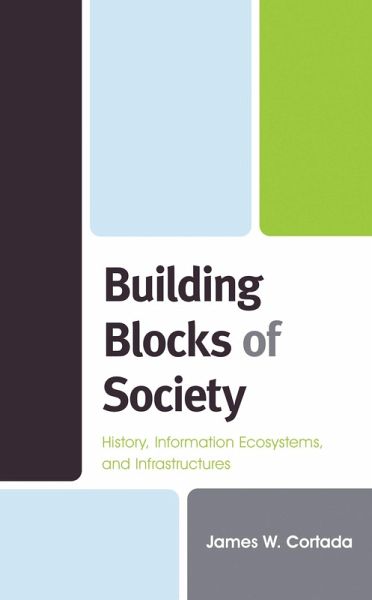
The history of information is a rapidly emerging new subfield of history. Historians are identifying the issues they need to examine, crafting novel research agendas, and locating research materials relevant to their work. Like the larger world around them, historians are discovering what it means to live and work in a world that increasingly sees itself as an information society. Long a discussion point among sociologists, economists, political leaders, and media experts, historians are integrating their methods and research into the larger conversation. This book proposes a way to look at the history of information and to history as a whole that is simultaneously relevant to observers in other disciplines and familiar to historians of business, economics, sociology and technology. The author presents that advocacy in two ways: with theoretical and historiographical discussions of what information ecosystems and infrastructures are and their value for this kind of research, second, through a range of case studies applying those concepts. The wide range of case studies is purposeful in demonstrating the applicability of the ideas presented in the early methodological chapters. Themes mentioned in each of the early chapters are consistently applied in all subsequent chapters. This book breaks from the more traditional historiography of book history, sociological and philosophical discussions about knowledge and society. The first two chapters focus on the craft of the historian in this new field, better known as historiography and methods. Subsequent chapters are case studies, showing what results when a historian writes about ecosystems and infrastructures, moving our discussion from theory to practice. The book is an important and substantive contribution to this new subfield, an essential primer, as well as a major statement for all historians on how next to evolve their craft.