26,95 €
26,95 €
inkl. MwSt.
Sofort per Download lieferbar

13 °P sammeln
26,95 €
Als Download kaufen
26,95 €
inkl. MwSt.
Sofort per Download lieferbar
13 °P sammeln
Jetzt verschenken
Alle Infos zum eBook verschenken
26,95 €
inkl. MwSt.
Sofort per Download lieferbar
Alle Infos zum eBook verschenken
13 °P sammeln

Andere Kunden interessierten sich auch für
") Building the Body of Christ (eBook, PDF)26,95 €
Building the Body of Christ (eBook, PDF)26,95 €") Christ Miracle Worker in Early Christian Art (eBook, ePUB)24,95 €
Christ Miracle Worker in Early Christian Art (eBook, ePUB)24,95 €") Building on Tradition: A New Language of Qatari Architecture (eBook, ePUB)10,95 €
Building on Tradition: A New Language of Qatari Architecture (eBook, ePUB)10,95 €") New American Covenant w/Christ (eBook, ePUB)3,99 €
New American Covenant w/Christ (eBook, ePUB)3,99 €") Nigeria: an Experiment in Nation Building (eBook, ePUB)2,99 €
Nigeria: an Experiment in Nation Building (eBook, ePUB)2,99 €") House of Difference (eBook, ePUB)38,95 €
House of Difference (eBook, ePUB)38,95 €") Architecture and Nation Building (eBook, ePUB)4,99 €
Architecture and Nation Building (eBook, ePUB)4,99 €


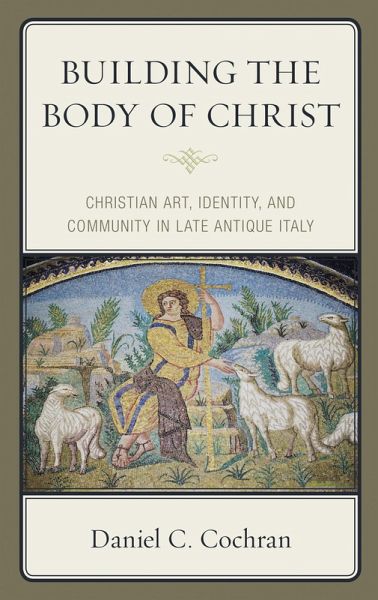
In Building the Body of Christ, Daniel C. Cochran argues that monumental Christian art and architecture played a crucial role in the formation of individual and communal identities in late antique Italy. The ecclesiastical buildings and artistic programs that emerged during the fourth and fifth centuries not only reflected Christianity's changing status within the Roman Empire but also actively shaped those who used them. Emphasizing the importance of materiality and the body in early Christian thought and practice, Cochran shows how bishops and their supporters employed the visual arts to present a Christian identity rooted in the sacred past but expressed in the present through church unity and episcopal authority. He weaves together archaeological and textual evidence to contextualize case studies from Rome, Aquileia, and Ravenna, showing how these sites responded to the diversity of early Christianity as expressed through private rituals and the imperial appropriation of the saints. Cochran shows how these early ecclesiastical buildings and artistic programs worked in conjunction with the liturgy to persuade individuals to adopt alternative beliefs, practices, and values that contributed to the formation of institutional Christianity and the "Christianization" of late antique Italy.