39,95 €
39,95 €
inkl. MwSt.
Sofort per Download lieferbar

20 °P sammeln
39,95 €
Als Download kaufen
39,95 €
inkl. MwSt.
Sofort per Download lieferbar
20 °P sammeln
Jetzt verschenken
Alle Infos zum eBook verschenken
39,95 €
inkl. MwSt.
Sofort per Download lieferbar
Alle Infos zum eBook verschenken
20 °P sammeln

Andere Kunden interessierten sich auch für
") Eco-activism and Social Work (eBook, PDF)39,95 €
Eco-activism and Social Work (eBook, PDF)39,95 €") A Textbook of Social Work (eBook, ePUB)37,95 €
A Textbook of Social Work (eBook, ePUB)37,95 €") Social Work and Faith-based Organizations (eBook, ePUB)41,95 €
Social Work and Faith-based Organizations (eBook, ePUB)41,95 €") Linking Activism (eBook, ePUB)47,95 €
Linking Activism (eBook, ePUB)47,95 €") Contemporary Practices in Social Work Supervision (eBook, ePUB)39,95 €
Contemporary Practices in Social Work Supervision (eBook, ePUB)39,95 €") Helping in Social Work (eBook, ePUB)31,95 €
Helping in Social Work (eBook, ePUB)31,95 €") Radical Challenges for Social Work Education (eBook, ePUB)41,95 €
Radical Challenges for Social Work Education (eBook, ePUB)41,95 €

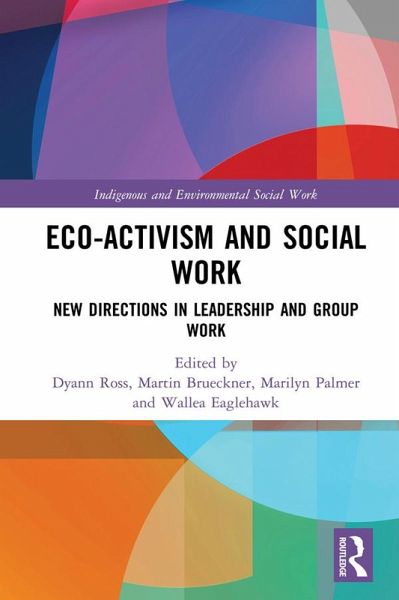
Social workers are called upon to shift from a human-centric bias to an ecological ethical sensibility by embracing love as integral to their justice mission and by extending the idea of social justice to include environmental and species justice. This book presents the love ethic model as a way to do eco-justice work using public campaigns, research, community arts practice and other nonviolent, direct action strategies.
The model is premised on an active and ongoing commitment to the eco-values of love, eco-justice and nonviolence for the purpose of upholding the public interest. The love ethic model is informed by the stories of eco-activists who used nonviolent actions to address ecological issues such as: pollution; degradation of the environment; exploitation of farm animals; mining industry overriding First Nation Peoples' land rights; and human health and social costs related to the natural resource industries, private land developments and government infrastructure projects.
Informed by practice insights by activists from a range of eco-justice concerns, this innovative book provides new directions in social work and environmental studies involving transformational change leadership and dialogical group work between interest groups. It should be considered essential reading for social work students, researchers and practitioners as well as eco-activists more generally.
The model is premised on an active and ongoing commitment to the eco-values of love, eco-justice and nonviolence for the purpose of upholding the public interest. The love ethic model is informed by the stories of eco-activists who used nonviolent actions to address ecological issues such as: pollution; degradation of the environment; exploitation of farm animals; mining industry overriding First Nation Peoples' land rights; and human health and social costs related to the natural resource industries, private land developments and government infrastructure projects.
Informed by practice insights by activists from a range of eco-justice concerns, this innovative book provides new directions in social work and environmental studies involving transformational change leadership and dialogical group work between interest groups. It should be considered essential reading for social work students, researchers and practitioners as well as eco-activists more generally.
Dieser Download kann aus rechtlichen Gründen nur mit Rechnungsadresse in A, B, BG, CY, CZ, D, DK, EW, E, FIN, F, GR, HR, H, IRL, I, LT, L, LR, M, NL, PL, P, R, S, SLO, SK ausgeliefert werden.
"Readers will encounter concrete examples that foster a new way of thinking about the social justice issues created because of environmental detachment. The case studies and analysis offer a new approach that may be brand-new to both social work students and practitioners. As issues of the environment continue to grow, this book will be a timely resource that should be in all social work program libraries. Summing Up: Highly recommended. Graduate students, faculty, and professionals." ---B. Ghilardi, Fairfield University, CHOICE Review