41,95 €
41,95 €
inkl. MwSt.
Sofort per Download lieferbar

21 °P sammeln
41,95 €
Als Download kaufen
41,95 €
inkl. MwSt.
Sofort per Download lieferbar
21 °P sammeln
Jetzt verschenken
Alle Infos zum eBook verschenken
41,95 €
inkl. MwSt.
Sofort per Download lieferbar
Alle Infos zum eBook verschenken
21 °P sammeln

Andere Kunden interessierten sich auch für
") Economic Statecraft and US Foreign Policy (eBook, PDF)41,95 €
Economic Statecraft and US Foreign Policy (eBook, PDF)41,95 €") Economic Statecraft and Foreign Policy (eBook, ePUB)45,95 €
Economic Statecraft and Foreign Policy (eBook, ePUB)45,95 €") Military Coercion and US Foreign Policy (eBook, ePUB)38,95 €
Military Coercion and US Foreign Policy (eBook, ePUB)38,95 €") Geopolitics and China's Patronage Strategy (eBook, ePUB)39,95 €
Geopolitics and China's Patronage Strategy (eBook, ePUB)39,95 €") US Foreign Policy Towards the Middle East (eBook, ePUB)41,95 €
US Foreign Policy Towards the Middle East (eBook, ePUB)41,95 €") Foreign Policy Analysis of a Baltic State (eBook, ePUB)42,95 €
Foreign Policy Analysis of a Baltic State (eBook, ePUB)42,95 €") India, South Korea and the ASEAN (eBook, ePUB)38,95 €
India, South Korea and the ASEAN (eBook, ePUB)38,95 €


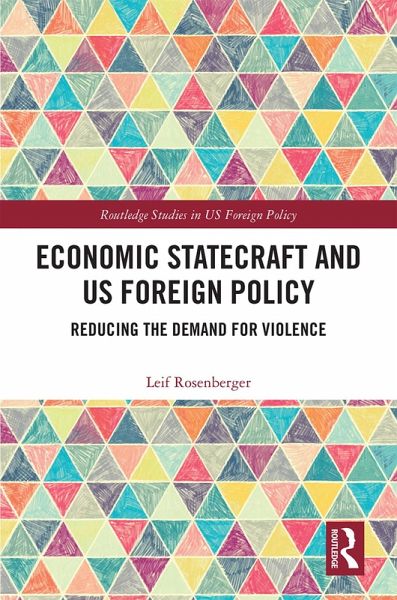
Explaining the connection between economics and violent extremism, this book argues that American foreign policy must be rebalanced with a greater emphasis on social inclusion and shared prosperity in order to mitigate the root causes of conflict.
Rosenberger argues that economic coercion has usually proven counterproductive, and that a militarized American foreign policy too often results in frustration and strategic failure. He analyses this theory through a number of case studies, from the Treaty of Versailles to the more recent issues of Israel in Gaza, US sanctions against Iran, the US backed, Saudi-led boycott of Qatar and Donald Trump's trade war against China. He concludes that the economic logic of social inclusion and shared prosperity demonstrated in Jean Monnet's European Coal and Steel Community would be a more successful strategy in reducing the demand for violence in the civil wars in Afghanistan, Iraq, Yemen and Syria.
This book will be of particular relevance for courses on American Foreign Policy, International Relations and International Political Economy and seminars on the Near East and South Asia. Professional economists, diplomats and military officers in America and in the Near East and South Asia will also find the argument useful.
Rosenberger argues that economic coercion has usually proven counterproductive, and that a militarized American foreign policy too often results in frustration and strategic failure. He analyses this theory through a number of case studies, from the Treaty of Versailles to the more recent issues of Israel in Gaza, US sanctions against Iran, the US backed, Saudi-led boycott of Qatar and Donald Trump's trade war against China. He concludes that the economic logic of social inclusion and shared prosperity demonstrated in Jean Monnet's European Coal and Steel Community would be a more successful strategy in reducing the demand for violence in the civil wars in Afghanistan, Iraq, Yemen and Syria.
This book will be of particular relevance for courses on American Foreign Policy, International Relations and International Political Economy and seminars on the Near East and South Asia. Professional economists, diplomats and military officers in America and in the Near East and South Asia will also find the argument useful.
Dieser Download kann aus rechtlichen Gründen nur mit Rechnungsadresse in A, B, BG, CY, CZ, D, DK, EW, E, FIN, F, GR, HR, H, IRL, I, LT, L, LR, M, NL, PL, P, R, S, SLO, SK ausgeliefert werden.