5,49 €
5,49 €
inkl. MwSt.
Sofort per Download lieferbar

0 °P sammeln
5,49 €
Als Download kaufen
5,49 €
inkl. MwSt.
Sofort per Download lieferbar
0 °P sammeln
Jetzt verschenken
Alle Infos zum eBook verschenken
5,49 €
inkl. MwSt.
Sofort per Download lieferbar
Alle Infos zum eBook verschenken
0 °P sammeln

Andere Kunden interessierten sich auch für
") Footprints in the Snow (eBook, ePUB)0,99 €
Footprints in the Snow (eBook, ePUB)0,99 €") The Devil's Footprints (eBook, ePUB)9,62 €
The Devil's Footprints (eBook, ePUB)9,62 € (eBook, ePUB)") Evelyn (Charleston's Leading Ladies, #1) (eBook, ePUB)4,49 €
Evelyn (Charleston's Leading Ladies, #1) (eBook, ePUB)4,49 €") The Devil's Footprints (eBook, ePUB)6,63 €
The Devil's Footprints (eBook, ePUB)6,63 €") Footprints in the Snow (eBook, ePUB)2,46 €
Footprints in the Snow (eBook, ePUB)2,46 €") No Footprints in the Snow (eBook, ePUB)8,64 €
No Footprints in the Snow (eBook, ePUB)8,64 €") The Leading Ladies (eBook, ePUB)2,99 €
The Leading Ladies (eBook, ePUB)2,99 €




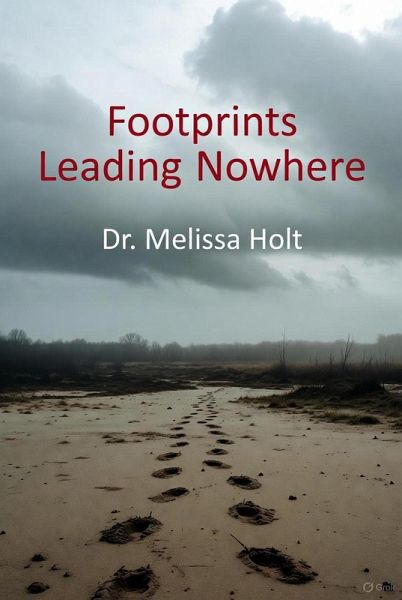
Between the winter of 1997 and the spring of 2004, at least 47 people (and possibly more than 70) walked onto the beaches of Cape Hatteras National Seashore, Ocracoke Island, Portsmouth Island, and Core Banks, removed their shoes, and disappeared. No bodies ever recovered. No suicide notes. No signs of struggle. Only neat rows of footprints that marched into the surf and ended, as if the ocean had erased the final step.
What began as isolated local legend became the largest missing-persons cluster in modern American history with zero physical evidence. The National Park Service sealed records. The Coast Guard classified search logs. Families were told their loved ones had "most likely drowned," despite calm seas and perfect weather on many of the disappearance dates.
Dr. Melissa Holt, then a young behavioral geographer specializing in liminal spaces and disappearance patterns, was granted limited access in 2009 after a Freedom of Information Act lawsuit. What she uncovered (and what tried to silence her) forms the backbone of this book: a phenomenon that defies physics, psychology, and recorded history, yet left behind hundreds of Polaroids, audio cassettes, sand samples that refuse to age, and one terrifying constant: every victim was barefoot when they vanished.
This is not a ghost story.
This is what happens when a place decides it no longer wants to give its visitors back.
What began as isolated local legend became the largest missing-persons cluster in modern American history with zero physical evidence. The National Park Service sealed records. The Coast Guard classified search logs. Families were told their loved ones had "most likely drowned," despite calm seas and perfect weather on many of the disappearance dates.
Dr. Melissa Holt, then a young behavioral geographer specializing in liminal spaces and disappearance patterns, was granted limited access in 2009 after a Freedom of Information Act lawsuit. What she uncovered (and what tried to silence her) forms the backbone of this book: a phenomenon that defies physics, psychology, and recorded history, yet left behind hundreds of Polaroids, audio cassettes, sand samples that refuse to age, and one terrifying constant: every victim was barefoot when they vanished.
This is not a ghost story.
This is what happens when a place decides it no longer wants to give its visitors back.
Dieser Download kann aus rechtlichen Gründen nur mit Rechnungsadresse in A, B, CY, CZ, D, DK, EW, E, FIN, F, GR, H, IRL, I, LT, L, LR, M, NL, PL, P, R, S, SLO, SK ausgeliefert werden.