30,95 €
30,95 €
inkl. MwSt.
Sofort per Download lieferbar

15 °P sammeln
30,95 €
Als Download kaufen
30,95 €
inkl. MwSt.
Sofort per Download lieferbar
15 °P sammeln
Jetzt verschenken
Alle Infos zum eBook verschenken
30,95 €
inkl. MwSt.
Sofort per Download lieferbar
Alle Infos zum eBook verschenken
15 °P sammeln

Andere Kunden interessierten sich auch für
") Istanbul 1940 and Global Modernity (eBook, PDF)30,95 €
Istanbul 1940 and Global Modernity (eBook, PDF)30,95 €") Mythologizing Jesus (eBook, ePUB)31,95 €
Mythologizing Jesus (eBook, ePUB)31,95 €") Jerusalem! (eBook, ePUB)8,95 €
Jerusalem! (eBook, ePUB)8,95 €") The Rebellion of Forms in Modern Persian Poetry (eBook, ePUB)24,95 €
The Rebellion of Forms in Modern Persian Poetry (eBook, ePUB)24,95 €") Culture, Diaspora, and Modernity in Muslim Writing (eBook, ePUB)49,95 €
Culture, Diaspora, and Modernity in Muslim Writing (eBook, ePUB)49,95 €") Iterations of Loss (eBook, ePUB)20,95 €
Iterations of Loss (eBook, ePUB)20,95 €") In the Shadow of World Literature (eBook, ePUB)25,95 €
In the Shadow of World Literature (eBook, ePUB)25,95 €



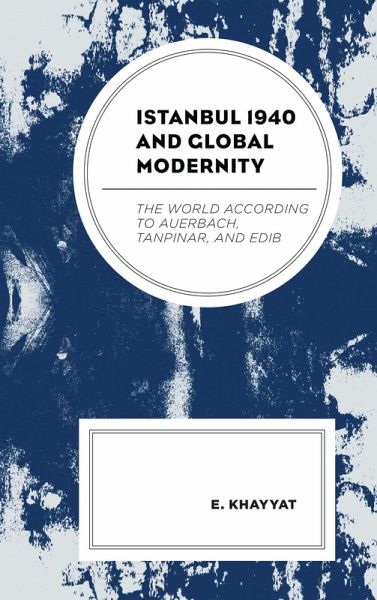
Istanbul 1940 and Global Modernity: The World According to Auerbach, Tanpinar, and Edib engages Erich Auerbach's Istanbul career and his pioneering works of comparative literature in a new light. It interprets Auerbach's works against the background of his Turkish colleagues' analogous works that, like Auerbach's masterpieces, were drafted at Istanbul University in the 1940s. Unlike Auerbach's writings, which center around Western literary cultures and Christianity, these Turkish writings trace non-Western, largely Islamicate cultural histories. The critic, novelist, and poet Ahmet Hamdi Tanpinar (1901-1962) and his illustrious senior, the Muslim feminist, humanist, and novelist Halide Edib (1884-1964) focused on Middle Eastern and South Asian cultural trajectories. In addition to offering groundbreaking insights into their respective cultural legacies, Auerbach, Tanpinar, and Edib elaborated extensively on the intercrossing that is their meeting place, the chiasmic space of modern literature. Interpreting their writings as the work of a collective, Istanbul 1940 and Global Modernity examines the new paths these critics opened for theorizing literary modernity, world literature, and the comparative study of literature and religion.