42,95 €
42,95 €
inkl. MwSt.
Sofort per Download lieferbar

21 °P sammeln
42,95 €
Als Download kaufen
42,95 €
inkl. MwSt.
Sofort per Download lieferbar
21 °P sammeln
Jetzt verschenken
Alle Infos zum eBook verschenken
42,95 €
inkl. MwSt.
Sofort per Download lieferbar
Alle Infos zum eBook verschenken
21 °P sammeln

Andere Kunden interessierten sich auch für
") Landscape Architecture in the Arab Middle East (eBook, ePUB)42,95 €
Landscape Architecture in the Arab Middle East (eBook, ePUB)42,95 €") Theory and Practice in Heritage and Sustainability (eBook, PDF)43,95 €
Theory and Practice in Heritage and Sustainability (eBook, PDF)43,95 €") Modern Theatres 1950-2020 (eBook, PDF)70,95 €
Modern Theatres 1950-2020 (eBook, PDF)70,95 €") Theory and Practice in Heritage and Sustainability (eBook, ePUB)43,95 €
Theory and Practice in Heritage and Sustainability (eBook, ePUB)43,95 €") Contemporary Museum Architecture and Design (eBook, PDF)45,95 €
Contemporary Museum Architecture and Design (eBook, PDF)45,95 €") The Future Designer (eBook, PDF)38,95 €
The Future Designer (eBook, PDF)38,95 €") Designing Sustainability (eBook, PDF)51,95 €
Designing Sustainability (eBook, PDF)51,95 €





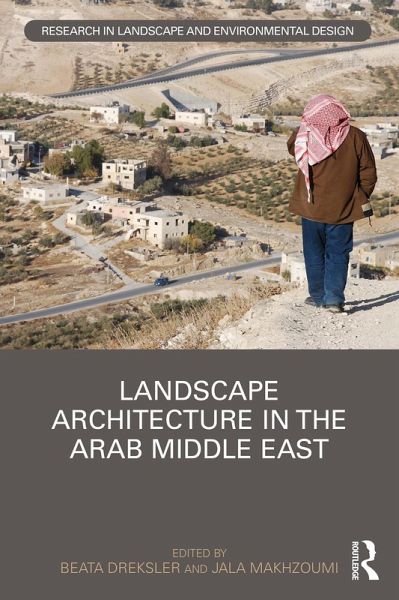
This book explores the challenges facing landscape architecture in the Middle East. It supports the idea that landscape is a multifaceted idea, and examines landscapes architecture as an emerging profession in the region. The book also responds to the limitations of faulty translations of the English 'landscape' that, in turn, limit the professional potential in the region.
The authors of the book see landscape as a way of beholding the world that is informed by place and culture. And because landscape is context specific, a landscape framing contextualizes a problem, be it community development, tourism, or nature conservation, to foster place and culture responsive perspectives. The nine chapters are grouped under four broad themes that reflect the multifaceted, 'expansive' framing that embraces landscape, natural and cultural heritage, people and livelihoods, and landscape and human rights.
The authors recognize that a landscape framing is not the exclusive domain of landscape architecture, but can be applied by architects, planners, and environmentalists. The ideas advanced and issues discussed will be of interest to researchers, students, and practitioners in landscape architecture, architecture, planning, and urban design, as well as social and environmental scientists.
The authors of the book see landscape as a way of beholding the world that is informed by place and culture. And because landscape is context specific, a landscape framing contextualizes a problem, be it community development, tourism, or nature conservation, to foster place and culture responsive perspectives. The nine chapters are grouped under four broad themes that reflect the multifaceted, 'expansive' framing that embraces landscape, natural and cultural heritage, people and livelihoods, and landscape and human rights.
The authors recognize that a landscape framing is not the exclusive domain of landscape architecture, but can be applied by architects, planners, and environmentalists. The ideas advanced and issues discussed will be of interest to researchers, students, and practitioners in landscape architecture, architecture, planning, and urban design, as well as social and environmental scientists.
Dieser Download kann aus rechtlichen Gründen nur mit Rechnungsadresse in A, B, BG, CY, CZ, D, DK, EW, E, FIN, F, GR, HR, H, IRL, I, LT, L, LR, M, NL, PL, P, R, S, SLO, SK ausgeliefert werden.