Sie sind bereits eingeloggt. Klicken Sie auf 2. tolino select Abo, um fortzufahren.
Bitte loggen Sie sich zunächst in Ihr Kundenkonto ein oder registrieren Sie sich bei bücher.de, um das eBook-Abo tolino select nutzen zu können.
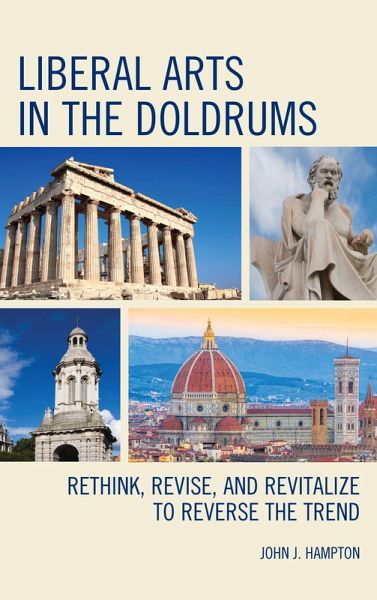
This book argues for changes in the common cultural heritage of an educated person. It addresses the need to differentiate teaching and scholarship. It proposes expansive views of an undergraduate education. It explains why colleges and universities must replace parochialism, reform the public perception of higher education, revise the professoriate, restructure the liberal arts curriculum, and extend the lessons of the liberal arts beyond the classroom.
This book argues for changes in the common cultural heritage of an educated person. It addresses the need to differentiate teaching and scholarship. It proposes expansive views of an undergraduate education. It explains why colleges and universities must replace parochialism, reform the public perception of higher education, revise the professoriate, restructure the liberal arts curriculum, and extend the lessons of the liberal arts beyond the classroom.
Die Herstellerinformationen sind derzeit nicht verfügbar.
Autorenporträt
John "Jack" Hampton is a professor at St. Peter's University and a former dean of the schools of business at Seton Hall and Connecticut State universities. He is the author of multiple enterprise risk management books with the American Management Association and a series of higher education books with Rowman & Littlefield.
Inhaltsangabe
Preface PART 1. REPLACING PAROCHIALISM IN THE LIBERAL ARTS 1. What's the difference between believing and knowing? Is your truth everybody's truth? 2. Are we fighting a decline in critical thinking? Is "truthiness" really a word in the dictionary? 3. What does it mean to be an educated person? Is everybody talking the same language? PART 2. REFORMING THE PUBLIC PERCEPTION OF HIGHER EDUCATION 4. Is it peacetime or wartime in higher education? Do we have to respond to attacks on the liberal arts? 5. What's the big picture of the liberal arts? Where are we going? 6. Why should we listen to weak signals? How long can we ignore the obvious? 7. Are liberals and conservatives at war on the campus? 8. Do reputation and accreditation matter? Would anyone hire Plato if he did not have a doctoral degree? PART 3. REVISING THE PROFESSORIATE. 9. Do we still need professors in the classroom? Why are we paying these people? 10. Does the classroom offer status for professors? When was the last time anyone praised your teaching? 11. Do professors need both cognitive and emotional intelligence? If we understand the great ideas, why do we need more? 12. Can professors help us improve decision making? If we only know the theory, is that enough? PART 4. RESTRUCTURING THE CURRICULUM 13. Why should professors encourage students to take chances? What good things might happen if we leave our comfort zones? 14. What's the big deal about context in a liberal arts education? Can't we just talk for 75 minutes or so? 15. Why should professors encourage pursuing tipping points and sticky messages? What's all the commotion about unstoppable change? 16. How should the liberal arts handle intuitive thinking? When do we have enough information to decide? 17. How should the liberal arts handle disruptive innovation? Will we break if we don't prepare to bend? PART 5. REACHING BEYOND THE CLASSROOM. 18. Why should professors help students understand risk, uncertainty, and opportunity? What's all this talk about the future? 19. Do professors know what they think they know? What is the danger of too much confidence? 20. Is collaboration the hallmark of a liberal arts education? Can people see further if they stand on the shoulders of others? 21. How should professors handle irrational behavior? Why do people make such odd decisions? 22. How does it all come together? What do we know at the end of our journey?
Preface PART 1. REPLACING PAROCHIALISM IN THE LIBERAL ARTS 1. What's the difference between believing and knowing? Is your truth everybody's truth? 2. Are we fighting a decline in critical thinking? Is "truthiness" really a word in the dictionary? 3. What does it mean to be an educated person? Is everybody talking the same language? PART 2. REFORMING THE PUBLIC PERCEPTION OF HIGHER EDUCATION 4. Is it peacetime or wartime in higher education? Do we have to respond to attacks on the liberal arts? 5. What's the big picture of the liberal arts? Where are we going? 6. Why should we listen to weak signals? How long can we ignore the obvious? 7. Are liberals and conservatives at war on the campus? 8. Do reputation and accreditation matter? Would anyone hire Plato if he did not have a doctoral degree? PART 3. REVISING THE PROFESSORIATE. 9. Do we still need professors in the classroom? Why are we paying these people? 10. Does the classroom offer status for professors? When was the last time anyone praised your teaching? 11. Do professors need both cognitive and emotional intelligence? If we understand the great ideas, why do we need more? 12. Can professors help us improve decision making? If we only know the theory, is that enough? PART 4. RESTRUCTURING THE CURRICULUM 13. Why should professors encourage students to take chances? What good things might happen if we leave our comfort zones? 14. What's the big deal about context in a liberal arts education? Can't we just talk for 75 minutes or so? 15. Why should professors encourage pursuing tipping points and sticky messages? What's all the commotion about unstoppable change? 16. How should the liberal arts handle intuitive thinking? When do we have enough information to decide? 17. How should the liberal arts handle disruptive innovation? Will we break if we don't prepare to bend? PART 5. REACHING BEYOND THE CLASSROOM. 18. Why should professors help students understand risk, uncertainty, and opportunity? What's all this talk about the future? 19. Do professors know what they think they know? What is the danger of too much confidence? 20. Is collaboration the hallmark of a liberal arts education? Can people see further if they stand on the shoulders of others? 21. How should professors handle irrational behavior? Why do people make such odd decisions? 22. How does it all come together? What do we know at the end of our journey?
Es gelten unsere Allgemeinen Geschäftsbedingungen: www.buecher.de/agb
Impressum
www.buecher.de ist ein Internetauftritt der buecher.de internetstores GmbH
Geschäftsführung: Monica Sawhney | Roland Kölbl | Günter Hilger
Sitz der Gesellschaft: Batheyer Straße 115 - 117, 58099 Hagen
Postanschrift: Bürgermeister-Wegele-Str. 12, 86167 Augsburg
Amtsgericht Hagen HRB 13257
Steuernummer: 321/5800/1497
USt-IdNr: DE450055826