2,99 €
2,99 €
inkl. MwSt.
Sofort per Download lieferbar

0 °P sammeln
2,99 €
Als Download kaufen
2,99 €
inkl. MwSt.
Sofort per Download lieferbar
0 °P sammeln
Jetzt verschenken
Alle Infos zum eBook verschenken
2,99 €
inkl. MwSt.
Sofort per Download lieferbar
Alle Infos zum eBook verschenken
0 °P sammeln

Andere Kunden interessierten sich auch für
 A Simple Guide To The Condition, Diagnosis, Treatment And Related Conditions (eBook, ePUB)") Alien Hand Syndrome, (Dr Strangelove Syndrome) A Simple Guide To The Condition, Diagnosis, Treatment And Related Conditions (eBook, ePUB)2,99 €
Alien Hand Syndrome, (Dr Strangelove Syndrome) A Simple Guide To The Condition, Diagnosis, Treatment And Related Conditions (eBook, ePUB)2,99 € A Simple Guide To The Condition, Diagnosis, Treatment And Related Conditions (eBook, ePUB)") Nystagmus, (Rapid Eye Movements) A Simple Guide To The Condition, Diagnosis, Treatment And Related Conditions (eBook, ePUB)2,99 €
Nystagmus, (Rapid Eye Movements) A Simple Guide To The Condition, Diagnosis, Treatment And Related Conditions (eBook, ePUB)2,99 € A Simple Guide To The Condition, Diagnosis, Treatment And Related Conditions (eBook, ePUB)") Hydrocephalus, (Fluid in Brain) A Simple Guide To The Condition, Diagnosis, Treatment And Related Conditions (eBook, ePUB)2,99 €
Hydrocephalus, (Fluid in Brain) A Simple Guide To The Condition, Diagnosis, Treatment And Related Conditions (eBook, ePUB)2,99 €") Clumsiness, A Simple Guide To The Condition, Diagnosis, Treatment And Related Conditions (eBook, ePUB)2,99 €
Clumsiness, A Simple Guide To The Condition, Diagnosis, Treatment And Related Conditions (eBook, ePUB)2,99 €") Intercostal Neuralgia, A Simple Guide To The Condition, Diagnosis, Treatment And Related Conditions (eBook, ePUB)2,99 €
Intercostal Neuralgia, A Simple Guide To The Condition, Diagnosis, Treatment And Related Conditions (eBook, ePUB)2,99 € A Simple Guide To The Condition, Diagnosis, Treatment And Related Conditions (eBook, ePUB)") The Syrinx, (Syringomyelia) A Simple Guide To The Condition, Diagnosis, Treatment And Related Conditions (eBook, ePUB)2,99 €
The Syrinx, (Syringomyelia) A Simple Guide To The Condition, Diagnosis, Treatment And Related Conditions (eBook, ePUB)2,99 €") Cerebral Edema, A Simple Guide To The Condition, Diagnosis, Treatment And Related Conditions (eBook, ePUB)2,99 €
Cerebral Edema, A Simple Guide To The Condition, Diagnosis, Treatment And Related Conditions (eBook, ePUB)2,99 €

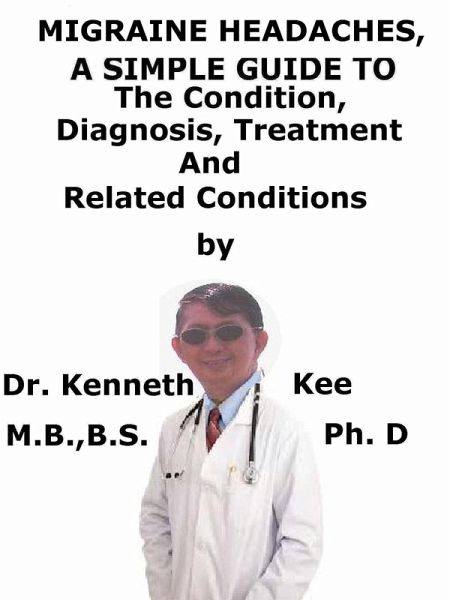
This book describes Migraine Headaches, Diagnosis and Treatment and Related Diseases
A migraine is a form of headache.
It may happen with symptoms such as nausea, vomiting, or sensitivity to light and sound.
In many people, a throbbing pain is felt only on one side of the head.
The migraine is the second most frequent type of headache that may be so intense and debilitating that people with migraine are not able to work.
Each migraine can last from four hours to three days.
At times, it will last longer (status migraineous)
Migraines have a tendency to run in families.
Four out of 5 migraine sufferers have a family history of migraines.
If one parent has a history of migraines, the child has a 50% possibility of forming migraines and if both parents have a history of migraines the risk goes up to 75%.
Migraine headaches tend to first appear between the ages of 10 and 45.
Occasionally they may begin later in life.
Migraines happen more often in women than men (5 to 1).
Causes
It is now thought that migraine is produced by inherited abnormalities in certain parts of the brain.
There is a migraine "pain center" or generator in the mid-brain area.
A migraine starts when hyperactive nerve cells transmit impulses to the blood vessels resulting in the dilation of these vessels and the release of prostaglandins, serotonin and other inflammatory substances that cause the pulsation to be painful.
Certain brain cells use serotonin as a messenger in regulating mood, attention, sleep and pain.
The chronic changes in serotonin can lead to anxiety, panic disorder and depression
Potential triggers are
1.Emotional stress
2.Sensitivity to specific chemicals
3.Caffeine
4.Changing weather
5.Changes in hormone levels during a menstrual cycle
6.Changes in normal sleep
7.Smoking
8.Alcohol
9.Certain odors or perfumes
10.Loud noises or bright lights
Symptoms
There used to be 2 main types of migraines:
1.Migraine with aura (classic migraine)
2.Migraine without aura (common migraine)
An aura is a cluster of nervous system symptoms that is a warning sign that a migraine is coming
The vision is affected :
1.Temporary blind spots
2.Blurred vision
3.Eye pain
4.Seeing stars, zigzag lines, or flashing lights
5.Tunnel vision
Diagnosis
There is no specific test to confirm that the headache is actually a migraine
The doctor may order a brain CT or MRI scan
An EEG may be required
Treatment
There is no specific cure for migraine headaches.
The purpose is to treat the migraine symptoms right away, and to prevent symptoms by avoiding or changing the triggers.
Lifestyle changes are:
1.Better sleep habits
2. Better eating habits
3. Managing stress
4. Losing weight, if overweight
5. If the patient has frequent migraines, the doctor may give medicine to reduce the number of attacks.
Medicines may be:
1.Antidepressants
2.Blood pressure medicines, such as beta blockers
3.Seizure medicines
4.Calcitonin gene-related peptide agents
5.Botulinum toxin type A (Botox) injections may decrease migraine attacks
6.Some people find relief with minerals and vitamins
Treating an Attack
Pain medicines are taken at the first sign of a migraine attack
1. Taking medicines more than 3 days a week may lead to rebound headaches that keep coming back from the overuse of pain medicine.
Too much acetaminophen can damage the liver.
Too much ibuprofen or aspirin can harm the stomach or kidneys.
2.Antiemetics for nausea and vomiting
3.The doctor can select:
a.Triptans
b.Ergots
c.Isometheptene
4. Other medicines are given to treat the symptoms:
Sedatives such as butalbital, diazepam
Narcotic pain relievers
Imigran a newer drug stops pain
Spring trans-cranial magnetic stimulation stops pain
T...
A migraine is a form of headache.
It may happen with symptoms such as nausea, vomiting, or sensitivity to light and sound.
In many people, a throbbing pain is felt only on one side of the head.
The migraine is the second most frequent type of headache that may be so intense and debilitating that people with migraine are not able to work.
Each migraine can last from four hours to three days.
At times, it will last longer (status migraineous)
Migraines have a tendency to run in families.
Four out of 5 migraine sufferers have a family history of migraines.
If one parent has a history of migraines, the child has a 50% possibility of forming migraines and if both parents have a history of migraines the risk goes up to 75%.
Migraine headaches tend to first appear between the ages of 10 and 45.
Occasionally they may begin later in life.
Migraines happen more often in women than men (5 to 1).
Causes
It is now thought that migraine is produced by inherited abnormalities in certain parts of the brain.
There is a migraine "pain center" or generator in the mid-brain area.
A migraine starts when hyperactive nerve cells transmit impulses to the blood vessels resulting in the dilation of these vessels and the release of prostaglandins, serotonin and other inflammatory substances that cause the pulsation to be painful.
Certain brain cells use serotonin as a messenger in regulating mood, attention, sleep and pain.
The chronic changes in serotonin can lead to anxiety, panic disorder and depression
Potential triggers are
1.Emotional stress
2.Sensitivity to specific chemicals
3.Caffeine
4.Changing weather
5.Changes in hormone levels during a menstrual cycle
6.Changes in normal sleep
7.Smoking
8.Alcohol
9.Certain odors or perfumes
10.Loud noises or bright lights
Symptoms
There used to be 2 main types of migraines:
1.Migraine with aura (classic migraine)
2.Migraine without aura (common migraine)
An aura is a cluster of nervous system symptoms that is a warning sign that a migraine is coming
The vision is affected :
1.Temporary blind spots
2.Blurred vision
3.Eye pain
4.Seeing stars, zigzag lines, or flashing lights
5.Tunnel vision
Diagnosis
There is no specific test to confirm that the headache is actually a migraine
The doctor may order a brain CT or MRI scan
An EEG may be required
Treatment
There is no specific cure for migraine headaches.
The purpose is to treat the migraine symptoms right away, and to prevent symptoms by avoiding or changing the triggers.
Lifestyle changes are:
1.Better sleep habits
2. Better eating habits
3. Managing stress
4. Losing weight, if overweight
5. If the patient has frequent migraines, the doctor may give medicine to reduce the number of attacks.
Medicines may be:
1.Antidepressants
2.Blood pressure medicines, such as beta blockers
3.Seizure medicines
4.Calcitonin gene-related peptide agents
5.Botulinum toxin type A (Botox) injections may decrease migraine attacks
6.Some people find relief with minerals and vitamins
Treating an Attack
Pain medicines are taken at the first sign of a migraine attack
1. Taking medicines more than 3 days a week may lead to rebound headaches that keep coming back from the overuse of pain medicine.
Too much acetaminophen can damage the liver.
Too much ibuprofen or aspirin can harm the stomach or kidneys.
2.Antiemetics for nausea and vomiting
3.The doctor can select:
a.Triptans
b.Ergots
c.Isometheptene
4. Other medicines are given to treat the symptoms:
Sedatives such as butalbital, diazepam
Narcotic pain relievers
Imigran a newer drug stops pain
Spring trans-cranial magnetic stimulation stops pain
T...
Dieser Download kann aus rechtlichen Gründen nur mit Rechnungsadresse in A, B, CY, CZ, D, DK, EW, E, FIN, F, GR, H, IRL, I, LT, L, LR, M, NL, PL, P, R, S, SLO, SK ausgeliefert werden.