67,95 €
67,95 €
inkl. MwSt.
Sofort per Download lieferbar

34 °P sammeln
67,95 €
Als Download kaufen
67,95 €
inkl. MwSt.
Sofort per Download lieferbar
34 °P sammeln
Jetzt verschenken
Alle Infos zum eBook verschenken
67,95 €
inkl. MwSt.
Sofort per Download lieferbar
Alle Infos zum eBook verschenken
34 °P sammeln

Andere Kunden interessierten sich auch für
") Imaging in Clinical Neurosciences for Non-radiologists (eBook, PDF)69,95 €
Imaging in Clinical Neurosciences for Non-radiologists (eBook, PDF)69,95 €") Neuroimmune System (eBook, PDF)52,95 €
Neuroimmune System (eBook, PDF)52,95 €") Diagnosis and Treatment of Cancer using Thermal Therapies (eBook, PDF)45,95 €
Diagnosis and Treatment of Cancer using Thermal Therapies (eBook, PDF)45,95 €") Finding Dignity at the End of Life (eBook, PDF)33,95 €
Finding Dignity at the End of Life (eBook, PDF)33,95 €") The Impact of Artificial Intelligence in Radiology (eBook, PDF)73,95 €
The Impact of Artificial Intelligence in Radiology (eBook, PDF)73,95 €") Handbook of Cosmetic Science and Technology (eBook, PDF)172,95 €
Handbook of Cosmetic Science and Technology (eBook, PDF)172,95 €") Dynamic Light Scattering Imaging (eBook, PDF)21,95 €
Dynamic Light Scattering Imaging (eBook, PDF)21,95 €







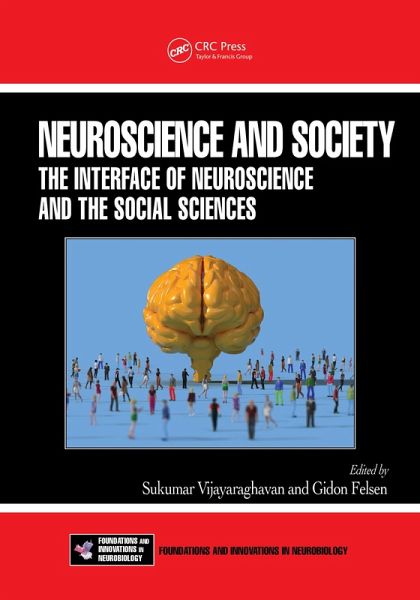
Advances in neuroscience research are rapidly redefining what it means to be human. The absence of the brain/mind dichotomy has, in turn, removed the separation between our brain biology and our sociocultural experiences, raising questions for social sciences to address. How responsible are we, as individuals, for our actions? Do we have free will? Is it ethical for us to peer into others' brains? How are our collective social cultural norms influenced by our brain function? At the same time, neuroscientists need to develop better intuition about the ethical, legal, and social implications of their research. Close collaboration between neuroscience and social sciences is the best way forward.
This book acts as an introduction to these and other issues that lie at the interface of neuroscience and social sciences, using the physiological underpinnings of our decision-making processes as a framework. Examples of topics addressed here are:
The book is intended for students of neuroscience and social sciences, as well as readers generally interested in the human condition. It is hoped that the book will stimulate cross-disciplinary thinking and inspire a new generation of thinkers who are willing to look at both social sciences and neuroscience research with a different lens. Such bridge builders will be the pioneers of the next level of interrogation at this emerging interface.
This book acts as an introduction to these and other issues that lie at the interface of neuroscience and social sciences, using the physiological underpinnings of our decision-making processes as a framework. Examples of topics addressed here are:
- Neuroscience and economics
- Neuroscience and law
- Neuroscience and ethics
- Neuroscience and mental health
- Neuroscience of religion and humour
The book is intended for students of neuroscience and social sciences, as well as readers generally interested in the human condition. It is hoped that the book will stimulate cross-disciplinary thinking and inspire a new generation of thinkers who are willing to look at both social sciences and neuroscience research with a different lens. Such bridge builders will be the pioneers of the next level of interrogation at this emerging interface.
Dieser Download kann aus rechtlichen Gründen nur mit Rechnungsadresse in A, B, BG, CY, CZ, D, DK, EW, E, FIN, F, GR, HR, H, IRL, I, LT, L, LR, M, NL, PL, P, R, S, SLO, SK ausgeliefert werden.