58,95 €
58,95 €
inkl. MwSt.
Sofort per Download lieferbar

29 °P sammeln
58,95 €
Als Download kaufen
58,95 €
inkl. MwSt.
Sofort per Download lieferbar
29 °P sammeln
Jetzt verschenken
Alle Infos zum eBook verschenken
58,95 €
inkl. MwSt.
Sofort per Download lieferbar
Alle Infos zum eBook verschenken
29 °P sammeln

Andere Kunden interessierten sich auch für
") Political Dreams and Musical Themes in the 1848-1922 Formation of Czechoslovakia (eBook, PDF)58,95 €
Political Dreams and Musical Themes in the 1848-1922 Formation of Czechoslovakia (eBook, PDF)58,95 €") The Emergence of the U.S. School Steel Band Movement (eBook, ePUB)72,95 €
The Emergence of the U.S. School Steel Band Movement (eBook, ePUB)72,95 €") Rock and Roll, Desegregation Movements, and Racism in the Post-Civil Rights Era (eBook, ePUB)26,95 €
Rock and Roll, Desegregation Movements, and Racism in the Post-Civil Rights Era (eBook, ePUB)26,95 €") The School of Arizona Dranes (eBook, ePUB)79,95 €
The School of Arizona Dranes (eBook, ePUB)79,95 €") Sacred and Secular Intersections in Music of the Long Nineteenth Century (eBook, ePUB)29,95 €
Sacred and Secular Intersections in Music of the Long Nineteenth Century (eBook, ePUB)29,95 €") Youth and Rock in the Soviet Bloc (eBook, ePUB)40,95 €
Youth and Rock in the Soviet Bloc (eBook, ePUB)40,95 €") Keyboard Presents the Evolution of Electronic Dance Music (eBook, ePUB)11,95 €
Keyboard Presents the Evolution of Electronic Dance Music (eBook, ePUB)11,95 €







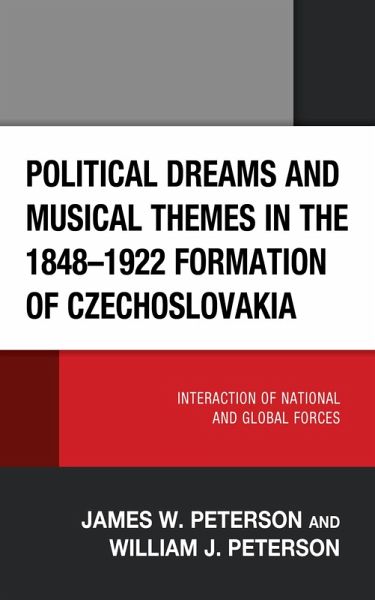
Political Dreams and Musical Themes in the 1848-1922 Formation of Czechoslovakia: Interaction of National and Global Forces characterizes the 1918-22 formation of Czechoslovakia as a consequence of political and musical expressions. Nationalist expressions and formations were striking after the 1848 Revolution. The authors explore how the music of Smetana, Janácek, and Dvorák inspired people with reminders about the important achievements of past Bohemian leaders. Under the control of the Vienna-based Habsburg Empire, Czech leaders also achieved more political representation in both Habsburg and Bohemian legislatures, and Slovaks made some national progress in at least asserting their demands to Budapest and its controlling Magyar Empire. During the early twentieth century, there was additional pressure to link up these nationalist movements in both music and politics with regional "modernist" approaches that were increasingly popular in other parts of Europe. The outbreak of World War I in 1914 opened up opportunities, such as joint participation in the Czechoslovak Legion, for the two key ethnic groups to forge a Czechoslovak state. Independence took place, with considerable western support, on October 28, 1918, and the commemorative concert two days later of compositions by Josef Suk put the final stamp on a considerable achievement that bore the hallmarks of globalism as well as nationalism.