72,95 €
72,95 €
inkl. MwSt.
Sofort per Download lieferbar

36 °P sammeln
72,95 €
Als Download kaufen
72,95 €
inkl. MwSt.
Sofort per Download lieferbar
36 °P sammeln
Jetzt verschenken
Alle Infos zum eBook verschenken
72,95 €
inkl. MwSt.
Sofort per Download lieferbar
Alle Infos zum eBook verschenken
36 °P sammeln

Andere Kunden interessierten sich auch für
") Presidential Power, Rhetoric, and the Terror Wars (eBook, ePUB)72,95 €
Presidential Power, Rhetoric, and the Terror Wars (eBook, ePUB)72,95 €") Rhetoric and Governance under Trump (eBook, PDF)28,95 €
Rhetoric and Governance under Trump (eBook, PDF)28,95 €") Centrist Rhetoric (eBook, PDF)35,95 €
Centrist Rhetoric (eBook, PDF)35,95 €") Talking with the President (eBook, PDF)13,95 €
Talking with the President (eBook, PDF)13,95 €") The Presidential Rhetoric of Woodrow Wilson, Warren Harding, and Calvin Coolidge (eBook, PDF)68,95 €
The Presidential Rhetoric of Woodrow Wilson, Warren Harding, and Calvin Coolidge (eBook, PDF)68,95 €") Rhetoric, Race, Religion, and the Charleston Shootings (eBook, PDF)28,95 €
Rhetoric, Race, Religion, and the Charleston Shootings (eBook, PDF)28,95 €") Dangerous Crooked Scoundrels (eBook, PDF)4,99 €
Dangerous Crooked Scoundrels (eBook, PDF)4,99 €

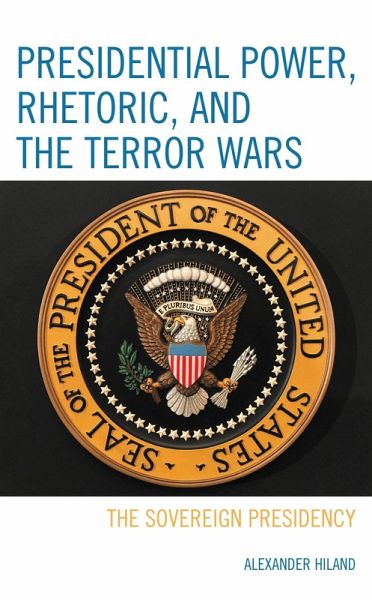
Presidential Power, Rhetoric, and the Terror Wars: The Sovereign Presidency argues that the War on Terror provided an opportunity to fundamentally change the presidency. Alexander Hiland analyzes the documents used to exercise presidential powers, including executive orders, signing statements, and presidential policy directives. Treating these documents as genres of speech-act that are ideologically motivated, Hiland provides a rhetorical criticism that illuminates the values and political convictions at play in these documents. This book reveals how both President George W. Bush and President Barack Obama wielded the personal power of the office to dramatically expand the power of the executive branch. During the War on Terror, the presidency shifted from an imperial form that avoided checks and balances, to a sovereign presidency where the executive branch had the ability to decide whether those checks and balances existed. As a result, Hiland argues that this shift to the sovereign presidency enabled the violation of human rights, myriad policy mistakes, and the degradation of democracy within the United States.