65,95 €
65,95 €
inkl. MwSt.
Sofort per Download lieferbar

33 °P sammeln
65,95 €
Als Download kaufen
65,95 €
inkl. MwSt.
Sofort per Download lieferbar
33 °P sammeln
Jetzt verschenken
Alle Infos zum eBook verschenken
65,95 €
inkl. MwSt.
Sofort per Download lieferbar
Alle Infos zum eBook verschenken
33 °P sammeln

Andere Kunden interessierten sich auch für
") Remnants of the Franco-Algerian Rupture (eBook, ePUB)28,95 €
Remnants of the Franco-Algerian Rupture (eBook, ePUB)28,95 €") The Supplement of Reading (eBook, ePUB)3,99 €
The Supplement of Reading (eBook, ePUB)3,99 €") Remnants of Modernity (eBook, ePUB)39,95 €
Remnants of Modernity (eBook, ePUB)39,95 €") Religious and Didactic Writings of Daniel Defoe, Part II vol 7 (eBook, ePUB)21,95 €
Religious and Didactic Writings of Daniel Defoe, Part II vol 7 (eBook, ePUB)21,95 €") Remnants of Refusal (eBook, ePUB)26,95 €
Remnants of Refusal (eBook, ePUB)26,95 €") Erasing and Rewriting in Manuscript Cultures (eBook, ePUB)0,00 €
Erasing and Rewriting in Manuscript Cultures (eBook, ePUB)0,00 €") The Complicit Text (eBook, ePUB)72,95 €
The Complicit Text (eBook, ePUB)72,95 €




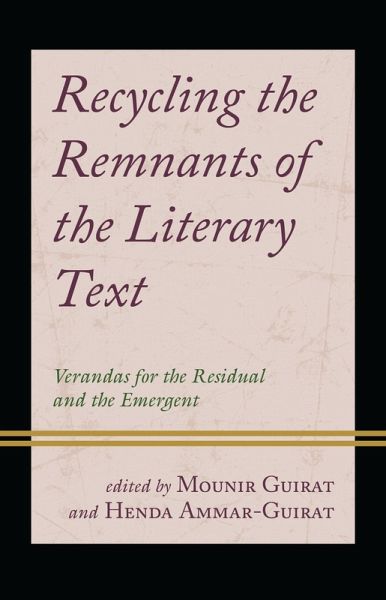
Recycling the Remnants of the Literary Text: Verandas for the Residual and the Emergent addresses literary recycling as a creative endeavour that supplements meaning through appropriating remnants of texts and transforming them into traces or echoes of their former selves within a new narrative design. It approaches recycling as a process that extends verandas of meanings and creates sites for ongoing discursive accretion of signification through the dialogic encounter between the old and the new, "the residual" and "the emergent." Whether seen as markers of the capacity of the literary text to surprise and haunt it readers, or residues of systems of representations predicated on selective inclusion and strategies of exclusion, remnants can offer rich material for setting in motion new cycles of renewal. The contributors of this volume propose recycling as writing and reading strategies. The first grants the remnants an afterlife and allow for an opening up of new narrative possibilities; while the second constructs alternative readings by allowing unwanted remnants to return and fill in gaps and silences. These oddments of the literary text are essential to question the iniquities of cultural, racial, and class prejudices. They are unavoidable in the construction of an emergent literary and cultural matrix for disruption and change.