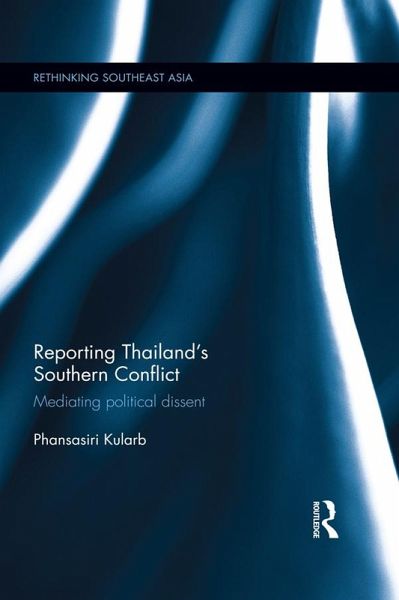
45,95 €
45,95 €
inkl. MwSt.
Sofort per Download lieferbar

23 °P sammeln
45,95 €
Als Download kaufen
45,95 €
inkl. MwSt.
Sofort per Download lieferbar
23 °P sammeln
Jetzt verschenken
Alle Infos zum eBook verschenken
45,95 €
inkl. MwSt.
Sofort per Download lieferbar
Alle Infos zum eBook verschenken
23 °P sammeln

Andere Kunden interessierten sich auch für
") Reporting Thailand's Southern Conflict (eBook, ePUB)45,95 €
Reporting Thailand's Southern Conflict (eBook, ePUB)45,95 €") Realism and Interdependence in Singapore's Foreign Policy (eBook, PDF)45,95 €
Realism and Interdependence in Singapore's Foreign Policy (eBook, PDF)45,95 €") Routledge Handbook of Contemporary Malaysia (eBook, PDF)49,95 €
Routledge Handbook of Contemporary Malaysia (eBook, PDF)49,95 €") Conflict and Change in Cambodia (eBook, PDF)45,95 €
Conflict and Change in Cambodia (eBook, PDF)45,95 €") Religion, Law and Intolerance in Indonesia (eBook, PDF)51,95 €
Religion, Law and Intolerance in Indonesia (eBook, PDF)51,95 €") Migrant Workers and ASEAN (eBook, PDF)41,95 €
Migrant Workers and ASEAN (eBook, PDF)41,95 €") The Handbook of Contemporary Cambodia (eBook, PDF)45,95 €
The Handbook of Contemporary Cambodia (eBook, PDF)45,95 €





Since 2004, Thailand's southern border provinces have been plagued by violence. There are a wide array of explanations for this violence, from the revival of Malay nationalist movements and the influence from the global trend of radical Islam, to the power play among the regional underground crime syndicates, politicians, and state authorities. The disparate interpretations signal the dynamic and complex discursive contention of this damaging and enduring conflict, and this book looks at how this is played out in the Thai media, and with what possible consequences.
In analysing the southern conflict coverage, the book presents the deficiencies in news coverage, as produced by four news organisations of different natures across a seven-year review period, and discusses the professional practices that hinder journalism from serving as a fair arena for healthy and rational democratic debates. Based on in-depth interviews with news workers, it argues that Thai journalism is not always monolithic and static, as shown in the discursive shifts in news content, the variations of journalistic practices and news workers' disparate stances on the conflict. The book goes on to highlight the less immediately apparent difficulties of political conflict reporting, such as the subtle patterns of intimidation and media manipulation, as well as the challenges of countering socially-prevailing hegemonic beliefs in Thai society.
Exploring the political contingencies and socio-cultural influences at play, this book provides an in-depth study of journalism's role in politics in Thailand, and is of interest to students and scholars of Southeast Asian Politics, Media Studies and Peace and Conflict Studies.
In analysing the southern conflict coverage, the book presents the deficiencies in news coverage, as produced by four news organisations of different natures across a seven-year review period, and discusses the professional practices that hinder journalism from serving as a fair arena for healthy and rational democratic debates. Based on in-depth interviews with news workers, it argues that Thai journalism is not always monolithic and static, as shown in the discursive shifts in news content, the variations of journalistic practices and news workers' disparate stances on the conflict. The book goes on to highlight the less immediately apparent difficulties of political conflict reporting, such as the subtle patterns of intimidation and media manipulation, as well as the challenges of countering socially-prevailing hegemonic beliefs in Thai society.
Exploring the political contingencies and socio-cultural influences at play, this book provides an in-depth study of journalism's role in politics in Thailand, and is of interest to students and scholars of Southeast Asian Politics, Media Studies and Peace and Conflict Studies.
Dieser Download kann aus rechtlichen Gründen nur mit Rechnungsadresse in A, B, BG, CY, CZ, D, DK, EW, E, FIN, F, GR, HR, H, IRL, I, LT, L, LR, M, NL, PL, P, R, S, SLO, SK ausgeliefert werden.