Sie sind bereits eingeloggt. Klicken Sie auf 2. tolino select Abo, um fortzufahren.
Bitte loggen Sie sich zunächst in Ihr Kundenkonto ein oder registrieren Sie sich bei bücher.de, um das eBook-Abo tolino select nutzen zu können.
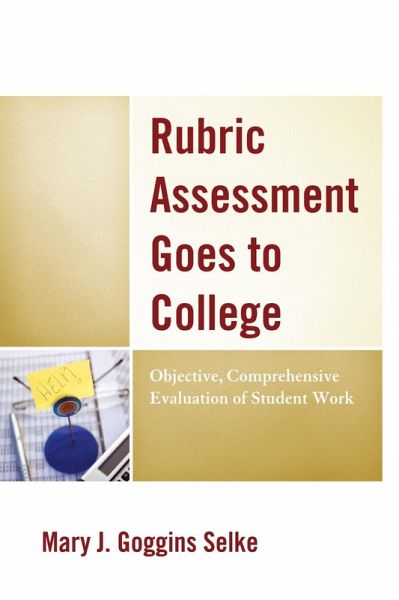
On campuses across the United States and beyond, schools of business, education, law, liberal arts, management, medical professions, pharmacy, and physical or social sciences are beginning to use assessment rubrics for purposes of formative and summative evaluation. A concise yet comprehensive guide to rubric usage, this book is an essential tool for university, professional school, college, community college, and upper level secondary school faculty members. It contains one-stop rubric shopping for key considerations, common problems, specific design steps, implementation samples, standards…mehr
On campuses across the United States and beyond, schools of business, education, law, liberal arts, management, medical professions, pharmacy, and physical or social sciences are beginning to use assessment rubrics for purposes of formative and summative evaluation. A concise yet comprehensive guide to rubric usage, this book is an essential tool for university, professional school, college, community college, and upper level secondary school faculty members. It contains one-stop rubric shopping for key considerations, common problems, specific design steps, implementation samples, standards alignment, and grade-focused applications. Effective college-level rubrics that are the right tools for objective, comprehensive assessment can be constructed almost as easily as an ice cream sundae! Welcome aboard as Rubric Assessment Goes to College!
Die Herstellerinformationen sind derzeit nicht verfügbar.
Autorenporträt
Dr. Mary Goggins Selke is dedicated to the preparation of educational leaders for 21st century schools. She has taught at every level from kindergarten to graduate school and has presented workshops, seminars, and national conference sessions on rubric assessment for teachers and teacher educators.
Inhaltsangabe
Section One: The ABCs of Rubric Assessment Chapter One - Advantages of Rubrics: What They Can Do for You Key Considerations - Advantages of Rubrics Chapter Two - Basis for Assessment: Performance or ProductKey Considerations - Performance Task and Artifact/Product Rubrics Chapter Three - Categories of Rubrics: Analytic and HolisticKey Considerations - When Analytic and Holistic Rubrics Best Fit the Assessment Task Section Two: Designing Rubric Assessments Chapter Four - Matching Tool to Task Or When a Rubric Is Not the Best Option Key Considerations - Questions to Determine if a Rubric Is a Viable Assessment Option Chapter Five - Rubric Design: Analytic Rubrics Key Considerations - The 10 Steps in Analytic Rubric Development Chapter Six - Rubric Design: Holistic Rubrics Key Considerations - The 10 Steps in Holistic Rubric Development Chapter Seven - A Closer Look at Rubric Strand DesignKey Considerations - Questions Answered By the Seven Types of Rubric Strands Chapter Eight - Common Errors in Rubric DesignKey Considerations - Ways to Avoid Common Errors in Rubric Design Section Three: Implementing Rubric Assessments Chapter Nine - Converting Rubric Scores to GradesKey Considerations - Converting Rubric Scores to Letter or Percentage Grades Chapter Ten - Designing a Standards-Aligned RubricKey Considerations - Developing Standards-Aligned Rubrics and Rubric Strands Chapter Eleven - Additional Rubric Uses Annotated Bibliography About the Author
Es gelten unsere Allgemeinen Geschäftsbedingungen: www.buecher.de/agb
Impressum
www.buecher.de ist ein Internetauftritt der buecher.de internetstores GmbH
Geschäftsführung: Monica Sawhney | Roland Kölbl | Günter Hilger
Sitz der Gesellschaft: Batheyer Straße 115 - 117, 58099 Hagen
Postanschrift: Bürgermeister-Wegele-Str. 12, 86167 Augsburg
Amtsgericht Hagen HRB 13257
Steuernummer: 321/5800/1497
USt-IdNr: DE450055826